
Aloe Vera Compound May Help Fight Alzheimer’s Disease, Simulations Suggest : ScienceAlert
Here’s the rewritten news article with an informative and viral tone, followed by a list of tags and viral sentences at the end:
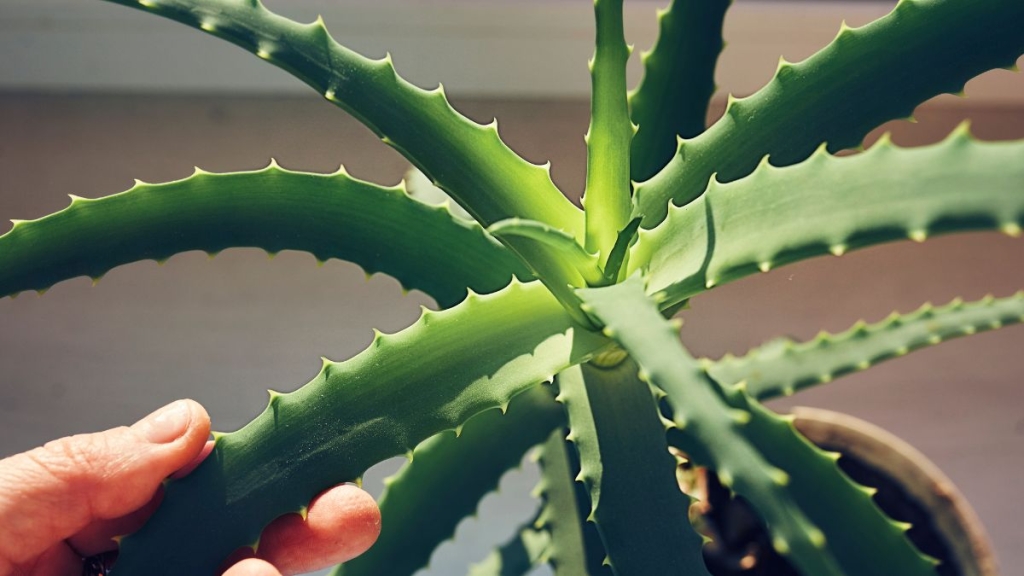
Aloe Vera: The Natural Wonder Plant That Could Revolutionize Alzheimer’s Treatment
In a groundbreaking discovery that could change the landscape of Alzheimer’s treatment, scientists have identified a powerful compound in the humble aloe vera plant that shows remarkable potential in combating this devastating neurodegenerative disease. The research, conducted by a team from Hassan II University of Casablanca in Morocco, has sent ripples through the scientific community and offers a glimmer of hope to the millions affected by Alzheimer’s worldwide.
For centuries, aloe vera has been revered for its medicinal properties, with traditional medicine practitioners using it to treat everything from skin inflammation to digestive issues. Now, modern science is catching up, revealing that this succulent plant may hold the key to addressing one of the most challenging medical conditions of our time.
The star of this scientific breakthrough is beta sitosterol, a compound found in aloe vera leaves that has demonstrated impressive binding affinities and stability in computer simulations. These virtual experiments, known as “in silico” studies, have shown that beta sitosterol could potentially interfere with the enzymes responsible for breaking down acetylcholine, a crucial neurotransmitter for learning and memory that is often depleted in Alzheimer’s patients.
Dr. Meriem Khedraoui, the lead chemist on the project, explains the significance of their findings: “Our findings suggest that beta sitosterol, one of the aloe vera compounds, exhibits significant binding affinities and stability, making it a promising candidate for further drug development.” This statement has ignited excitement in the medical community, as it suggests a natural, plant-based approach to tackling a disease that has long eluded effective treatment.
The research team’s approach was methodical and comprehensive. They began by examining 11 different compounds found in aloe vera, using advanced computer modeling to predict how these substances might interact with acetylcholinesterase (AChE) and butyrylcholinesterase (BChE) – the enzymes that break down acetylcholine. Beta sitosterol emerged as the clear frontrunner, showing the highest binding scores for both enzymes.
But the team didn’t stop there. They conducted a thorough ADMET (Absorption, Distribution, Metabolism, Excretion, Toxicity) analysis to assess how beta sitosterol might behave in the human body. This crucial step in drug development ensures that potential treatments are not only effective but also safe for human consumption. Remarkably, beta sitosterol passed this test with flying colors, along with another compound called succinic acid.
The implications of this research are staggering. With over 55 million people currently living with Alzheimer’s worldwide, and projections suggesting this number could soar to 138 million by 2050, the need for effective treatments has never been more urgent. Alzheimer’s is not just a disease; it’s a global crisis that affects families, economies, and healthcare systems across the planet.
Dr. Samir Chtita, a fellow researcher on the project, emphasizes the potential impact: “The comprehensive analysis supports the potential of these compounds as safe and effective therapeutic agents.” This statement offers a ray of hope in a field that has seen many promising treatments fail in clinical trials.
It’s important to note that while these findings are incredibly promising, they are based on computer simulations rather than physical experiments or human trials. The road from computer model to effective treatment is long and fraught with challenges. However, this research provides a solid foundation for future studies and opens up new avenues for exploring natural compounds in the fight against Alzheimer’s.
The beauty of this discovery lies in its simplicity and accessibility. Aloe vera is a plant that grows readily in many parts of the world, and its compounds are already known to be safe for human use. This could potentially lead to more affordable and widely available treatments in the future, addressing not just the medical but also the economic aspects of the Alzheimer’s crisis.
As we look to the future, this research reminds us of the untapped potential in the natural world around us. It challenges us to look beyond synthetic compounds and explore the wealth of medicinal properties that plants may offer. In an era where antibiotic resistance and drug side effects are growing concerns, turning to nature for solutions is not just wise – it’s necessary.
The journey to an effective Alzheimer’s treatment is far from over, but with each discovery like this, we move one step closer. The aloe vera plant, once known primarily for its ability to soothe sunburns, may soon be recognized as a powerful ally in the fight against one of humanity’s most challenging diseases. As research continues, the world watches with bated breath, hoping that this natural wonder will indeed blossom into a breakthrough that changes millions of lives.
Tags: #Alzheimer’s #AloeVera #MedicalBreakthrough #NaturalRemedies #Dementia #BrainHealth #ScientificDiscovery #MedicinalPlants #NeurodegenerativeDiseases #HealthcareInnovation
Viral Sentences:
- “Nature’s pharmacy: How aloe vera could hold the key to Alzheimer’s treatment”
- “From sunburn relief to brain health: The surprising potential of aloe vera”
- “55 million reasons to hope: The natural compound that could change Alzheimer’s treatment forever”
- “Computer models predict aloe vera compound as potential Alzheimer’s game-changer”
- “The succulent solution: How a common plant might combat a complex disease”
- “Alzheimer’s researchers turn to ancient wisdom, find modern miracle in aloe vera”
- “Beta sitosterol: The tongue-twister that could revolutionize dementia treatment”
- “Nature vs. Alzheimer’s: The plant-based approach that’s got scientists buzzing”
- “From Moroccan labs to global impact: The aloe vera compound that could save millions”
- “Alzheimer’s meets its match: How a humble plant is challenging a devastating disease”
,


Leave a Reply
Want to join the discussion?Feel free to contribute!