
Gemini Can Now Book You an Uber or Order a DoorDash Meal on Your Phone. Here’s How It Works
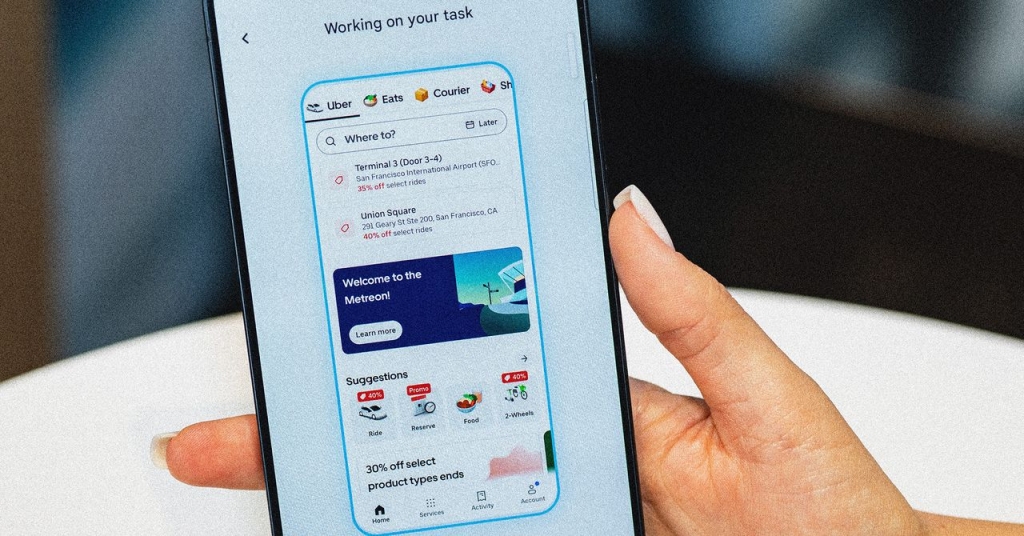
Gemini’s Bold New Vision: Automating Your Digital Life, One Uber Ride at a Time
You might be feeling a sense of déjà vu right now. That nagging feeling that we’ve been here before—that promises of truly intelligent voice assistants have been dangled in front of us for years, only to fizzle out into disappointment.
A decade ago, tech giants made grand claims about how their voice assistants would revolutionize our daily lives. Apple confidently proclaimed that Siri could handle complex tasks like requesting an Uber ride—yet today, if you try that exact command, Siri simply opens the Uber app and leaves you to figure out the rest. Google Assistant promised to handle your “usual” Starbucks order with a simple voice command, but the experience was clunky and ultimately abandoned.
Now, in the age of large language models and artificial intelligence that finally seems to understand natural human language, we’re hearing those same promises again. At Samsung’s Galaxy Unpacked event, Google and Samsung unveiled a feature that feels simultaneously revolutionary and eerily familiar: using the Gemini voice assistant to complete actual tasks with third-party apps.
The pitch is compelling: book an Uber, order food through Uber Eats, DoorDash, or Grubhub—all with simple voice commands. The companies promise more app support will arrive later this year when Android 17 launches. But this time, they insist, things will be different.
The feature is still in early preview, launching first in the United States and South Korea, beginning with the Galaxy S26 smartphones on March 11, before rolling out to Google Pixel 10 series devices via software update. Whether this represents genuine progress or just another cycle of overpromised, underdelivered AI remains to be seen.
How It Actually Works
The process begins simply enough. You activate Gemini and say something like “Get me an Uber to the airport.” What happens next feels like magic—or at least like technology finally catching up to science fiction.
Gemini opens the Uber app in what amounts to a virtual window on your screen. But here’s where things get interesting: instead of just launching the app and leaving you to fend for yourself, Gemini continues working in the background. You can monitor its progress through a live notification, watching as it navigates the booking process step by step.
If Gemini encounters ambiguity—say you’re in the New York tristate area and haven’t specified which airport—it will proactively ask clarifying questions. This represents a significant evolution from earlier voice assistants that would either make incorrect assumptions or simply fail.
Once Gemini completes its portion of the task, you receive a notification and are taken to the actual booking stage within the Uber app. Critically, Gemini doesn’t make the final booking decision for you. You still choose between UberX or UberXL, confirm the fare, and tap the book button yourself.
This hybrid approach—AI handling the tedious navigation while leaving the final decisions to humans—represents a thoughtful compromise. It’s automation without the anxiety of an AI making purchases on your behalf.
“I refer to some of the tasks that you might want to have automated as sort of digital laundry—things that you know you need to do, but are not necessarily excited about finishing,” explains Sameer Samat, president of the Android Ecosystem at Google. It’s a telling metaphor that captures both the mundane nature of these tasks and the potential relief automation could provide.
The Bigger Picture: Why This Matters
The return of these promises isn’t just about convenience—it represents a fundamental shift in how we interact with our devices. For years, smartphone interfaces have remained stubbornly two-dimensional, requiring us to navigate through apps, menus, and screens. Voice assistants promised to break us free from this paradigm, but technical limitations kept them trapped in a world of simple commands and basic queries.
Large language models have changed the game. They can understand context, handle ambiguity, and string together multiple steps in a logical sequence. This isn’t just incremental improvement—it’s potentially transformative.
Consider the cumulative time spent on “digital laundry” throughout a year: booking rides, ordering food, scheduling appointments, filling out forms. Even if each individual task saves only a few minutes, the aggregate impact on productivity and quality of life could be substantial.
Moreover, this technology could be genuinely empowering for people with disabilities, the elderly, or anyone who finds traditional smartphone interfaces challenging to navigate. Voice-based task completion could open up new levels of independence and accessibility.
The Ghost of Assistants Past
Yet the skepticism is understandable. We’ve been promised this future before, and each time, the reality fell short. The difference this time, proponents argue, is the underlying technology. Large language models don’t just recognize keywords—they understand intent, context, and nuance.
But there are still significant challenges. Privacy concerns loom large when an AI assistant needs access to multiple apps and services to complete tasks. Security becomes paramount when AI can potentially make purchases or book services on your behalf. And reliability remains a question mark—what happens when the AI misunderstands a command or encounters an unexpected error?
The selective rollout—starting with just a handful of apps in limited markets—suggests Google and Samsung are proceeding cautiously. They’re likely well aware that another high-profile failure could set the entire concept back years.
The Road Ahead
If successful, this technology could be just the beginning. Imagine extending this capability beyond ride-sharing and food delivery to encompass travel bookings, calendar management, email composition, and even complex multi-app workflows. The vision is of an AI assistant that doesn’t just answer questions but actively manages your digital life.
The timing is also significant. As smartphones reach maturity and hardware innovation slows, software and AI capabilities represent one of the few remaining frontiers for meaningful differentiation. Companies are betting heavily that intelligent automation will be the next killer feature that drives upgrades and loyalty.
Whether Gemini’s task automation represents the future arriving at last or just another false start in the long quest for truly intelligent voice assistants, one thing is clear: the competition to define this space is heating up. Apple, Amazon, Microsoft, and others are all racing to build the next generation of AI assistants. The company that cracks this code first could gain a significant competitive advantage.
For now, we’re left with cautious optimism tempered by hard-earned skepticism. The technology is impressive, the potential is enormous, but the track record of similar promises is poor. Only time will tell if Gemini can finally deliver on the decade-old dream of a voice assistant that actually makes our digital lives easier.
Tags: #Gemini #AI #VoiceAssistant #Samsung #GalaxyS26 #Google #Automation #TechInnovation #DigitalAssistant #LargeLanguageModels #Uber #DoorDash #Grubhub #Android #Pixel #MobileTech #ArtificialIntelligence #FutureOfTech #TechNews #SmartphoneRevolution
Viral Phrases: “Digital laundry,” “Déjà vu all over again,” “The future is finally here—or is it?”, “Voice commands that actually work,” “AI that understands you,” “The assistant that delivers,” “Beyond simple commands,” “Your phone, finally smart,” “The next big thing in mobile,” “Task automation revolution,” “Voice AI maturity,” “From promises to performance,” “The decade-long wait ends,” “Smart assistants, smarter execution,” “Mobile AI breakthrough,” “Task completion reimagined,” “The assistant that gets things done,” “Beyond the hype cycle,” “Real AI productivity,” “The digital life manager,” “Voice control evolved,” “AI that works for you,” “The automation advantage,” “Mobile intelligence unleashed,” “Your digital butler arrives,” “The voice assistant reborn,” “Task automation perfected,” “AI that actually helps,” “The future of mobile interaction,” “Voice commands that matter,” “Beyond the basics,” “The AI assistant we’ve been waiting for,” “Task completion reimagined,” “Mobile AI breakthrough,” “The digital life manager,” “Voice control evolved,” “AI that works for you,” “The automation advantage,” “Mobile intelligence unleashed,” “Your digital butler arrives,” “The voice assistant reborn,” “Task automation perfected,” “AI that actually helps,” “The future of mobile interaction,” “Voice commands that matter,” “Beyond the basics,” “The AI assistant we’ve been waiting for.”
,

Leave a Reply
Want to join the discussion?Feel free to contribute!