
Tech legend Stewart Brand on Musk, Bezos and his extraordinary life: ‘We don’t need to passively accept our fate’ | Technology
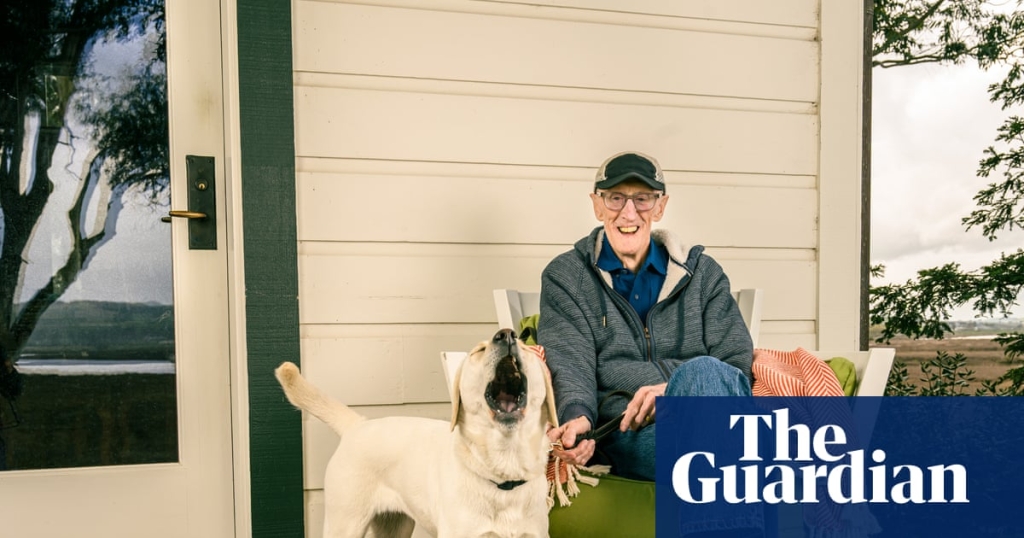
Stewart Brand on Musk, Bezos, and His Extraordinary Life: “We Don’t Need to Passively Accept Our Fate”
Stewart Brand, the visionary behind the Whole Earth Catalog and co-founder of the Long Now Foundation, has spent his life thinking on a planetary scale and on the longest of timeframes. Now 87, Brand’s latest project, “Maintenance: Of Everything, Part One,” explores the fundamental concept of keeping things—from machines to institutions—functioning over time.
Brand’s career has been nothing short of extraordinary. He’s been a writer, editor, publisher, soldier, photojournalist, LSD evangelist, events organizer, future-planning consultant, and even a government adviser to California Governor Jerry Brown in the late 1970s. His philosophy of “finding things and founding things” has led him to cross paths with some of the most consequential events and figures of his era.
The new book, the first of 13 planned installments, deals with material forms of maintenance but will eventually explore everything from buildings to communities, institutions to the human body, and planetary and environmental maintenance. “Maintenance is what keeps everything going. It’s what keeps life going,” Brand explains from his library in Petaluma, California.
Brand’s magpie curiosity takes readers on a journey through industrial history, from round-the-world yacht racing to vehicle manufacturing to the refurbishment of the Statue of Liberty. He points out that wars have been won and lost on the strength of maintenance, citing the Vietnam War where the US Army’s M16 rifle, though lighter and more accurate, often jammed compared to the more reliable but cruder AK-47s used by the Viet-Cong.
Surprisingly, Brand expresses approval for Elon Musk, praising his push to advance manufacturing. He draws parallels between Musk’s Tesla and Henry Ford’s Model T, noting that both revolutionized their respective eras by making vehicles that were easier to maintain. “Fewer parts means less to go wrong, which means less maintenance. This is how technology gets better,” he says.
The flipside of technological advancement is our growing expectation that things should work perfectly all the time. “Most consumer products pretty much don’t require maintenance,” Brand observes. “You get an electric clock and plug it into the wall or change the batteries from time to time, and it’ll tell perfectly good time. You don’t have to do anything else.”
Brand’s thinking extends to institutions as well. Speaking shortly after the Davos economic forum, where Donald Trump’s attempts to “acquire” Greenland came to a head, Brand remains relatively relaxed about the apparent breakdown of the “rules-based international order.” He sees institutions as evolving entities that can falter, prevail, or come back in different forms.
The Long Now Foundation, which Brand co-founded 30 years ago, embodies his long-term thinking. The foundation’s most ambitious project is the Clock of the Long Now—a mechanical timepiece designed to chronicle the next 10,000 years. “It’s really a giant work of land art,” Brand explains. “There’s a statue of liberty in New York, and this is kind of a statue of responsibility.”
Brand’s Whole Earth Catalog, first published in 1968, was a groundbreaking publication that offered “access to tools” in the broadest sense. It listed everything from seed drills to footwear, kayaks to macrame kits, but also championed books on esoteric religions, sociology, architecture, philosophy, science, and more. “It opened doors for people in a way that invited them to consider, ‘maybe I could just build a guitar, or live off the grid.’ And so it had the impact of conferring agency,” Brand says.
The catalog became a huge bestseller in the late 60s and 70s, making Brand a lot of money—too much for his liking. In the early 70s, he wound the publication down and founded the Point Foundation, which gave grants to worthy causes.
Brand has always straddled the schism between technologists and environmentalists. He saw how they could complement each other, noting that the NASA image of the whole Earth, which galvanized conservation movements, “was a direct result of something that environmentalists hated, which was the space programme.”
Predictably, Brand was in on the ground floor when it came to computers. In 1968, he was a camera operator at what is now known as “the mother of all demos”—a seismic event showcasing what we would recognize today as the foundations of personal computing. In a 1972 article for Rolling Stone, Brand declared personal computing to be “good news, maybe the best since psychedelics.”
Having lived through the rapid rise and fall of the commune movement, Brand saw the potential of online community early on. In 1984, he organized the Hackers Conference, where he coined the now-familiar maxim “information wants to be free.” A year later, he co-founded the Whole Earth ‘Lectronic Link (WELL) as a sort of proto-social media platform.
To his critics, Brand paved the way for the neoliberal, libertarian mindset of today’s Silicon Valley. But he was also a community-focused idealist and a lifelong environmentalist. That technology vs. nature tension persists—hence his apparent affinity with tech figures such as Bezos and Musk.
In terms of physical maintenance, Brand has always been a healthy, active, outdoorsy person. Now, though, he has a respiratory illness, which is “progressive, incurable and fatal.” He’s in a stable condition, still exercises, but uses supplementary oxygen as well. “I’d be very surprised by making it into my 90s,” he says, seemingly without regret: “Imagine the luck, to get to be 87—it’s just fantastic!”
Brand has always been an optimist, and taking the long view, he still is. “I find optimism in terms of being able to find a way to not only continue but keep getting better.” He acknowledges that it might be hard to see a positive way forward right now, but that’s always been the way. “If you like some scenarios better than others, you can be aware of the ones you don’t like and look for signs of them, and also look at signs of the ones you want to have come to pass, and lean differentially toward them. That’s how you negotiate your way into a future you were glad of. It’s done incrementally by, among other things, lots of individuals and some institutions, and that’s how we grapple our way, muddle our way forward.”
Tags: Stewart Brand, Whole Earth Catalog, Long Now Foundation, Maintenance, Silicon Valley, Elon Musk, Jeff Bezos, counterculture, technology, environmentalism, futurism, innovation, maintenance culture, global order, optimism, long-term thinking
Viral Sentences:
- “We are as gods and might as well get good at it.”
- “Stay hungry. Stay foolish.”
- “Information wants to be free.”
- “Maintenance is what keeps everything going. It’s what keeps life going.”
- “Imagine the luck, to get to be 87—it’s just fantastic!”
- “We don’t need to passively accept our fate.”
- “It’s done incrementally by, among other things, lots of individuals and some institutions, and that’s how we grapple our way, muddle our way forward.”
,


Leave a Reply
Want to join the discussion?Feel free to contribute!