
b4’s Review TUI With AI Integration Nearing Pre-Alpha Release
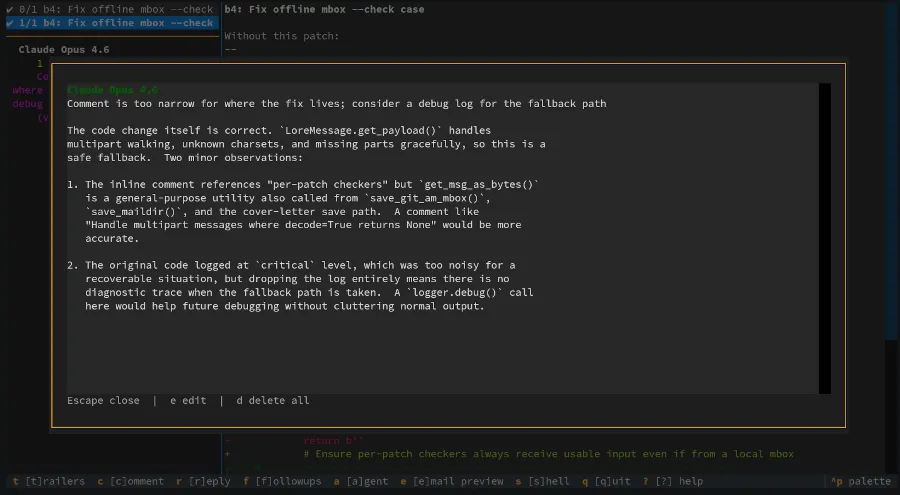
AI-Powered Patch Review Tool for Linux Kernel Nears Pre-Alpha Release
In a groundbreaking development for open-source software development, the Linux kernel’s patch review workflow tool, known as b4 review, is rapidly approaching a pre-alpha release state. This innovative tool, designed to streamline and enhance the notoriously complex process of Linux kernel patch management, has been undergoing intensive development, with recent iterations incorporating cutting-edge AI assistance through integration with Claude Code.
The b4 tool, which has long served as a critical infrastructure component for managing patch workflows in the Linux kernel development ecosystem, is now evolving to include a sophisticated text user interface (TUI) that promises to revolutionize how developers review and process kernel patches. This advancement represents a significant leap forward in addressing one of open-source development’s most persistent challenges: efficiently managing the high volume of code contributions while maintaining rigorous quality standards.
The Evolution of b4 Review
Konstantin Ryabitsev, the lead developer of b4 and a prominent figure at the Linux Foundation, has been spearheading this ambitious project. Under his guidance, the tool has seen remarkable progress in recent weeks, with the integration of AI-powered code review capabilities taking center stage. The development team has been working tirelessly to create a system that not only automates routine aspects of patch review but also provides intelligent assistance that can help identify potential issues and suggest improvements.
The AI integration within b4 review is particularly noteworthy because it represents a careful balance between automation and human oversight. Unlike some AI implementations that might attempt to fully automate decision-making processes, the b4 review system has been designed with a crucial principle in mind: AI assistance is strictly opt-in. This approach ensures that developers retain full control over their review processes while having access to powerful AI tools when they choose to utilize them.
Technical Capabilities and Integration
The current state of b4 review demonstrates impressive technical sophistication. The tool now features seamless integration with Patchwork, a widely-used web-based patch tracking system that is integral to Linux kernel development workflows. This integration allows developers to manage their patch series directly from the TUI, streamlining what was previously a multi-step process involving multiple tools and interfaces.
One of the most compelling demonstrations of b4 review’s capabilities is captured in a recent recording available on asciinema.org. This recording showcases the tool’s ability to handle complex review scenarios, including the review of entire patch series, the acceptance of patches that meet quality standards, and the rejection of those that require further work. The demonstration particularly highlights the Claude Code integration, which provides AI-powered suggestions and insights throughout the review process.
The TUI interface itself represents a significant improvement over traditional command-line tools. It provides a clean, intuitive interface that presents relevant information in a structured manner, making it easier for developers to quickly assess the status of patches and make informed decisions. The interface is designed to be responsive and efficient, recognizing that kernel developers often work with large volumes of patches and need tools that can keep pace with their workflow.
The Role of AI in Code Review
The integration of AI into the patch review process addresses several longstanding challenges in kernel development. Code review for the Linux kernel is notoriously demanding, requiring deep technical expertise and significant time investment. By leveraging AI capabilities, b4 review aims to reduce the cognitive load on human reviewers while maintaining or even improving the quality of reviews.
The AI component, powered by Claude Code, brings several advantages to the review process. It can quickly analyze code changes for potential issues, suggest improvements based on best practices, and even help identify patterns that might indicate security vulnerabilities or performance problems. Importantly, the AI is designed to augment human judgment rather than replace it, providing suggestions that reviewers can accept, modify, or reject based on their expertise and judgment.
This approach to AI integration reflects a mature understanding of the limitations and appropriate applications of artificial intelligence in software development. Rather than attempting to create an autonomous review system, the b4 review team has focused on creating a tool that enhances human capabilities while preserving the critical role of human judgment in the kernel development process.
Development Progress and Future Prospects
The rapid advancement of b4 review is a testament to the dedication and expertise of the development team. Moving from concept to near-pre-alpha status in a matter of weeks demonstrates both the technical feasibility of the approach and the clear demand for such tools within the kernel development community.
Looking ahead, the potential for b4 review to transform kernel development workflows is substantial. As the tool continues to mature, it could significantly reduce the time and effort required for patch review while simultaneously improving the quality and consistency of reviews. This could have far-reaching implications for the Linux kernel project, potentially enabling faster development cycles and more efficient handling of the growing volume of contributions.
The success of b4 review could also serve as a model for other open-source projects facing similar challenges in managing code contributions and reviews. The combination of thoughtful AI integration, user-centric design, and respect for established development workflows represents a blueprint for how AI can be effectively incorporated into software development tools.
Community Impact and Adoption
The Linux kernel development community, known for its rigorous standards and careful approach to tooling changes, will be watching the development of b4 review closely. The opt-in nature of the AI features is likely to be particularly well-received, as it allows developers to experiment with and adopt new capabilities at their own pace without disrupting established workflows.
Early adopters of b4 review will play a crucial role in shaping the tool’s evolution. Their feedback and experiences will inform future development priorities and help ensure that the tool meets the diverse needs of the kernel development community. The transparent development process, with regular updates and demonstrations of progress, suggests a commitment to community engagement that is characteristic of successful open-source projects.
Technical Architecture and Implementation
While specific technical details of the implementation are still emerging, the b4 review tool appears to be built on a solid foundation that leverages existing kernel development infrastructure while introducing innovative new capabilities. The integration with Patchwork suggests a deep understanding of the kernel development ecosystem and a commitment to working within established frameworks rather than creating isolated tools.
The use of Claude Code for AI capabilities indicates a strategic choice to leverage proven AI technology rather than attempting to develop proprietary AI models. This approach allows the b4 review team to focus on the unique challenges of kernel development while benefiting from the broader advancements in AI technology.
Conclusion
As b4 review approaches its pre-alpha release, the Linux kernel development community stands on the brink of a potentially transformative change in how patch reviews are conducted. The combination of sophisticated TUI design, seamless integration with existing tools, and thoughtful AI assistance represents a significant advancement in development tooling.
The success of this initiative could have implications far beyond the Linux kernel project, potentially influencing how other large-scale open-source projects approach the challenge of managing code reviews. As the tool continues to evolve and mature, it will be fascinating to watch how the community adopts and adapts to these new capabilities, and what impact they have on the efficiency and quality of kernel development.
The journey from concept to pre-alpha status has been remarkably swift, but the real test will come as the tool is deployed in real-world kernel development scenarios. If b4 review can deliver on its promise of enhanced efficiency while maintaining the high standards of quality that characterize Linux kernel development, it may well become an indispensable tool for kernel developers worldwide.
Tags & Viral Phrases:
- Linux kernel development revolution
- AI-powered code review breakthrough
- b4 review pre-alpha release imminent
- Konstantin Ryabitsev Linux Foundation innovation
- Claude Code integration for kernel patches
- Patchwork TUI transformation
- Open source AI development tools
- Kernel patch workflow automation
- Text user interface for developers
- AI-assisted code review game changer
- Linux development efficiency boost
- Next-gen kernel development tools
- Revolutionary patch management system
- AI and open source collaboration
- Kernel development workflow reimagined
- Cutting-edge AI for Linux kernel
- Developer productivity enhancement
- Open source tooling innovation
- AI in software development evolution
- Linux kernel review process transformation
,


Leave a Reply
Want to join the discussion?Feel free to contribute!