
Trace raises $3M to solve the AI agent adoption problem in enterprise
AI Agents Finally Find Their Manager: Trace Raises $3M to Solve Enterprise AI’s Biggest Problem
In the fast-paced world of enterprise AI, agents have been the shiny new promise—intelligent, autonomous helpers ready to revolutionize workflows, boost productivity, and automate the mundane. But for all the hype, these AI agents have been slow to make a real impact inside companies. The culprit? A fundamental lack of context. Without understanding the intricate web of tools, processes, and human workflows that define a business, even the most advanced AI agents flounder.
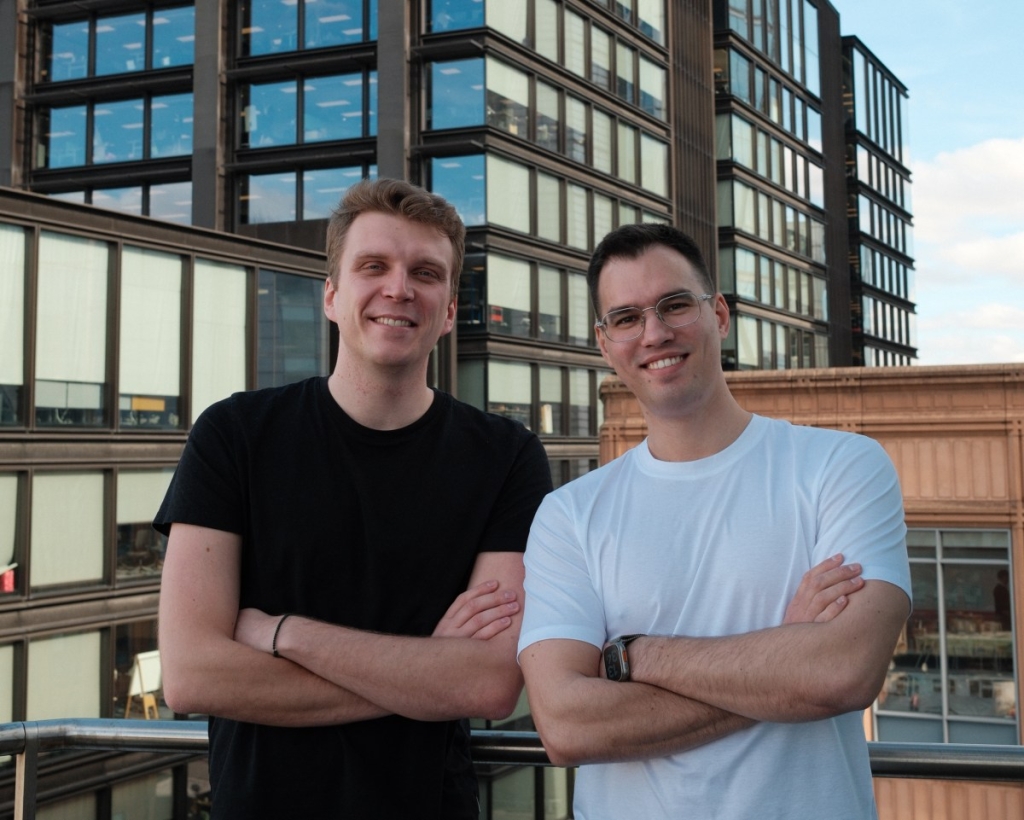
Enter Trace, a London-based startup that just emerged from Y Combinator’s 2025 summer cohort with a bold mission: to be the manager that AI agents have been missing. Today, Trace announced a $3 million seed funding round led by Y Combinator, with participation from Zeno Ventures, Transpose Platform Management, Goodwater Capital, Formosa Capital, and WeFunder. Angel investors Benjamin Bryant and Kevin Moore also joined the round.
The Problem: Brilliant Interns Without a Boss
“OpenAI and Anthropic are building these brilliant interns that can be leveraged within the company,” says Tim Cherkasov, CEO and co-founder of Trace. “We’re building the manager that knows where to put them.”
The analogy is apt. Today’s AI agents—whether from OpenAI, Anthropic, or other labs—are powerful but inexperienced. They can answer questions, generate text, and even write code, but they lack the situational awareness to operate effectively in complex corporate environments. They don’t know which tools to use, who to collaborate with, or how to navigate the unique workflows of a given company.
This is where Trace steps in. The startup’s core innovation is a system that builds a comprehensive knowledge graph of a company’s existing tools and processes—mapping out everything from email and Slack to Airtable and Jira. With this contextual backbone in place, Trace can orchestrate AI agents and human workers alike, assigning tasks based on deep understanding rather than guesswork.
How It Works: From High-Level Prompt to Seamless Workflow
Imagine a CEO who wants to design a new microsite or craft a 2027 sales plan. Instead of cobbling together a manual process or hoping an AI agent can figure it out on its own, they simply prompt Trace: “We need to design a new microsite.”
Trace then breaks this high-level request into a detailed, step-by-step workflow. Some steps are delegated to AI agents, others to human team members. When an agent is called upon, Trace provides it with the precise data and context it needs—no more, no less. The result is a seamless, automated process that minimizes friction and maximizes productivity.
This approach addresses one of the biggest blockers to AI adoption in the enterprise: the onboarding and integration of agents. Traditionally, deploying an AI agent meant painstakingly configuring it for each new environment, a process that’s both time-consuming and error-prone. Trace’s knowledge graph eliminates much of this manual labor, making it far easier for companies to scale their use of AI.
The Competitive Landscape: Not the Only Player, But a Different Approach
Trace is entering a crowded field. Just this week, Anthropic launched its own suite of enterprise agents, complete with pre-built plugins for finance, engineering, and design. Meanwhile, workplace productivity giants like Atlassian are embedding AI agents directly into their platforms—Jira, for example, now allows AI agents and humans to work side-by-side.
But Trace’s founders believe their knowledge-graph approach sets them apart. Rather than building specialized agents for specific tasks, Trace aims to be the underlying infrastructure that enables any agent—or human—to operate effectively, no matter the context.
“2024 and 2025 was still about prompt engineering,” says Artur Romanov, Trace’s CTO and co-founder. “Now we’ve moved from prompt engineering to context engineering. Whoever provides the best context at the right time is going to be the infrastructure on top of which the AI-first companies will be built. And we hope to be that infrastructure.”
The Vision: Context as the New Competitive Edge
The shift from prompt engineering to context engineering is more than semantic. It reflects a maturing understanding of what it takes to make AI truly useful in the enterprise. Prompts are static; context is dynamic. A prompt might tell an agent what to do, but context tells it how, where, and why—drawing on the full richness of a company’s operations.
For Trace, this means building systems that can adapt to the ever-changing landscape of a business. As new tools are adopted, teams are restructured, or strategies shift, Trace’s knowledge graph evolves in real time, ensuring that agents always have the most up-to-date information at their fingertips.
This dynamic adaptability is crucial in a world where the pace of change is accelerating. Companies can no longer afford to spend months onboarding AI agents or painstakingly configuring workflows. They need solutions that can keep up—and Trace aims to be that solution.
The Road Ahead: Scaling Context Engineering
With its fresh funding, Trace plans to double down on its mission. The immediate focus is on refining its knowledge-graph technology and expanding its integrations with popular workplace tools. Longer term, the company envisions becoming the go-to infrastructure for AI-first companies—those that build their operations around intelligent agents from the ground up.
But the path forward won’t be easy. Competition is fierce, and the enterprise AI space is notorious for its rapid shifts and unpredictable winners. Trace’s success will depend on its ability to deliver on its promise of seamless, context-aware orchestration—and to convince companies that context, not just capability, is the key to unlocking the true potential of AI agents.
Why It Matters: The Future of Work, Reimagined
At its core, Trace’s vision is about more than just making AI agents more effective. It’s about reimagining the future of work itself. In a world where humans and AI collaborate ever more closely, the lines between manager and managed, between tool and teammate, are blurring. Trace is betting that the companies who thrive in this new reality will be those that can harness the full power of context—connecting people, processes, and technology in ways that are both intelligent and intuitive.
As AI continues its march into every corner of the enterprise, the need for systems that can bridge the gap between human and machine will only grow. Trace’s approach—building a manager for the brilliant interns of AI—may just be the key to unlocking the next wave of productivity and innovation.
Tags: AI agents, enterprise AI, context engineering, workflow orchestration, knowledge graph, Y Combinator, Trace, AI-first companies, workplace productivity, automation, human-AI collaboration
Viral phrases: “brilliant interns,” “manager for AI agents,” “context engineering,” “AI-first companies,” “knowledge graph,” “seamless workflow,” “the future of work,” “bridging human and machine,” “dynamic adaptability,” “unlocking productivity”
Viral sentences: “We’re building the manager that knows where to put them.” “Whoever provides the best context at the right time is going to be the infrastructure on top of which the AI-first companies will be built.” “The shift from prompt engineering to context engineering.” “Trace aims to be the go-to infrastructure for AI-first companies.” “The future of work, reimagined.”
,

Leave a Reply
Want to join the discussion?Feel free to contribute!