
Antarctica’s Cloud Mystery: What’s Really Floating Above the Ice?
Antarctica’s Cloud Mystery: What’s Really Floating Above the Ice?
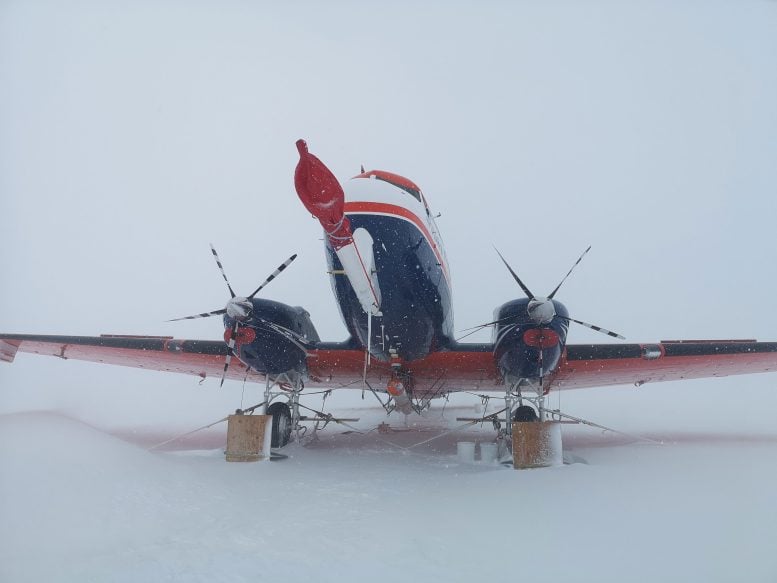
In a groundbreaking deep-field research flight over the frozen heart of Antarctica, scientists have uncovered a puzzling atmospheric phenomenon that could reshape our understanding of Earth’s climate system. The recent airborne campaign, conducted under extreme conditions in one of the planet’s most remote regions, has revealed unexpectedly high concentrations of aerosols—microscopic particles suspended in the atmosphere—above the Antarctic interior. These findings, which defy current climate models, are now forcing researchers to reconsider long-held assumptions about the role of Earth’s southernmost continent in regulating global temperatures.
Antarctica is often described as Earth’s climate thermostat. Its sprawling ice sheets, which cover an area roughly the size of the United States and Mexico combined, reflect a significant portion of incoming solar radiation back into space. This high albedo effect, coupled with the continent’s persistent cloud cover, plays a critical role in keeping the planet cool. However, the exact mechanisms by which clouds and aerosols interact over Antarctica remain poorly understood—a gap in knowledge that could have far-reaching consequences for climate predictions.
The recent flight campaign, part of an international effort to study polar atmospheric processes, involved a series of daring sorties deep into the Antarctic interior. Equipped with state-of-the-art sensors, the research aircraft collected data on aerosol composition, concentration, and distribution at altitudes and locations never before sampled. What the team discovered was both surprising and perplexing: aerosol levels over the continent’s interior were significantly higher than expected, and the particles themselves appeared to be of a type not commonly associated with polar regions.
Aerosols play a crucial role in cloud formation. They act as condensation nuclei, providing surfaces on which water vapor can condense to form cloud droplets. The type, size, and concentration of aerosols can dramatically influence cloud properties, including their brightness, longevity, and ability to reflect sunlight. In Antarctica, where cloud cover is a major factor in the region’s cooling effect, even subtle changes in aerosol populations could have outsized impacts on the climate.
The origin of these unexpected aerosols is a mystery. Unlike the Arctic, which receives regular infusions of particles from industrial and natural sources in the Northern Hemisphere, Antarctica is relatively isolated. The continent’s extreme cold and dryness make it an unlikely breeding ground for aerosols, and its distance from major landmasses limits the influx of windborne particles. Some researchers speculate that the aerosols could be generated locally by processes such as sea spray, volcanic emissions from subglacial volcanoes, or even biological activity in the Southern Ocean. Others wonder if they might be the result of long-range transport from lower latitudes, carried by high-altitude winds and deposited over the continent.
The implications of this discovery are profound. If aerosol concentrations over Antarctica are higher than previously thought, it could mean that current climate models are underestimating the continent’s cooling effect. Alternatively, if the aerosols are of a type that enhances cloud formation or alters cloud properties in unexpected ways, they could be amplifying or dampening Antarctica’s influence on global climate in ways that are not yet understood. Either scenario underscores the urgent need for more detailed observations and improved modeling of polar atmospheric processes.
The research team is now planning a series of follow-up flights and ground-based studies to further investigate the sources and impacts of these aerosols. Advanced satellite observations and computer simulations will also be used to track their movement and evolution over time. In the meantime, the discovery serves as a powerful reminder of how much remains unknown about Earth’s most remote and extreme environments—and how those unknowns can have global consequences.
As scientists continue to unravel the mysteries of Antarctica’s atmosphere, one thing is clear: the frozen continent is far more dynamic and influential than once believed. Its clouds and aerosols, long overlooked in the broader climate conversation, may hold the key to understanding not just the future of the South Pole, but the fate of the entire planet.
Tags & Viral Phrases:
Antarctica cloud mystery, Antarctic aerosols, polar climate research, deep-field flight campaign, Earth’s climate thermostat, ice sheet albedo effect, cloud formation, condensation nuclei, Southern Ocean aerosols, subglacial volcanoes, atmospheric particles, climate modeling, global cooling, high-altitude winds, remote sensing, climate change, polar atmospheric processes, unexpected discovery, scientific breakthrough, climate science, environmental research, Earth’s climate system, aerosol concentrations, cloud properties, climate predictions, scientific mystery, polar research, Antarctic interior, aerosol sources, atmospheric dynamics, climate impact, scientific flight, environmental mystery, global climate, Antarctic atmosphere, cloud cover, ice sheet, aerosol particles, climate models, scientific discovery, environmental science, climate research, polar climate, aerosol effects, atmospheric science, cloud mystery, climate mystery, scientific investigation, Antarctic research, climate system, aerosol study, environmental impact, climate phenomenon, scientific findings, Antarctic clouds, atmospheric particles, climate modeling, aerosol sources, climate science, polar research, scientific breakthrough, environmental mystery, global climate, Antarctic atmosphere, cloud cover, ice sheet, aerosol particles, climate models, scientific discovery, environmental science, climate research, polar climate, aerosol effects, atmospheric science, cloud mystery, climate mystery, scientific investigation, Antarctic research, climate system, aerosol study, environmental impact, climate phenomenon, scientific findings.
,


Leave a Reply
Want to join the discussion?Feel free to contribute!