
When we interbred with Neanderthals, they were usually the fathers
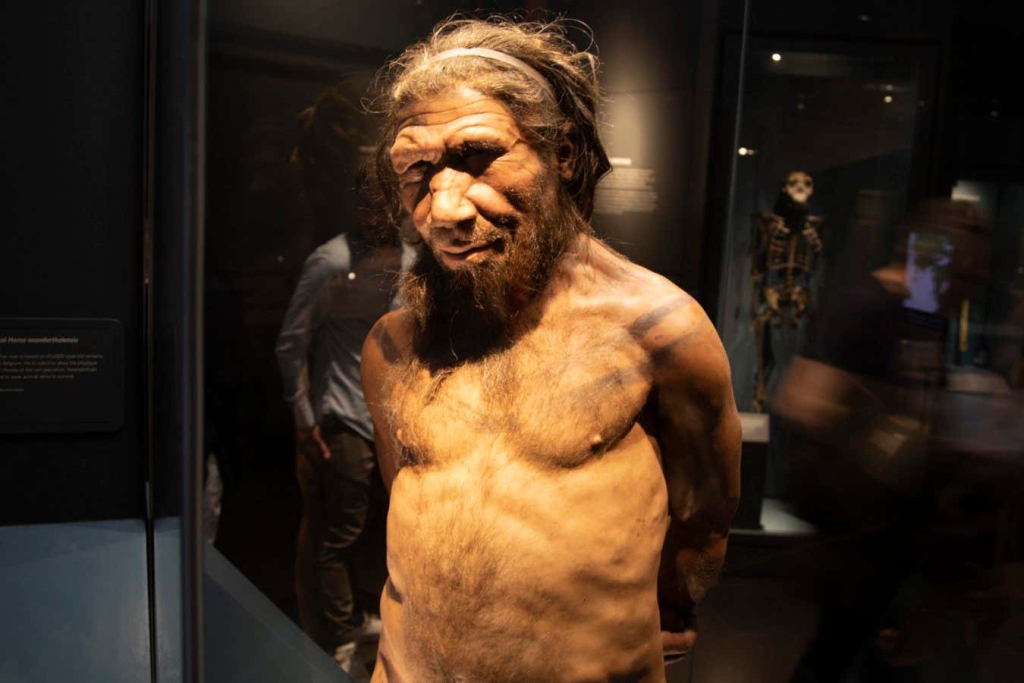
Neanderthal DNA Reveals Shocking Truth: Most Ancient Mating Involved Female Humans and Male Neanderthals
In a groundbreaking study that’s sending shockwaves through the archaeological and genetic communities, researchers have uncovered startling evidence about the intimate relationships between modern humans and Neanderthals tens of thousands of years ago. The data suggests that when these two human species interbred, it was predominantly female Homo sapiens mating with male Neanderthals—a revelation that challenges our assumptions about ancient human behavior and raises provocative questions about attraction, power dynamics, and survival in the prehistoric world.
The research, led by a team from the University of Pennsylvania including Alexander Platt, Sarah Tishkoff, and Daniel Harris, examined the genetic traces left in both populations by this ancient interbreeding. What they discovered about the sex chromosomes tells a fascinating story that goes far beyond simple population mixing.
“We can say very little about the social or emotional context,” admits Platt. “The meaningful thing we can say is that it was something that took place over generations.”
Yet the implications are enormous. When modern humans migrated out of Africa into Eurasia, they encountered Neanderthals who had been living there for hundreds of thousands of years. The genetic evidence shows multiple waves of interbreeding occurred, with the most recent happening between 50,000 and 43,000 years ago, and possibly earlier encounters dating back 200,000 years or more.
Today, everyone of non-African descent carries approximately 1-2% Neanderthal DNA, a lasting legacy of these ancient encounters. But it’s what happened to the sex chromosomes that has researchers particularly intrigued.
The human X chromosome presents a peculiar puzzle. Unlike other chromosomes where Neanderthal DNA is relatively evenly distributed, the X chromosome is almost entirely devoid of Neanderthal genetic material in modern humans. This “Neanderthal desert” on the X chromosome has puzzled geneticists for years.
The University of Pennsylvania team systematically examined four possible explanations for this phenomenon. First, they considered whether the two species were simply too different for their DNA to function properly together—a concept known as hybrid incompatibility. However, their analysis revealed that the Neanderthal X chromosome actually contained more Homo sapiens DNA than the non-sex chromosomes, suggesting compatibility rather than incompatibility.
Second, they explored whether natural selection might have favored modern human DNA over Neanderthal DNA on the X chromosome. Neanderthals had lived in small, isolated populations for millennia, which would have allowed harmful mutations to accumulate. In contrast, the larger Homo sapiens populations would have been more effective at eliminating such mutations through natural selection. But this explanation fell short too—the modern human DNA retained on the Neanderthal X chromosome was mostly in non-functional regions where it couldn’t provide any advantage.
The third possibility involved cultural patterns of how the sexes moved between groups. In some societies, females leave their birth group to live with partners, while in others, males relocate. If modern human women consistently moved to live with Neanderthal groups, this could create a sex bias in the genetic record. But even if every single interbreeding event involved a migrating female human, this wouldn’t account for the strength of the bias the researchers observed.
This left only one explanation that fit the data: mating preference. The evidence strongly suggests that male Neanderthals preferred female Homo sapiens as mates, or female Homo sapiens preferred male Neanderthals—or both scenarios occurred simultaneously.
“If they just like it that way, that explains everything,” Platt notes.
This conclusion has sparked intense debate in the scientific community. Arev Sümer from the Max Planck Institute for Evolutionary Anthropology cautions that “we need more evidence, because it’s a big claim about behavior.” The idea that Neanderthals might have found modern human females particularly attractive, or that modern human females might have been drawn to Neanderthal males, represents a significant leap in our understanding of prehistoric relationships.
The research also reveals another fascinating detail: an earlier episode of interbreeding had such a dramatic effect that it completely replaced the original Neanderthal Y chromosomes with Homo sapiens Y chromosomes. “There should be some huge amount of modern human males involved in this mixing process,” Sümer points out, suggesting the mating patterns may have been more complex than initially thought.
Moisès Coll Macià from the Institute of Evolutionary Biology in Barcelona adds that we can’t rule out other factors, including meiotic drive—a process where certain genetic elements can bias which chromosomes get passed on to offspring. His team has found tentative evidence of this occurring in modern human populations outside Africa, potentially contributing to the deletion of Neanderthal DNA from their X chromosomes.
The study raises profound questions about what drove these mating preferences. Were male Neanderthals particularly attracted to the physical differences of modern human females? Did modern human females find Neanderthal males’ physical strength or other characteristics appealing? Or were these matings driven by practical considerations of survival and alliance-building in challenging prehistoric environments?
What’s clear is that these intimate encounters between our ancestors and Neanderthals were not isolated incidents but occurred repeatedly over thousands of years, leaving an indelible mark on the human genome. The genetic evidence provides a window into a world where two distinct human species not only coexisted but formed intimate bonds that shaped the future of humanity.
As research continues, scientists hope to uncover more details about these ancient relationships. But for now, the evidence suggests that when modern humans and Neanderthals came together, it was often a meeting of female humans and male Neanderthals—a prehistoric love story written in our DNA.
#Neanderthal #AncientDNA #HumanEvolution #PrehistoricLove #GeneticResearch #Anthropology #ScienceDiscovery #Interbreeding #HumanOrigins #ViralScience #PrehistoricSex #DNAEvidence #EvolutionaryBiology #ArchaeologicalDiscovery #TrendingScience #MindBlowingFacts #ScientificBreakthrough #PrehistoricRelationships #HumanHistory #GeneticMystery
Female humans, male Neanderthals, prehistoric mating, ancient DNA, evolutionary biology, genetic research, human origins, interbreeding evidence, scientific breakthrough, viral science, anthropology discovery, prehistoric relationships, DNA evidence, mind-blowing facts, trending science, archaeological discovery, human evolution, genetic mystery, scientific community, prehistoric love story,

Leave a Reply
Want to join the discussion?Feel free to contribute!