
ASML’s high-NA EUV tools clear the runway for next-gen AI chips
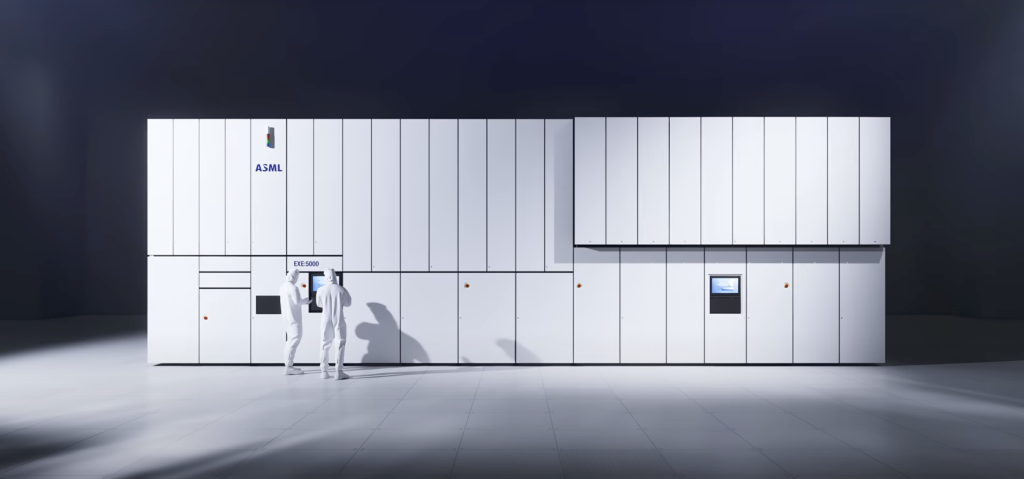
ASML’s High-NA EUV Machines Are Ready—AI’s Next Performance Leap Is Officially Underway
The moment the semiconductor world has been waiting for has arrived: ASML, the Dutch giant with a monopoly on extreme ultraviolet lithography, has declared its next-generation High-NA EUV machines ready for mass production. This isn’t just another incremental upgrade—it’s the green light for a new era in AI chip manufacturing, one that promises to shatter the physical limits of today’s most advanced processors.
The announcement came directly from ASML’s CTO, Marco Pieters, in an exclusive interview with Reuters, timed ahead of a major technical conference in San Jose. For years, AI companies and chipmakers have been racing toward this threshold, knowing that current-generation EUV tools were nearing their maximum potential. Now, with High-NA EUV tools proven at scale, the clock has officially started on the industry’s next big leap.
Why This Matters for AI
Here’s the crux: today’s most powerful AI chips—the ones driving large language models and next-gen accelerators—are bumping up against a physical ceiling. EUV lithography, which uses extreme ultraviolet light to etch microscopic circuits onto silicon, has been the backbone of chip advancement for years. But as transistors get smaller and chip designs more complex, even EUV is struggling to keep pace.
High-NA EUV changes the game. By enabling finer, denser circuit patterns in fewer steps, these machines allow chipmakers to push past current barriers. That means more powerful, energy-efficient AI processors, capable of handling ever-larger models and more demanding workloads. In short, the performance ceiling for AI hardware is about to get a whole lot higher.
The Numbers That Matter
ASML’s case for readiness is built on hard data. The company reports that its High-NA EUV tools have now processed 500,000 silicon wafers, achieved roughly 80% uptime (with a target of 90% by year’s end), and demonstrated imaging precision that can replace multiple conventional patterning steps with a single High-NA pass. These figures aren’t just impressive—they’re the industry’s green light for qualification.
But this next leap doesn’t come cheap. At approximately $400 million per machine—double the cost of the previous EUV generation—High-NA EUV tools are among the most expensive pieces of capital equipment ever built. Early adopters include TSMC and Intel, both of whom are racing to integrate the technology into their production lines.
A Two-to-Three-Year Runway
Technical readiness is one thing; full integration into high-volume production is another. Pieters was quick to note that, while the tools are ready, it will still take two to three years for chipmakers to fully qualify and integrate High-NA EUV into their manufacturing processes. “Chipmakers have all the knowledge to qualify these tools,” he said, expressing confidence in the industry’s ability to move forward, even if the timeline remains measured.
For the AI sector, that means the next generation of chip performance improvements is on the horizon, not yet in hand. But with ASML now saying the starting gun has fired, the race to integrate High-NA EUV into production has formally begun.
The Bottom Line
This isn’t just a technical milestone—it’s a strategic inflection point for the entire AI ecosystem. The chips that power tomorrow’s breakthroughs are about to get a whole lot more powerful, and the companies that can harness this technology first will have a decisive edge. As the semiconductor industry enters this new chapter, one thing is clear: the future of AI hardware is being printed, one EUV pulse at a time.
Tags: ASML, High-NA EUV, extreme ultraviolet lithography, AI chips, semiconductor manufacturing, TSMC, Intel, chip performance, next-gen AI hardware, silicon wafers, lithography, Marco Pieters, chipmaking, AI accelerator, chip technology, semiconductor industry
Viral Phrases: game-changer, next big leap, physical ceiling, breaking barriers, green light, race to the future, the starting gun has fired, high-stakes technology, billion-dollar machines, tomorrow’s AI, the next chapter, decisive edge, printed in light, the future is now, tech monopoly, industry inflection point, pushing the limits, AI’s next frontier, high-NA revolution, silicon destiny
Viral Sentences: The future of AI hardware is being printed, one EUV pulse at a time. Tomorrow’s breakthroughs are already in the machine. The race to harness next-gen chip power is officially on. Breaking the physical ceiling means breaking into a new era. At $400 million a pop, these aren’t just tools—they’re the keys to the future.
,


Leave a Reply
Want to join the discussion?Feel free to contribute!