
Samsung confirms it is not killing the S Pen, shares plans for the future
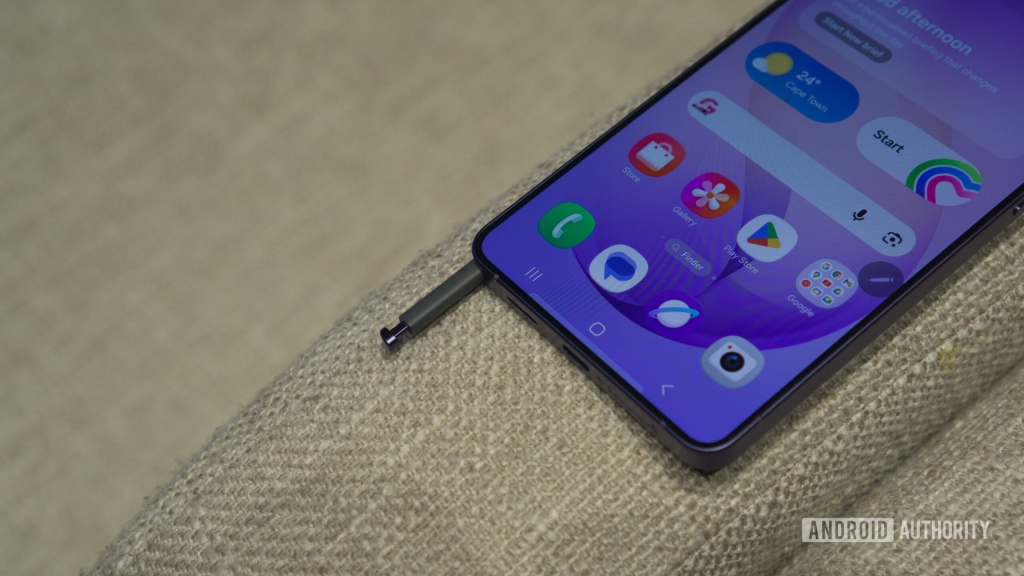
Samsung Confirms S Pen Is Here to Stay: New Display Tech in the Works to Keep the Stylus Relevant
TL;DR: Samsung’s COO Won-Joon Choi confirms the S Pen will remain a “core” feature, with new display technology in development to eliminate compromises and enhance usability across future Galaxy devices.
The S Pen has been a cornerstone of Samsung’s mobile identity for over a decade—first making its debut with the original Galaxy Note in 2011, then surviving the Note’s demise in 2021, and continuing to thrive within the Galaxy S Ultra lineup. But in recent years, Samsung has quietly stripped away some of the stylus’s premium features, sparking concern among fans that the company might be slowly phasing it out. Now, Samsung’s COO has stepped in to put those fears to rest.
In a recent interview with Bloomberg, Won-Joon Choi, COO of Samsung’s Mobile Experience (MX) division, delivered a clear message: the S Pen isn’t going anywhere. In fact, it’s becoming more integral than ever.
“We’re working on a more advanced technology within S Pen to come up with a new structure of display, so the penalty of having S Pen is diminished,” Choi said. “S-Pen will continue to be one of the core technologies.”
The “Penalty” of the S Pen: Why Samsung Has Been Trimming Features
If you’ve followed Samsung’s flagship releases over the past few years, you may have noticed a subtle but significant trend: the S Pen’s feature set has been shrinking. From the removal of Bluetooth connectivity and Air Actions to the elimination of certain pressure sensitivity levels, Samsung has gradually dialed back the stylus’s premium capabilities.
Why? The answer lies in hardware constraints. The S Pen requires a digitizer layer beneath the display to detect precise stylus input and differentiate it from finger touches. This layer adds thickness, weight, and cost to the device—trade-offs Samsung has been hesitant to make as it pushes for ever-thinner, lighter, and more affordable flagships.
The most glaring example came with the Galaxy Z Fold 7 in 2025, where Samsung removed the digitizer layer entirely to achieve an ultra-slim form factor. The result? No S Pen support on the foldable—a first for a major Samsung flagship in years.
But if Choi’s comments are any indication, Samsung isn’t giving up on the stylus—it’s doubling down on solving the engineering puzzle.
The Secret Sauce: A New Display Technology
While Choi didn’t reveal specifics, his mention of a “new structure of display” strongly suggests Samsung is developing a digitizer-free touchscreen that can still accurately detect S Pen input. This would be a game-changer.
Imagine a future where the S Pen works seamlessly without requiring a separate sensing layer—eliminating the “penalty” of added bulk, cost, and complexity. Such a breakthrough could allow Samsung to:
- Reintroduce S Pen support to thin foldables like the Galaxy Z Fold series without compromising on sleekness.
- Enhance the S Pen experience on the Galaxy S Ultra with improved responsiveness and new features.
- Expand stylus functionality to mid-range devices, democratizing the Note-like experience.
Rumors are already swirling that the upcoming Galaxy Z “Wide” Fold (expected in 2026) will bring back S Pen support thanks to this new tech. If successful, it’s likely Samsung will roll out the same innovation to its S Ultra lineup, ensuring the stylus remains a flagship differentiator.
Why the S Pen Still Matters in 2026
In an era dominated by all-screen slabs and AI-driven interfaces, you might wonder: does anyone still care about a stylus?
The answer is a resounding yes—especially among power users, creatives, and productivity-focused professionals. The S Pen isn’t just a niche accessory; it’s a tool that transforms how people interact with their devices. From handwritten notes and precise photo edits to signature workflows and remote camera control, the stylus offers a level of precision and versatility that fingers (and even Apple Pencils) can’t match.
Samsung knows this. That’s why it’s investing in keeping the S Pen relevant—not by clinging to legacy tech, but by innovating around it.
What’s Next for the S Pen?
While we don’t have a timeline for when this new display tech will debut, the fact that Samsung is actively developing it signals long-term commitment. Here’s what we might see in the near future:
- Galaxy Z “Wide” Fold (2026): S Pen support returns with the new display tech.
- Galaxy S26 Ultra (2026): Enhanced S Pen features and possibly slimmer hardware.
- Mid-range expansion: S Pen support could trickle down to Galaxy A series devices, following the Note FE model.
One thing is clear: Samsung isn’t abandoning the S Pen—it’s future-proofing it.
TL;DR: Samsung’s COO confirms the S Pen will remain a core feature, with new display technology in development to eliminate hardware compromises and enhance usability across future Galaxy devices.
Tags: Samsung, S Pen, Galaxy S26 Ultra, Galaxy Z Fold, stylus, display technology, Won-Joon Choi, Mobile Experience, MX division, digitizer-free touchscreen, foldable phones, Galaxy Note, productivity, creative tools, flagship smartphones, tech innovation
Viral Sentences:
- “Samsung just confirmed the S Pen isn’t dead—it’s getting a glow-up.”
- “The stylus that refused to die: Samsung’s S Pen is back with a vengeance.”
- “Say goodbye to the ‘S Pen penalty’—Samsung’s cooking up something revolutionary.”
- “Galaxy Z Fold 7 dropped the S Pen, but Samsung’s already bringing it back better than ever.”
- “Power users, rejoice: the S Pen isn’t going anywhere.”
- “Samsung’s secret weapon? A stylus that defies the odds.”
- “The Note is gone, but the S Pen lives on—and it’s about to get a major upgrade.”
- “Samsung’s COO just dropped a bombshell: the S Pen is here to stay.”
- “From Note to Ultra: the S Pen’s journey is far from over.”
- “Get ready for the thinnest, smartest S Pen yet—Samsung’s got big plans.”
,


Leave a Reply
Want to join the discussion?Feel free to contribute!