
Resident Evil Requiem’s path tracing is tough on GPUs but it probably won’t take as long as ray tracing did to become a mainstream option in games
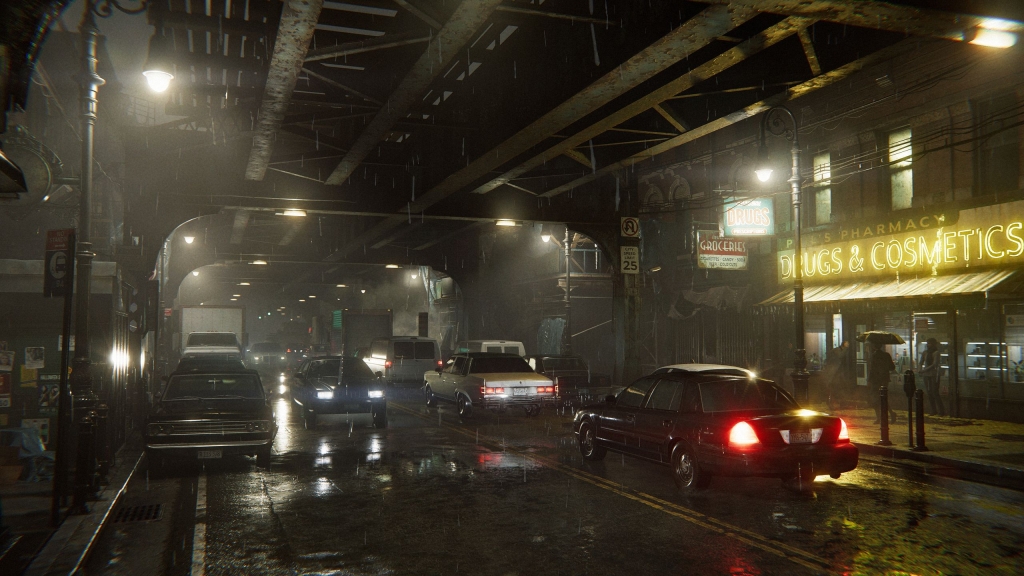
With the release of Capcom’s Resident Evil Requiem, PC gamers can now add another title to their libraries that pushes the boundaries of rendering technology: path tracing (or “full ray tracing,” as Nvidia calls it). For those seeking pixel-perfect lighting, shadows, and reflections, path tracing is the ultimate solution. However, the price of entry—both financially and in terms of hardware demands—is staggeringly high.
Let’s start with the fiscal side. While any RTX graphics card can technically handle path tracing in modern games, the performance will be abysmal unless the card boasts a robust combination of shader units, cache, and VRAM. For instance, the RTX 3060 Ti, with its 4,864 shaders, 4 MB of L2 cache, and 8 GB of VRAM, struggles mightily under the weight of path tracing. While it can technically run the feature, the frame rates are so low that the experience is essentially unplayable. In contrast, the card performs admirably with standard ray tracing, delivering smooth and visually impressive results.
To put this into perspective, let’s compare the performance of the RTX 3060 Ti with the RTX 4070. The latter, with its significantly higher compute performance, cache, and VRAM, fares much better with path tracing. However, even the RTX 4070’s frame rates plummet when path tracing is enabled, though not as severely as with the RTX 3060 Ti. This highlights the immense computational demands of path tracing, which require cutting-edge hardware to achieve playable frame rates.
One workaround for improving performance is the use of DLSS (Deep Learning Super Sampling) and frame generation. By enabling DLSS Performance mode and frame generation, the RTX 4070 can achieve playable frame rates with path tracing, albeit still not as smooth as with standard ray tracing. This underscores the importance of AI-driven technologies in mitigating the performance hit of path tracing.
Reflecting on the evolution of ray tracing, it’s remarkable how far we’ve come since Nvidia introduced its RTX 20-series graphics cards in 2018. Back then, ray tracing was a niche feature, primarily used for enhancing shadows and reflections in games like Battlefield 5. The release of Metro Exodus Enhanced Edition in 2021 marked a significant leap forward, as it utilized ray tracing for global illumination, light source emission, reflections, refractions, and shadows. However, the first game to fully embrace path tracing was Quake 2 RTX, which debuted two years earlier. Despite its simpler geometry and materials, Quake 2 RTX demonstrated the potential of path tracing, albeit with limited performance.
Today, path tracing is still a rarity in gaming, with only a handful of titles offering the feature. Games like Doom: The Dark Ages, Black Myth: Wukong, Stalker 2, Star Wars Outlaws, and Avatar: Frontiers of Pandora have embraced ray tracing, but path tracing remains a niche option due to its extreme hardware requirements. This is understandable, given that path tracing is essentially a supercharged version of ray tracing, involving the tracing of multiple light paths and complex calculations for materials, reflections, and refractions.
The computational demands of path tracing are so high that even the latest GPUs, like the RTX 5090, struggle to deliver smooth performance at 4K resolution with path tracing enabled. The RTX 5090, with its 21,760 shader units, double the L2 cache, and 100% more VRAM than its predecessors, can achieve around 60 fps with path tracing at 4K when using DLSS Performance. This is a testament to the immense power required to render path-traced graphics in real-time.
Looking ahead, the future of path tracing depends on advancements in hardware and software. The latest GPUs from Nvidia, AMD, and Intel are packed with features designed to accelerate ray tracing and AI workloads. Technologies like neural shading and neural texture compression, which leverage AI to optimize rendering, could play a crucial role in making path tracing more accessible. While it may take several years for path tracing to become as mainstream as standard ray tracing, the rapid pace of innovation suggests that this milestone is within reach.
In conclusion, path tracing represents the pinnacle of graphical fidelity in gaming, offering unparalleled realism in lighting, shadows, and reflections. However, its extreme hardware requirements make it a luxury reserved for the most powerful systems. As technology continues to evolve, we can expect path tracing to become more accessible, eventually delivering the same smooth performance as standard ray tracing. Until then, gamers will need to weigh the visual benefits against the performance costs, making informed choices about when and where to enable this cutting-edge feature.
Tags & Viral Phrases:
- Path tracing revolution
- Ray tracing vs. path tracing
- Next-gen graphics explained
- GPU performance showdown
- AI-powered gaming graphics
- The future of real-time rendering
- Resident Evil Requiem tech deep dive
- Why path tracing is so demanding
- RTX 5090 path tracing performance
- DLSS and frame generation explained
- Gaming hardware evolution
- Metro Exodus Enhanced Edition review
- Quake 2 RTX: The first path-traced game
- Black Myth: Wukong ray tracing analysis
- Star Wars Outlaws ray tracing breakdown
- Avatar: Frontiers of Pandora graphics
- Doom: The Dark Ages ray tracing performance
- Stalker 2 ray tracing performance
- Neural shading and texture compression
- Gaming at 4K with path tracing
- RTX 3060 Ti vs. RTX 4070 comparison
- The rise of AI in gaming
- Real-time rendering breakthroughs
- Path tracing: The ultimate graphical challenge
- Gaming hardware requirements for 2026
- The cost of cutting-edge graphics
- Path tracing: Worth the performance hit?
- How path tracing works
- The evolution of ray tracing
- Gaming’s graphical arms race
- Path tracing in 2026: What to expect
- The future of gaming graphics
- RTX 5090: The king of path tracing
- Path tracing: A glimpse into the future
- Gaming’s most demanding feature
- Path tracing: The holy grail of graphics
- The next frontier in gaming visuals
- Path tracing: The ultimate test for GPUs
- Gaming’s graphical revolution
- Path tracing: The future is now
- The end of traditional rendering?
- Path tracing: The next big thing in gaming
- Gaming’s most ambitious graphics feature
- Path tracing: The ultimate visual upgrade
- The future of gaming is path traced
- Path tracing: The next generation of realism
- Gaming’s most demanding feature yet
- Path tracing: The future of real-time graphics
- The rise of path tracing in gaming
- Path tracing: The ultimate graphical challenge
- Gaming’s most ambitious graphics feature
- Path tracing: The future of gaming visuals
- The next frontier in gaming graphics
- Path tracing: The ultimate visual upgrade
- Gaming’s most demanding feature
- Path tracing: The future is now
- The end of traditional rendering?
- Path tracing: The next big thing in gaming
- Gaming’s graphical revolution
- Path tracing: The ultimate test for GPUs
- The future of gaming is path traced
- Path tracing: The next generation of realism
- Gaming’s most demanding feature yet
- Path tracing: The future of real-time graphics
- The rise of path tracing in gaming
,


Leave a Reply
Want to join the discussion?Feel free to contribute!