
Aventon Soltera 3 Electric Bike Review: A Fun Hybrid Single-Speed
Belt-Drive Ebike Revolution: The Aventon Soltera 3 Challenges Everything You Know About Electric Bikes
The ebike market has exploded in recent years, but most offerings share a common DNA: heavy frames, bulky batteries, and designs that scream “electric.” The Aventon Soltera 3 boldly challenges this status quo, delivering a lightweight, sleek alternative that might just make you forget you’re riding an electric bike at all.
The Belt-Drive Advantage: Maintenance-Free Riding
One of the Soltera 3’s most striking features is its Gates belt drive system. Unlike traditional chain drives that require regular lubrication, cleaning, and eventual replacement, the Gates belt promises a dramatically different ownership experience.
Belt drives typically last twice as long as conventional chains—often exceeding 10,000 miles of riding before needing replacement. More importantly, there’s zero grease involved. That means no more black smudges on your work pants after a morning commute or ruined khakis from an accidental brush against the drivetrain. For urban riders who need to look presentable upon arrival, this alone could justify the upgrade.
The Gates belt on the Soltera 3 represents the gold standard in belt-drive technology. Known for their durability and smooth operation, Gates belts deliver a nearly silent riding experience that many cyclists describe as “buttery smooth.” The absence of metal-on-metal contact eliminates the characteristic chain noise that plagues traditional drivetrains.
The Curious Case of Mixed Maintenance Philosophy
However, the Soltera 3’s maintenance strategy presents an interesting paradox. While Aventon opted for the ultra-low-maintenance belt drive, they paired it with hydraulic disc brakes—components that require annual bleeding to maintain optimal performance.
This combination struck me as somewhat contradictory. If the goal was to create the most hands-off riding experience possible, cable-actuated mechanical disc brakes would have been the more logical choice. Mechanical brakes require minimal maintenance beyond occasional pad replacement and cable adjustment.
The hydraulic system does offer superior stopping power and modulation, which is valuable for an ebike capable of higher speeds. But for riders prioritizing convenience above all else, this decision seems like a missed opportunity to create a truly maintenance-free package.
Lightweight Design: A Game-Changer for Ebike Handling
At 37 pounds, the Soltera 3 represents a significant departure from typical ebike weight profiles. To put this in perspective, that’s heavy for a conventional bicycle but remarkably light for an electric bike. Most ebikes tip the scales at 50-70 pounds, making the Soltera 3 feel almost nimble by comparison.
This weight reduction translates directly to improved handling characteristics. The bike feels surprisingly stiff and responsive, navigating tight turns and crowded urban environments with the agility of a traditional road bike. One of the most persistent complaints about ebikes has always been their cumbersome nature—difficult to lift onto bike racks, challenging to carry up stairs, and generally unwieldy in everyday situations. The Soltera 3 largely eliminates these pain points.
The reduced weight stems partly from the bike’s design philosophy. Rather than building a load-bearing platform designed to replace a car, Aventon created something closer to a traditional bicycle with electric assistance. This approach sacrifices some cargo capacity but dramatically improves the riding experience.
Design That Doesn’t Scream “Ebike”
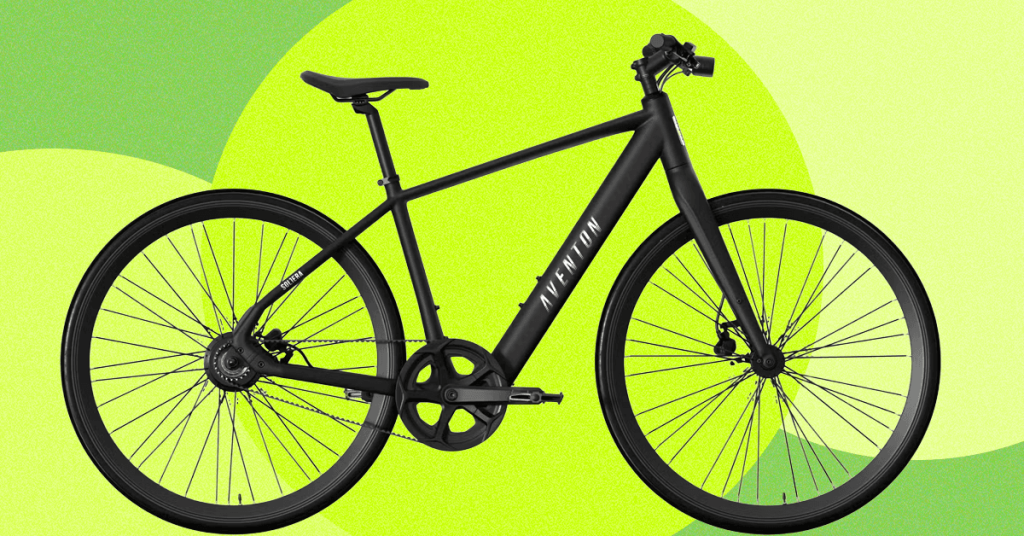
Perhaps the Soltera 3’s most impressive achievement is its aesthetic appeal. Many ebikes prioritize function over form, resulting in designs that look more like small motorcycles than bicycles. The Soltera 3 takes the opposite approach, embracing clean lines and minimalist styling.
The matte black finish on my test unit exemplifies this design philosophy—understated, sophisticated, and undeniably cool. (For those seeking alternatives, Aventon offers the Soltera 3 in dark matte blue and a sleek silver finish as well.) The bike’s geometry, featuring wide, almost perfectly flat handlebars and narrow 700 x 36 tires, reinforces its road bike DNA rather than the cruiser or mountain bike aesthetics common in the ebike world.
This design approach serves a practical purpose beyond mere aesthetics. By not looking like a typical ebike, the Soltera 3 is less likely to attract unwanted attention from thieves or curious onlookers. It blends seamlessly into the urban landscape, looking like just another stylish commuter bike.
User Interface: Simplicity Meets Functionality
The Soltera 3’s control system exemplifies the bike’s overall design philosophy: keep it simple. A single button press activates the electric assist, with intuitive controls that don’t require consulting a manual. The display provides essential information without overwhelming the rider with data.
This minimalist approach extends to the bike’s overall feature set. Rather than cramming in every possible bell and whistle, Aventon focused on delivering the core ebike experience exceptionally well. The result is a bike that feels approachable to newcomers while still satisfying experienced cyclists.
Sizing Considerations: Room for Improvement
During testing, I rode the extra-large size, which positioned the saddle at its maximum height. At 6’4″, I found it suitable but barely so. Riders taller than me would likely find the extra-large inadequate. However, the Soltera 3 offers four sizes ranging from small to extra-large, accommodating riders from 5′ tall up to my height.
This sizing range covers a broad spectrum of riders, though those at the extremes of the height spectrum might want to test ride before purchasing. The geometry remains consistent across sizes, maintaining the bike’s road-oriented handling characteristics regardless of frame size.
Performance in Real-World Conditions
Over several weeks of testing in various conditions—from smooth bike paths to potholed city streets—the Soltera 3 consistently impressed. The electric assist provides a noticeable boost without feeling artificial or overpowering. It’s the kind of assistance that makes hills feel flat and headwinds disappear, rather than turning you into a silent motorcycle.
The belt drive’s quiet operation becomes particularly noticeable in urban environments, where the absence of drivetrain noise allows you to better hear approaching traffic and enjoy your surroundings. The bike’s relatively narrow tires, while not ideal for extremely rough terrain, provide excellent efficiency on paved surfaces.
Battery life proved more than adequate for typical urban commuting, easily handling 30-40 mile days with power to spare. The integrated battery design maintains the bike’s clean lines while providing reasonable range for most riders’ needs.
The Verdict: A New Direction for Ebikes
The Aventon Soltera 3 represents a compelling alternative in the crowded ebike market. By prioritizing weight reduction, clean design, and a more traditional bicycle riding experience, Aventon has created something that stands apart from typical ebike offerings.
The belt drive system delivers on its promise of reduced maintenance and cleaner operation, though the pairing with hydraulic brakes slightly undermines the maintenance-free goal. The lightweight design and road-oriented geometry make it genuinely enjoyable to ride, even when you’re not using the electric assist.
At its core, the Soltera 3 succeeds because it doesn’t try to be everything to everyone. It’s not designed to haul cargo like a cargo bike, nor does it attempt to conquer mountain trails. Instead, it excels at what most urban cyclists actually need: a reliable, efficient, and enjoyable way to get around town without arriving sweaty or exhausted.
For riders seeking an ebike that feels more like a bicycle with benefits rather than a small electric vehicle, the Soltera 3 deserves serious consideration. It’s proof that ebikes don’t have to compromise the fundamental joys of cycling to deliver electric assistance.
Tags & Viral Phrases:
belt-drive ebike game changer, maintenance-free cycling revolution, Gates belt drive excellence, lightweight ebike breakthrough, urban commuting redefined, electric bike that doesn’t look electric, Aventon Soltera 3 review, belt vs chain drive comparison, hydraulic disc brakes debate, ebike weight reduction innovation, matte black bike aesthetic, road bike geometry electric, minimalist ebike design, urban cyclist dream machine, next-gen electric bicycle technology, commuting without the grease stains, silent drivetrain revolution, ebike handling reimagined, cargo capacity vs agility trade-off, electric assist that feels natural, battery integration done right, four-size fit system, 37-pound wonder bike, Gates belt drive supremacy, cable vs hydraulic brake maintenance, ebike thief deterrent design, narrow tire efficiency, urban mobility evolution, traditional cycling experience enhanced, maintenance paradox in ebike design, electric bicycle market disruption, road-oriented ebike geometry, clean urban commuting solution, belt drive longevity advantage, ebike aesthetic revolution, minimalist control interface, real-world ebike performance, urban terrain conqueror, electric assist subtlety perfected, battery life optimization, cargo bike alternative, mountain bike vs road bike ebike debate, electric bicycle weight breakthrough, design that blends in, approachable electric cycling, experienced rider satisfaction, height accommodation challenges, smooth urban riding experience, hills made flat, headwinds eliminated, clean lines integration, maintenance-free goal undermined, traditional bicycle joy preserved, electric assistance benefits, urban cyclist essential, cycling experience enhancement, fundamental joys maintained, electric vehicle alternative, compelling market alternative, weight reduction priority, clean design focus, traditional experience delivery, maintenance promise delivery, hydraulic brake pairing, lightweight design impact, aesthetic achievement, control system simplicity, sizing consideration importance, real-world condition performance, battery life adequacy, core experience excellence, market differentiation strategy, targeted design philosophy, urban environment optimization, pavement efficiency focus, range adequacy, compromise elimination, benefits delivery, serious consideration worthy, market proof point, fundamental compromise avoidance
,


Leave a Reply
Want to join the discussion?Feel free to contribute!