
Sophia Space raises $10M seed to demo novel space computers
Nvidia-Backed Startup Sophia Space Secures $10 Million to Revolutionize Cooling for Space-Based Data Centers
As the race to deploy cutting-edge computing infrastructure in orbit accelerates, one critical challenge has emerged as the elephant in the room: how to keep next-generation processors from melting in the vacuum of space. While the cosmos may be frigid, the absence of air means traditional cooling methods are useless—forcing innovators to rethink thermal management from the ground up.
During Nvidia’s latest earnings call, CEO Jensen Huang underscored the urgency, noting that “it’s cold in space… [but] there’s no airflow, and so the only way to dissipate is through conduction.” His comments reflect a growing industry consensus: as space-based data centers move from science fiction to imminent reality, solving the heat problem isn’t optional—it’s existential.
Enter Sophia Space, a Caltech-spun startup that just closed a $10 million seed round led by Alpha Funds, with participation from KDDI Green Partners Fund and Unlock Venture Partners. The company’s mission? To prove a radical new approach to passive cooling that could redefine how high-performance computing operates beyond Earth’s atmosphere.
From Solar Sails to Space Servers
The origins of Sophia Space’s technology trace back to an unlikely source: a $100 million Caltech program aimed at developing orbital solar power stations capable of beaming electricity to Earth. Researchers working on ultra-light, sail-like structures for solar energy collection realized their design could be repurposed for something equally ambitious—space-based computing.
“We were looking at ways to maximize energy efficiency in orbit, and it hit us: the same architecture that could harvest sunlight for power could also host compute,” said Leon Alkalai, Sophia’s CTO and a fellow at NASA’s Jet Propulsion Laboratory. “The thinness and flexibility of the design allow for direct thermal conduction, which eliminates the need for bulky, failure-prone cooling systems.”
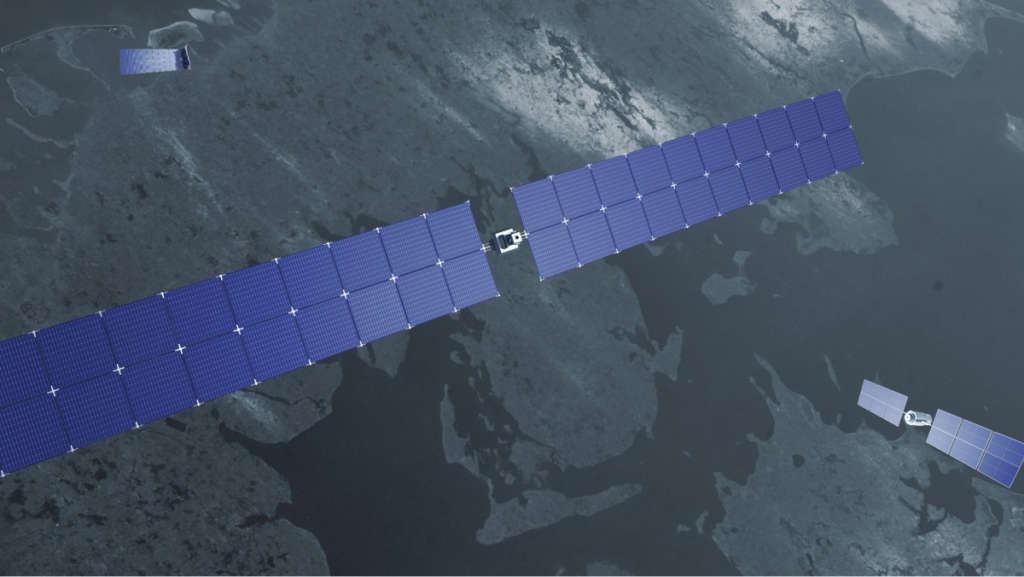
The startup’s solution is called TILES—modular, 1-meter-by-1-meter server racks that integrate solar panels and processors into a single, centimeter-thick unit. By sandwiching high-powered chips against a passive heat spreader, Sophia claims its design can achieve 92% energy efficiency, meaning nearly all generated power goes directly to computation rather than being lost to cooling overhead.
“Traditional satellites waste a huge amount of energy just trying to stay cool,” explained CEO Rob DeMillo. “Our approach flips that equation. The thin form factor allows heat to radiate directly into space, no fans, no pumps, no moving parts.”
A Bold Vision for the 2030s
Sophia’s ambitions extend far beyond experimental payloads. By the early 2030s, the company envisions assembling massive space data centers—50 meters by 50 meters in size—constructed from thousands of interconnected TILES, capable of delivering 1 megawatt of continuous computing power. That’s enough to run complex AI models, process petabytes of satellite imagery, or support real-time military surveillance networks.
DeMillo argues that competing approaches—such as SpaceX’s proposed laser-linked satellite clusters or Google’s modular space servers—will struggle with efficiency and cost. “If you’re using traditional satellite designs with active cooling, you’re burning half your power just to stay alive,” he said. “We’re building something that scales economically because the physics works in our favor.”
The company plans to validate its technology in two phases: first, extensive ground testing to simulate the thermal and radiation conditions of space; then, a demonstration mission launching aboard an Apex Space satellite bus by late 2027 or early 2028. If successful, Sophia will begin offering its TILES to satellite operators needing onboard compute—ranging from Earth observation firms drowning in sensor data to Pentagon contractors building next-gen missile tracking systems.
“The dirty little secret of the satellite industry is we’ve got all these amazing sensors up there that produce terabytes, or even petabytes, of data every few minutes, and they throw most of it out because they can’t do the computing on board and they can’t get round trip back and forth to the surface fast enough,” DeMillo told TechCrunch.
Why This Matters
The implications of Sophia’s work stretch far beyond satellite operations. Space-based data centers could enable real-time AI inference at the edge of orbit, support autonomous deep-space missions, and even lay the groundwork for interplanetary internet infrastructure. With Nvidia as a key partner, the startup is positioning itself at the intersection of terrestrial AI leadership and the nascent space computing economy.
But challenges remain. Regulatory hurdles for large orbital structures, the technical complexity of managing thousands of synchronized processors, and the sheer cost of launching megastructures into space all loom large. Still, with backing from top-tier investors and a pedigree rooted in NASA-caliber research, Sophia Space is betting that the future of computing isn’t just in the cloud—it’s in the cosmos.
Tags: space data centers, orbital computing, passive cooling, Sophia Space, Nvidia, satellite technology, Caltech, Apex Space, space AI, thermal management, solar power satellites, edge computing, military satellites, Earth observation, interplanetary internet
Viral Phrases:
- “The future of computing isn’t just in the cloud—it’s in the cosmos.”
- “92% energy efficiency: nearly all generated power goes directly to computation.”
- “Space is cold, but there’s no airflow—so how do you cool a supercomputer?”
- “From solar sails to space servers: the unexpected origin of orbital computing.”
- “The dirty little secret of the satellite industry: most data gets thrown away.”
- “1 megawatt of computing power, 50 meters wide, floating in orbit by 2030.”
- “Nvidia’s CEO says space cooling is the next big tech bottleneck.”
- “Caltech’s $100M solar program accidentally invented the space data center.”
- “No fans, no pumps, no moving parts—just pure passive cooling in orbit.”
- “The race to build the first true space-based AI supercomputer has begun.”
,

Leave a Reply
Want to join the discussion?Feel free to contribute!