
GNOME GitLab Redirecting Some Git Traffic To GitHub For Reducing Costs
GNOME Redirects Git Traffic to GitHub to Slash Server Costs Amid Growing Infrastructure Pressures
In a surprising move that has caught the open-source community off guard, GNOME—the venerable Linux desktop environment project—has begun redirecting all Git traffic from its official GitLab instance to GitHub mirrors. This strategic shift, implemented quietly over the past week, represents a significant departure from GNOME’s long-standing commitment to self-hosted infrastructure and has sparked intense discussion across developer forums.
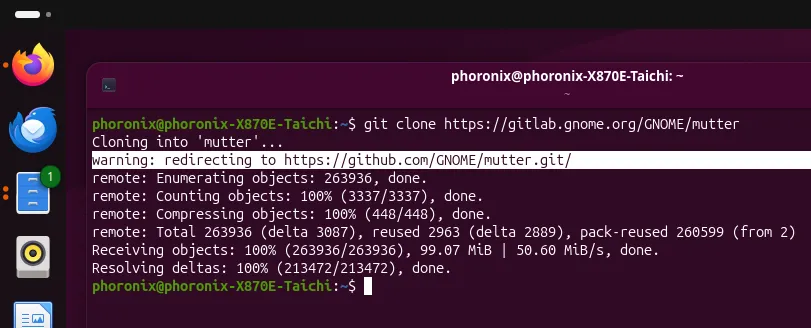
The change manifests when developers attempt to clone GNOME repositories using commands like git clone https://gitlab.gnome.org/GNOME/[repo]. Instead of connecting to GNOME’s own GitLab servers, users are automatically redirected to corresponding repositories on GitHub under the https://github.com/GNOME/[repo] URL structure. This seamless redirection happens transparently, meaning developers may not even realize they’re pulling code from GitHub rather than GNOME’s official infrastructure.
The Cost-Cutting Imperative
According to Andrea Veri from GNOME’s Infrastructure Team, the decision stems from mounting financial pressures. “This change was required due to the significant data transfer costs we are incurring,” Veri explained in an infrastructure issue thread. The team has implemented this as an immediate cost-saving measure while exploring longer-term solutions.
The financial strain appears severe enough that GNOME is willing to redirect users away from their own infrastructure—a move that contradicts the project’s historical emphasis on maintaining control over its development ecosystem. Veri indicated that the team applied “a set of potential mitigations” and would monitor costs throughout February. Should these measures prove insufficient, additional changes are planned to further reduce expenses and potentially eliminate the redirect entirely.
Sophie Herold, writing for GNOME’s official newsletter, confirmed the cost-saving rationale: “As a cost-saving measure, git traffic like git clone https://gitlab.gnome.org/GNOME/[repo] is now redirected to our mirror under https://github.com/GNOME/[repo].” This transparent acknowledgment underscores the financial realities facing even well-established open-source projects.
Community Reaction and Technical Implications
The redirection has generated mixed reactions within the developer community. Some view it as a pragmatic response to real-world infrastructure costs, while others express concern about the precedent it sets for open-source projects relying on proprietary platforms.
From a technical perspective, the redirect maintains functional parity—developers can still access and contribute to GNOME codebases without interruption. GitHub’s robust infrastructure ensures reliable access, potentially even improving clone speeds for some users. However, the shift raises questions about data sovereignty, long-term accessibility, and the growing dependence of open-source projects on commercial platforms.
The Irony of the Timing
The timing of GNOME’s move presents an interesting paradox. While many open-source projects are actively migrating away from GitHub to avoid having their code used for AI training purposes—particularly to prevent inclusion in GitHub Copilot datasets—GNOME is effectively increasing its reliance on the platform. This divergence highlights the complex trade-offs projects face between ideological purity and practical necessities.
Projects like Genode OS have publicly announced their migration away from GitHub, citing concerns about AI training and data privacy. GNOME’s decision to redirect more traffic to GitHub, even temporarily, stands in stark contrast to this broader trend within the open-source ecosystem.
Infrastructure Challenges in the Open-Source World
GNOME’s situation illuminates a broader challenge facing open-source projects: the escalating costs of maintaining robust infrastructure. As projects grow in popularity, so too does the bandwidth required to serve developers worldwide. For a project of GNOME’s scale, with thousands of daily clones and continuous integration builds, these costs can quickly become prohibitive.
The redirect to GitHub mirrors represents a clever workaround—leveraging GitHub’s massive infrastructure investment without abandoning GNOME’s GitLab instance entirely. This hybrid approach allows GNOME to maintain its official infrastructure while offloading the most bandwidth-intensive operations to a platform designed to handle massive scale.
What This Means for GNOME’s Future
The infrastructure team’s monitoring period throughout February will be crucial in determining GNOME’s long-term strategy. If the cost savings prove significant and sustainable, GNOME may continue this arrangement indefinitely. Alternatively, if the redirect fails to address the underlying financial pressures, more drastic measures may be necessary.
Potential future scenarios include negotiating better rates with GitLab’s parent company, implementing more aggressive caching strategies, or even a partial migration to GitHub for certain services while maintaining core infrastructure in-house. The flexibility demonstrated by this redirect suggests GNOME remains open to various solutions as it navigates these challenges.
Developer Guidance and Workarounds
For developers working with GNOME repositories, the redirect requires no immediate action. All existing workflows continue to function normally, though users may notice slightly different clone URLs in their terminal output. Those who prefer to bypass the redirect and clone directly from GNOME’s GitLab can do so by using the SSH protocol (git clone [email protected]:GNOME/[repo]) or by explicitly specifying the GitLab URL in their clone commands.
Broader Implications for Open-Source Sustainability
GNOME’s cost-cutting measure raises important questions about the sustainability of open-source infrastructure. As bandwidth costs continue to rise and projects scale globally, more organizations may face similar difficult choices between maintaining ideological purity and ensuring practical viability.
This situation may prompt renewed discussions about alternative funding models for open-source infrastructure, including increased corporate sponsorship, community-funded bandwidth pools, or the development of more cost-effective self-hosted solutions. GNOME’s experience could serve as a case study for other projects grappling with similar challenges.
The Human Element
Behind these technical decisions are dedicated volunteers and professionals working to ensure GNOME’s continued success. The infrastructure team’s willingness to implement such a significant change reflects their commitment to the project’s long-term health, even when it means making unpopular short-term decisions.
As the open-source community watches GNOME’s experiment unfold, the coming weeks will reveal whether this pragmatic approach to infrastructure management represents a temporary fix or a glimpse into the future of how major open-source projects might balance ideals with economic realities.
Tags: #GNOME #GitLab #GitHub #OpenSource #Infrastructure #CostCutting #Linux #DesktopEnvironment #DeveloperTools #BandwidthCosts #TechNews #SoftwareDevelopment #FreeSoftware #Community #Innovation
Viral Phrases: “GNOME redirects Git traffic to GitHub,” “open-source projects face infrastructure crisis,” “bandwidth costs forcing tough choices,” “GitHub mirrors as cost-saving measure,” “the irony of moving to GitHub,” “sustainability challenges in open-source,” “developer infrastructure under pressure,” “pragmatic solutions for open-source,” “the future of self-hosted services,” “balancing ideals with economics”
,


Leave a Reply
Want to join the discussion?Feel free to contribute!