
The Air Force’s new ICBM is nearly ready to fly, but there’s nowhere to put it
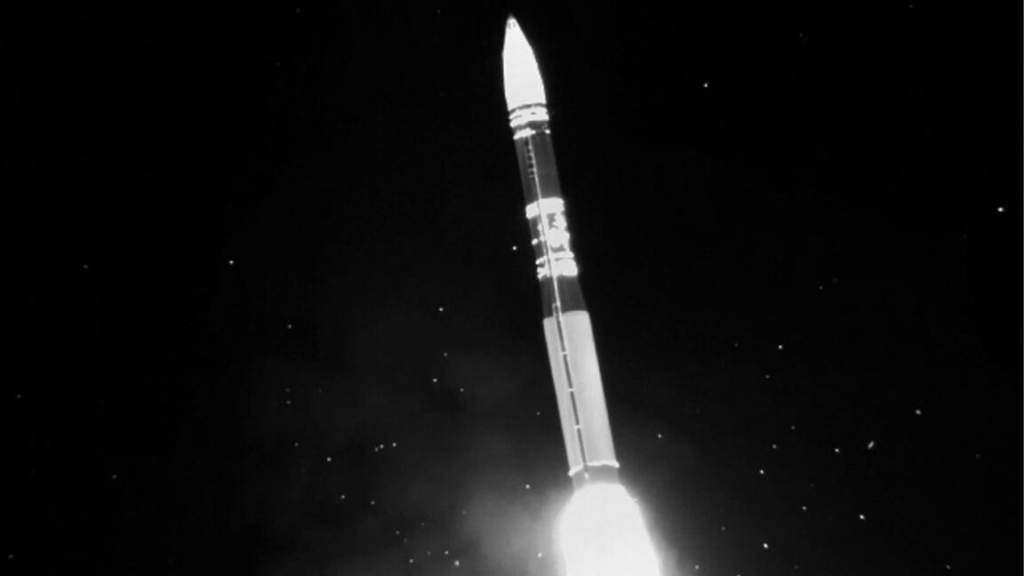
Air Force Pushes Forward with $141 Billion Sentinel ICBM Program Amid Growing Global Threats
In a bold move signaling the United States’ commitment to maintaining nuclear deterrence in an increasingly complex global security environment, the U.S. Air Force is accelerating development of its next-generation intercontinental ballistic missile (ICBM) system, Sentinel. The program, already projected to cost $141 billion, represents not just a technological upgrade but a complete reimagining of America’s land-based nuclear deterrent infrastructure.
A System at the End of Its Lifespan
“We’ve gotten all the capability that we can out of the Minuteman,” declared Gen. Stephen “S.L.” Davis, commander of Air Force Global Strike Command, in a recent address that underscored the urgency behind the Sentinel program. The venerable Minuteman III, which has served as the backbone of America’s nuclear triad since the 1970s, is increasingly vulnerable to modern threats that have “evolved significantly” since its initial deployment during the Cold War.
The aging Minuteman system, while reliable for decades, faces mounting challenges from advanced adversary capabilities including hypersonic missiles, sophisticated electronic warfare systems, and improved anti-satellite technologies. These developments have created what military strategists describe as a “survivability gap” that threatens the credibility of America’s nuclear deterrent.
From Retrofit to Rebuild: A Massive Infrastructure Overhaul
What began as a plan to modernize existing facilities has evolved into one of the most ambitious civil engineering projects in American history. The Air Force’s original strategy called for adapting current Minuteman III silos to accommodate the new Sentinel missiles. However, engineers quickly discovered that retrofitting these aging facilities would prove both prohibitively expensive and time-consuming.
“The cost and schedule to modify the aging Minuteman facilities proved unsustainable,” military officials revealed, marking a pivotal shift in the program’s trajectory. This revelation has transformed Sentinel from a missile replacement program into a comprehensive infrastructure reconstruction effort spanning five states.
The Scale of Reconstruction
The geographic scope of the project is staggering. The Air Force, collaborating with defense contractors and the U.S. Army Corps of Engineers, will excavate hundreds of new missile silos across Colorado, Montana, Nebraska, North Dakota, and Wyoming. This massive undertaking will reshape the rural landscapes of America’s heartland in ways not seen since the original Minuteman deployment in the 1960s.
The new infrastructure package includes 24 state-of-the-art forward launch centers, three centralized wing command centers, and an unprecedented 5,000 miles of fiber-optic cabling to interconnect the entire system. This communications network represents a quantum leap in command and control capabilities, providing hardened, redundant pathways for launch orders and system monitoring.
A Historic Undertaking
Military historians note that the United States hasn’t constructed new missile silos since the late 1960s, and the nation hasn’t developed an entirely new ICBM since the 1980s. The technical expertise required for such construction has atrophied over decades, presenting unique challenges for both military planners and contractors.
“Sentinel represents the largest U.S. government civil works project since the completion of the interstate highway system,” wrote Sen. Roger Wicker (R-Mississippi) and Sen. Deb Fischer (R-Nebraska) in a 2024 Wall Street Journal op-ed. They emphasized that the program constitutes “the most complex acquisition program the Air Force has ever undertaken,” highlighting the unprecedented nature of this modernization effort.
Budgetary Uncertainty and Program Restructuring
The $141 billion price tag, already eye-watering, is acknowledged to be outdated. Gen. Dale White, the Pentagon’s director of critical major weapons systems, revealed Wednesday that the Defense Department plans to complete a comprehensive “restructuring” of the Sentinel program by year’s end. Only after this restructuring will an updated budget figure be made public.
This budgetary opacity has raised concerns among defense analysts and congressional watchdogs, who worry about potential cost overruns and schedule delays that have plagued other major defense acquisition programs. The complexity of simultaneously developing new missile technology while constructing entirely new launch facilities multiplies the traditional risks associated with major defense programs.
Strategic Implications
The Sentinel program arrives at a critical juncture in great power competition. Russia continues to modernize its nuclear forces, China is rapidly expanding its nuclear arsenal, and North Korea maintains its outlaw nuclear status. In this context, American military leaders argue that maintaining a credible land-based deterrent is essential for strategic stability.
The new system promises enhanced accuracy, improved reliability, and greater resistance to modern threats. Advanced penetration aids and potential hypersonic capabilities under consideration would ensure that Sentinel missiles could reach their targets even in high-threat environments. Additionally, the new command and control architecture would provide improved decision-making tools for military leadership during crisis situations.
Timeline and Challenges Ahead
While the Air Force has set ambitious goals for Sentinel deployment, significant hurdles remain. The program must navigate complex environmental regulations, address concerns from local communities in affected states, and overcome the technical challenges of large-scale infrastructure construction in remote areas.
The first test flights of prototype Sentinel missiles are expected in the early 2030s, with initial operational capability targeted for the mid-2030s. However, given the program’s complexity and the military’s track record with major acquisition programs, many analysts expect delays and cost increases.
Conclusion
The Sentinel ICBM program represents a fundamental bet on America’s future nuclear deterrence strategy. At a time of rising global tensions and advancing adversary capabilities, the United States is investing unprecedented resources to ensure its land-based nuclear forces remain credible and effective. Whether this massive investment will deliver the promised capabilities on time and on budget remains one of the most consequential questions in American defense planning for the coming decade.
As construction crews prepare to break ground on new missile silos across the American West, and as engineers work to perfect the next generation of nuclear delivery systems, the Sentinel program stands as a testament to the enduring importance of nuclear deterrence in the 21st century—and the extraordinary costs, both financial and political, required to maintain it.
ICBM modernization, nuclear deterrence, Sentinel missile, Minuteman replacement, U.S. Air Force Global Strike Command, missile silo construction, strategic weapons systems, defense acquisition, nuclear triad, intercontinental ballistic missile, military infrastructure, great power competition, nuclear modernization, defense spending, national security, military technology, missile defense, strategic deterrence, nuclear capabilities, military engineering, civil works project, defense budget, nuclear arsenal, military readiness, strategic forces, missile technology, defense contractors, Army Corps of Engineers, nuclear strategy, military procurement, strategic stability, hypersonic weapons, command and control systems, nuclear forces, military construction, defense industry, strategic competition, nuclear weapons, military modernization, defense policy, missile development, strategic deterrence, military infrastructure, nuclear triad modernization, defense spending, military technology, missile systems, strategic forces, nuclear capabilities, military readiness, defense contractors, military engineering, civil works project, defense budget, nuclear arsenal, military procurement, strategic stability, hypersonic weapons, command and control systems, nuclear forces, military construction, defense industry, strategic competition, nuclear weapons, military modernization, defense policy, missile development
,


Leave a Reply
Want to join the discussion?Feel free to contribute!