
A Dish of Neurons Playing DOOM Is the Wildest Thing I’ve Seen in Ages
Neurons in a Dish Just Played Doom—And They’re Getting Better
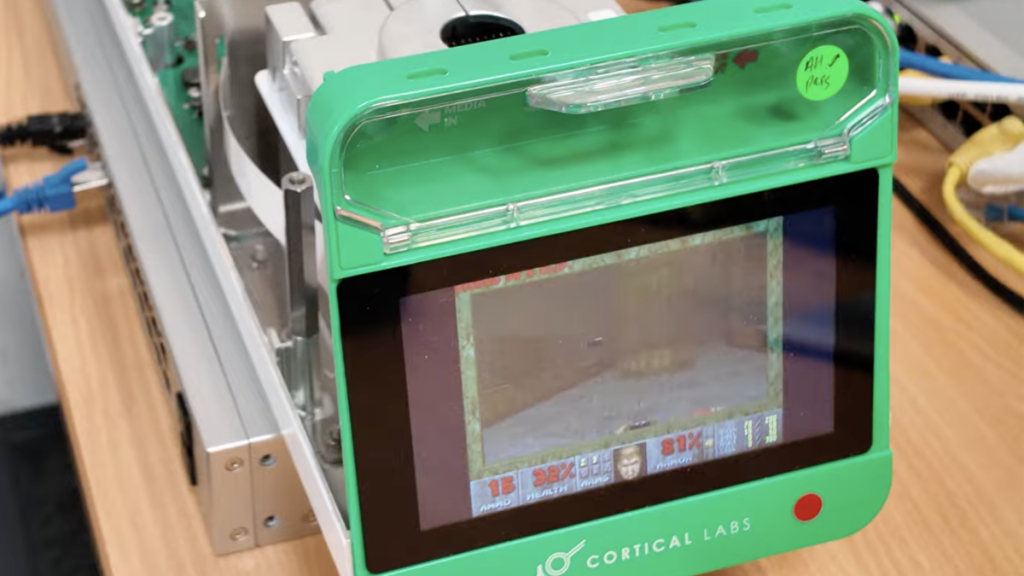
A couple of years ago, the tech world collectively did a double-take when Cortical Labs unveiled a video of a Petri dish full of human neurons playing a simplified version of Pong. Fast-forward to today, and those same neurons have leveled up—literally. Cortical Labs has now demonstrated that a culture of 200,000 human neurons mounted on a microchip can not only run Doom, but actually play it, learning and adapting as they go.
The setup is as mind-bending as it sounds. The company’s CL-1 neural computing system houses these neurons on a multi-electrode array—a kind of biological circuit board where the organic and the electronic meet. In the slickly produced demo, the neurons aren’t just passively running the game; they’re actively controlling it. On-screen data is translated into patterns of electrical stimuli, which are fed to the neurons. In response, the neurons fire their own signals, which are then mapped to in-game actions: shoot, move left, move right. It’s a closed loop of biological computation that feels ripped straight from the pages of a science fiction novel.
The visual contrast is striking. Microscope images reveal intricate, organic webs of neurons winding around the crisp, straight lines of silicon circuitry. It’s a surreal blend of the natural and the artificial, a glimpse into a future where biology and technology are no longer separate domains but intertwined partners.
But here’s where it gets even more fascinating: these neurons are learning. Right now, their gameplay is rudimentary—imagine a complete beginner who’s never touched a keyboard. But given the remarkable plasticity of neural networks, there’s every reason to believe they’ll improve over time. Just as our own brains adapt and refine their responses through experience, these dish-bound neurons could become surprisingly adept at navigating Doom‘s pixelated corridors and blasting its pixelated demons.
Of course, there’s a twist. The neurons aren’t playing the original Doom; they’re playing Freedoom, an open-source game that runs on the same engine but uses different assets. While Freedoom is a perfectly respectable homage, it lacks the iconic demons and weapons that made Doom a cultural touchstone. It’s a small but telling detail—one that hints at the legal and creative challenges of blending biology, computing, and pop culture.
This breakthrough raises a host of questions, both thrilling and troubling. Who do these neurons belong to? What are the ethical implications of using human cells in this way? Could we see a future where every AI-powered game console contains neurons from a single donor, echoing the story of Henrietta Lacks? And what about the potential for misuse—could these biological processors end up powering everything from cutting-edge research to, well, less savory applications?
Cortical Labs is leaning into the collaborative potential of its technology with the launch of the “Cortical Cloud,” a platform that allows developers worldwide to experiment with the CL-1 via a Python-based API. It’s an ambitious move, one that could democratize access to biological computing. But it also opens the door to unpredictable—and perhaps uncomfortable—uses.
As we stand on the brink of this new frontier, it’s hard not to feel a mix of awe and unease. The idea of neurons learning to play video games is both exhilarating and a little unnerving. It’s a reminder that the line between biology and technology is blurring, and that the future may be stranger—and more organic—than we ever imagined.
Tags:
Cortical Labs, CL-1 neural computing, human neurons, Doom, Freedoom, multi-electrode array, biological computing, neural networks, AI gaming, Cortical Cloud, Python API, Henrietta Lacks, ethical AI, sci-fi tech, brain in a dish, neuron learning, organic circuits, future of computing
Viral Sentences:
- Neurons in a dish just played Doom—and they’re getting better.
- Meet the 200,000 human neurons that can shoot, move, and learn.
- This is Pong on steroids—literally.
- The future of gaming is alive, and it’s in a Petri dish.
- Your next gaming console might have a brain.
- Who owns the neurons that just beat your high score?
- Welcome to the age of biological computing.
- These neurons are learning to play Doom—what’s next?
- The line between biology and tech just disappeared.
- This is the most mind-bending gaming demo you’ll see all year.
,


Leave a Reply
Want to join the discussion?Feel free to contribute!