
Can Robots Feel Pain? This New Artificial Skin Makes It Possible
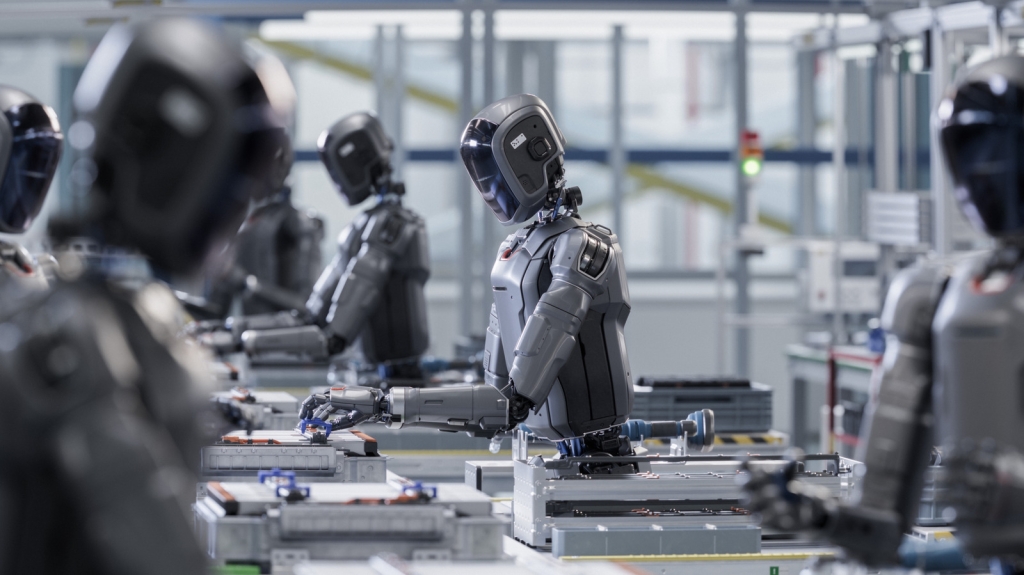
Can Robots Feel Pain? This New Artificial Skin Makes It Possible
In a groundbreaking leap toward truly intelligent machines, researchers at City University of Hong Kong have unveiled a revolutionary artificial skin that allows robots to actively perceive pain and injury—without actually experiencing suffering like humans do. This neuromorphic robotic electronic skin (NRE-skin) is a game-changer, pushing the boundaries of robotics and artificial intelligence in ways that could redefine how machines interact with the physical world.
The study, titled “A neuromorphic robotic electronic skin with active pain and injury perception,” was published in the prestigious Proceedings of the National Academy of Sciences (PNAS) and represents a significant milestone in the evolution of robotic sensing. Unlike traditional electronic skins that merely detect pressure or temperature, this new technology mimics the human nervous system, enabling robots to respond to escalating or persistent pressure in a way that simulates pain perception.
How Does It Work?
At its core, the NRE-skin operates like a simplified nervous system. Each pressure sensor generates electrical pulses, with the frequency of these pulses increasing as pressure intensifies. For example, a light touch produces low-frequency pulses, while a strong impact generates high-frequency pulses—mirroring how human nerves react to stimuli. This design allows the robot to distinguish between harmless contact and potentially damaging force.
The skin’s layered circuit architecture processes these impulses locally, reducing the need for constant central processing. A modulation network embeds location information into each pulse, a signal integrator collects the data, and a dedicated “pain center” monitors the pressure. If the pressure exceeds a threshold or persists for too long, the pain signal fires, triggering a reflex-like response. This means the robot can instinctively pull away from harmful stimuli without waiting for instructions from a central processor.
Why Is This a Breakthrough?
The implications of this technology are profound. Traditional electronic skins consume significant power and generate vast amounts of raw data, making them inefficient for real-world applications. In contrast, the NRE-skin remains dormant when not in use, consuming only 2.5 mW when idle and 5.6 mW under heavy contact. This is a dramatic improvement over current e-skins, which consume around 118 mW continuously.
Additionally, the computational load is drastically reduced because only pulse events are processed, not full sensor frames. This efficiency makes the NRE-skin ideal for applications where power and processing resources are limited, such as in autonomous robots or wearable devices.
Potential Applications
While the technology is still in the research phase and no commercial products have incorporated it yet, its potential applications are vast. The NRE-skin is designed to be physically flexible, modular, and magnetically dockable, allowing companies to apply it to specific parts of a robot that require tactile feedback. This could revolutionize industries ranging from manufacturing to healthcare, where robots are increasingly being used for dull, dangerous, and repetitive tasks.
For instance, in a factory setting, a robot equipped with NRE-skin could detect when it’s being subjected to excessive force and adjust its actions to prevent damage to itself or its surroundings. In healthcare, such technology could enable robots to handle delicate tasks, such as assisting patients or performing surgeries, with greater precision and care.
The Future of Robotics
As robots become more integrated into our daily lives, the ability to perceive and respond to their environment in a nuanced way will be crucial. This technology brings us one step closer to creating machines that can operate autonomously and safely in complex, dynamic environments. However, it’s important to note that while robots may be able to “sense” pain, they won’t experience it in the way humans do. The goal is not to make robots suffer but to enhance their awareness and responsiveness.
In a world where robots are expected to take on increasingly sophisticated roles, from running errands to performing human chores, this kind of sensory awareness could be a game-changer. It’s a testament to how far we’ve come in the field of robotics and a glimpse into the exciting possibilities that lie ahead.
Tags: #Robotics #ArtificialIntelligence #Innovation #TechBreakthrough #FutureTech #PainPerception #NeuromorphicEngineering #SmartRobots #TechNews #ScienceAndTechnology
Viral Phrases:
- “Robots that can feel pain? This is next-level tech!”
- “The future of robotics is here, and it’s smarter than ever.”
- “Imagine a robot that knows when it’s in danger—this is it!”
- “Science fiction is becoming science fact.”
- “This could change everything we know about robots.”
- “The line between human and machine is blurring.”
- “Pain-sensing robots: the next big thing in AI?”
- “From factories to hospitals, this tech could revolutionize industries.”
- “Robots are getting smarter, and it’s both exciting and terrifying.”
- “The future is now, and it’s full of possibilities.”
,


Leave a Reply
Want to join the discussion?Feel free to contribute!