
Photons that aren’t actually there influence superconductivity
Virtual Photons Could Be Making Superconductors Worse, New Study Suggests
In a fascinating twist that blends quantum weirdness with practical physics, researchers have discovered that virtual photons—ghostly particles that don’t technically exist but still exert real effects—may be interfering with the performance of superconductors. While the headline might suggest a breakthrough in room-temperature superconductivity, the real story here is far more intriguing: it’s about how the quantum vacuum itself can subtly sabotage one of the most exotic states of matter.
The Quantum Field Theory Foundation
To understand this discovery, we need to dive into the strange world of quantum field theory. Even in a perfect vacuum, empty space isn’t truly empty. It’s filled with quantum fields that permeate all of reality, governing the behavior of particles and forces. These fields can exist in various energy states, and when they’re excited, they manifest as particles—like photons, the fundamental particles of light.
But not all photons are created equal. While we can easily detect real photons—like those emitted by a laser and absorbed by a detector—there’s another category of photons that are far more elusive: virtual photons. These aren’t particles in the traditional sense; they don’t exist long enough to be directly observed. Instead, they act as messengers, mediating the electromagnetic force between charged particles. Think of them as the invisible couriers of the quantum world, delivering force without ever being seen.
The Casimir Effect and Vacuum Fluctuations
One of the most mind-bending consequences of virtual photons is the Casimir effect. When two closely spaced metal plates are placed in a vacuum, they experience a tiny but measurable force pushing them together. This happens because the space between the plates restricts the types of virtual photons that can exist there, creating a pressure difference. Even though no real photons are present, the vacuum itself is teeming with activity.
This brings us to the heart of the new research: scientists have found a way to harness these virtual photons to influence the behavior of superconductors. Specifically, they’ve shown that virtual photons can disrupt the delicate quantum state that allows superconductors to conduct electricity with zero resistance.
Boron Nitride: The Key Material
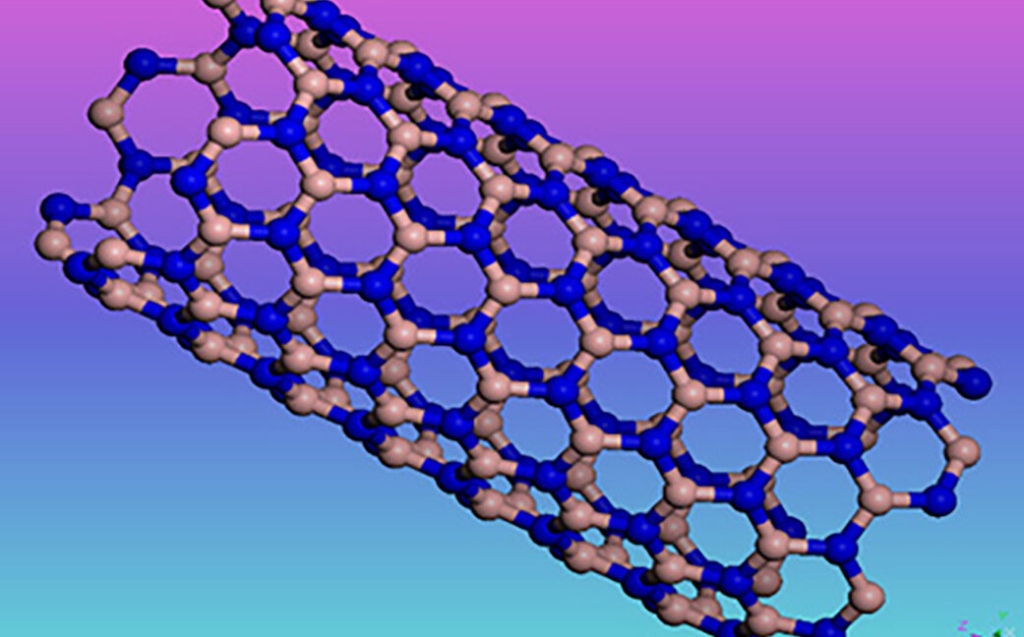
Central to this discovery is boron nitride, a material with a structure similar to graphene. Boron nitride forms sheets of interlinked hexagonal rings, and when stacked together, these sheets create a layered bulk material. What makes boron nitride special is how it interacts with light. When light travels perpendicular to the sheets, it gets absorbed or scattered. But when it moves along the plane of the sheets, it can propagate through the space between the boron and nitrogen atoms.
This unique property makes boron nitride an ideal playground for studying the effects of virtual photons. By manipulating the material’s structure and the surrounding electromagnetic environment, researchers were able to observe how virtual photons could interfere with superconductivity.
How Virtual Photons Affect Superconductors
Superconductors rely on a quantum state called Cooper pairing, where electrons pair up and move through the material without resistance. This state is incredibly fragile and can be disrupted by even the slightest disturbance. The researchers found that virtual photons, by interacting with the electromagnetic fields in the material, could introduce fluctuations that break these Cooper pairs apart.
In essence, the virtual photons act like tiny saboteurs, subtly undermining the superconducting state. While the effect is small, it’s measurable and provides new insights into the quantum mechanics of superconductors.
Why This Matters
At first glance, this might seem like a purely academic exercise. After all, if virtual photons are making superconductors worse, why should we care? But the implications go far beyond this specific finding. By studying how virtual photons interact with superconductors, scientists can gain a deeper understanding of the quantum vacuum and its role in material behavior.
This could eventually lead to new ways to control and manipulate superconductors, potentially paving the way for more efficient energy transmission, faster quantum computers, and other technological breakthroughs. It’s a reminder that even the most abstract concepts in quantum physics can have real-world consequences.
The Road Ahead
While this discovery is exciting, it’s just the beginning. The researchers acknowledge that it will take time to fully understand the implications of their findings and to explore potential applications. But one thing is clear: the quantum vacuum is far from empty, and its hidden activity could hold the key to unlocking new frontiers in physics and technology.
So, the next time you think about superconductors, remember that even the tiniest, most elusive particles in the universe—the ones that don’t technically exist—might be playing a role in shaping their behavior. It’s a testament to the weird and wonderful nature of quantum mechanics, where even the impossible can have a profound impact on the real world.
Tags: Quantum Physics, Superconductivity, Virtual Photons, Boron Nitride, Casimir Effect, Quantum Field Theory, Cooper Pairs, Electromagnetic Fields, Material Science, Quantum Mechanics, Vacuum Fluctuations, Graphene, Energy Transmission, Quantum Computing, Scientific Discovery
Viral Sentences:
- “Ghost particles that don’t exist are sabotaging superconductors—welcome to the quantum world!”
- “The vacuum isn’t empty—it’s full of invisible saboteurs!”
- “Virtual photons: the invisible force messing with your superconductor.”
- “Boron nitride is the new playground for quantum weirdness.”
- “Even the quantum vacuum has a dark side.”
- “Superconductors just got a little less super—thanks to virtual photons.”
- “The Casimir effect strikes again, this time in superconductors.”
- “Quantum field theory just got a whole lot more interesting.”
- “Cooper pairs beware: virtual photons are on the prowl.”
- “The future of superconductivity might depend on understanding the quantum vacuum.”
,


Leave a Reply
Want to join the discussion?Feel free to contribute!