
Vibe coding with overeager AI: Lessons learned from treating Google AI Studio like a teammate
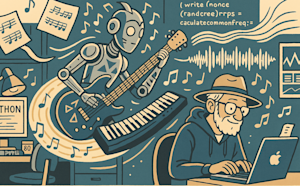
Vibe Coding in Production: How I Built a MarTech App with AI—and Why It’s Not as Easy as It Sounds
In the world of software development, the rise of generative AI has sparked a heated debate: Is AI a helpful sidekick or the new frontman of coding? Most discussions position AI as a backup singer—great for brainstorming, sketching early code structures, and exploring new directions quickly. But when it comes to production systems, where reliability, testability, and operational stability are non-negotiable, caution is often advised.
However, my latest project taught me that achieving production-quality work with an AI assistant requires more than just going with the flow. I set out with a clear and ambitious goal: to build an entire production-ready business application by directing an AI inside a vibe coding environment—without writing a single line of code myself. This project would test whether AI-guided development could deliver real, operational software when paired with deliberate human oversight.
The application itself explored a new category of MarTech that I call promotional marketing intelligence. It would integrate econometric modeling, context-aware AI planning, privacy-first data handling, and operational workflows designed to reduce organizational risk.
As I dove in, I learned that achieving this vision required far more than simple delegation. Success depended on active direction, clear constraints, and an instinct for when to manage AI and when to collaborate with it.
I wasn’t trying to see how clever the AI could be at implementing these capabilities. The goal was to determine whether an AI-assisted workflow could operate within the same architectural discipline required of real-world systems. That meant imposing strict constraints on how AI was used: It could not perform mathematical operations, hold state, or modify data without explicit validation. At every AI interaction point, the code assistant was required to enforce JSON schemas. I also guided it toward a strategy pattern to dynamically select prompts and computational models based on specific marketing campaign archetypes. Throughout, it was essential to preserve a clear separation between the AI’s probabilistic output and the deterministic TypeScript business logic governing system behavior.
I started the project with a clear plan to approach it as a product owner. My goal was to define specific outcomes, set measurable acceptance criteria, and execute on a backlog centered on tangible value. Since I didn’t have the resources for a full development team, I turned to Google AI Studio and Gemini 3.0 Pro, assigning them the roles a human team might normally fill. These choices marked the start of my first real experiment in vibe coding, where I’d describe intent, review what the
,

Leave a Reply
Want to join the discussion?Feel free to contribute!