
Don’t buy a new phone just for gaming, last-gen flagships still perform just as well
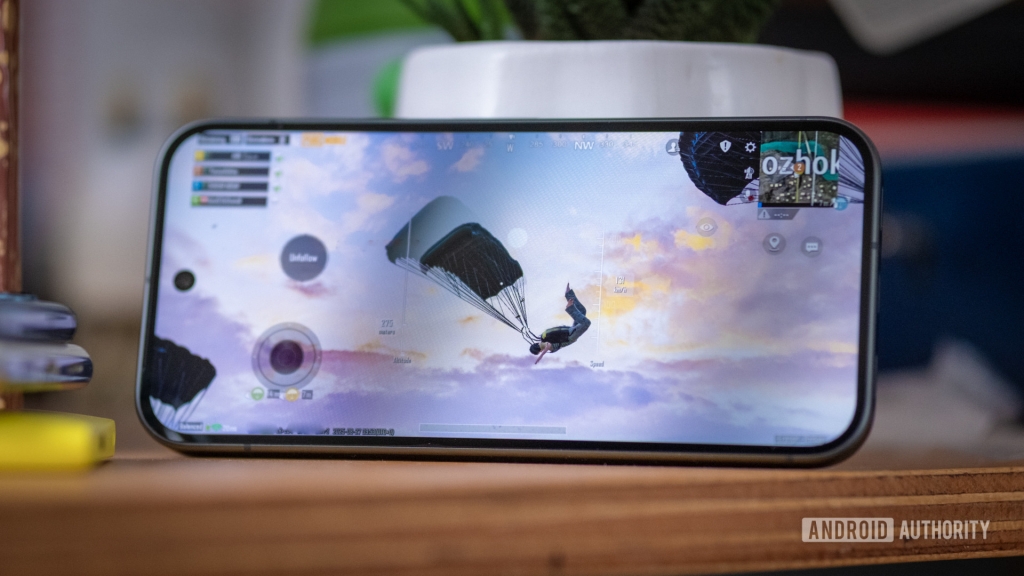
Snapdragon 8 Elite Gen 5 vs Snapdragon 8 Elite: Real-World Gaming Performance Test
The latest flagship Qualcomm Snapdragon 8 Elite Gen 5 chipset is blazing fast in benchmarks, and with more smartphones equipped with the chip now hitting the market, we’re starting to see whether these purported gains hold up in real-world workloads.
Looking specifically at graphics and gaming, Qualcomm claims 23% better graphics performance and up to 20% lower power consumption versus last year. Benchmark results back this up; this year’s flagship phones fly past their predecessors, suggesting a truly next-gen experience even over models that are only a year old. However, some phones have proven pretty hot under pressure, leaving many of us wondering if we’re hitting the ceiling of graphics performance in a compact mobile form factor.
To see if next-gen performance is more than just numbers on theoretical tests, I grabbed the new Xiaomi 17 Ultra, complete with the 8 Elite Gen 5, and last year’s 15 Ultra with the original Snapdragon 8 Elite for a within-brand comparison. I updated both phones to their latest versions and started installing some of Android’s most popular games.
High-end gaming test
To put the phones through their paces, I’ve stuck with a small selection of popular games that can still put handsets through some serious stress. We have COD Mobile Battle Royal mode with medium graphics to unlock the 120fps potential ceiling, Asphalt Legends with maxed-out bells and whistles and a 120fps cap (up from 60fps on some older phones), and Genshin Impact at maximum settings with a lower 60fps limit but a wider open-world environment to stress the GPU.
Starting with COD Mobile, both phones can comfortably hit 120fps without issue. While there are occasional microstutters on both models, they only dip to 80 fps at worst and are spaced out, so they are nothing to be concerned about. That said, I did witness sustained drops for several seconds on both models. This appears to be a background-, temperature-, or power-throttling feature, as it happens consistently once the phones reach 40°C. Thankfully, that’s as hot as the phones get, and that takes a couple of back-to-back rounds to reach, so about 20-30 minutes of playtime. Both models are equally vulnerable to temperature throttling when running demanding workloads, but neither heats up particularly quickly in this game.
Even with 120fps caps, the difference between the Elite and Elite Gen 5 is small.
Genshin Impact also shows the two processors neck and neck, easily handling 60 fps with graphics cranked up to maximum. Neither phone becomes too hot here either. Both peak at a reasonable 35°C, suggesting a relatively easy workload, meaning it’s unlikely either would throttle after extended play.
It’s not until we get to Asphalt Legends that we see a discrepancy. I triple checked that I set both phones to 120fps in the settings, but the Xiaomi 15 Ultra is still capped at 60fps. This seems arbitrary, as the phone averages 60fps and could definitely hit a higher frame rate if allowed to. That said, the lower 5th percentile of frames suggests the older chip is a little less capable here. It’s not unusual for games to lock graphical features to certain chipsets, and sometimes this cuts both ways, with cutting-edge chips missing out initially. So I don’t want to bash the Snapdragon 8 Elite too hard here, as this is uncommon for flagship chips, but it’s worth noting that limited options do happen.
Emulation performance test
With top-tier Android games producing very similar frame rates, I turned to emulation tests to try and pry them apart. I resorted to the demanding PlayStation 2 emulator NetherSX, playing Need For Speed: Most Wanted at 3x native resolution, along with Dolphin and Mario Kart Wii at 4x native resolution, both using OpenGL (which is typically safer but a bit slower than Vulkan).
Drivers can be more of a factor here than Android games, so that’s worth keeping in mind before we dive in. However, it’s been several months since the 8 Elite Gen 5 arrived on the scene, so it should be performing pretty well by now. Or at least you’d think — I had to disable multi-core speed up in Mario Kart Wii on the Xiaomi 17 Ultra to avoid graphics synchronization errors.
Future 8 Elite Gen 5 drivers might help with emulation, but performance is very close today.
Thankfully, that didn’t appear to affect performance. Both phones come pretty close to locking a rock-solid 60 fps in both titles. The two have fairly robust 5th percentile frame rates as well, indicating little in the way of regular jank or dropped frames. However, looking at the full timeline, the Xiaomi 17 Ultra and its Snapdragon 8 Elite Gen 5 are marginally smoother, though I struggled to notice any meaningful difference during play.
One thing that the 8 Elite Gen 5 has going for it is lower power consumption. It averaged 5.4W in NFS and 5.0W in Mario Kart, compared to 7.6W and 5.6W for the last-gen phone. There are some variables here, of course, but this is quite a significant discrepancy, suggesting the newer phone has to work less hard to achieve the same frame rates. However, both phones also saw extreme power draw above 12W that coincided with very rare, short, but noticeable CPU spikes. It’s not clear to me that these are directly related to gaming, a background Xiaomi process, or something else altogether. I’ll save drawing too many conclusions here.
Should you buy a next-gen phone for gaming?
Overall, then, there’s very little performance difference between the Xiaomi 17 Ultra and its Snapdragon 8 Elite Gen 5 processor and last year’s Xiaomi 15 Ultra and its Snapdragon 8 Elite when it comes to popular Android games and emulators. Granted, there are a few edge cases where some games support different features or settings, and some emulator options may need to be tweaked slightly, but overall, you’ll see very similar frame rates on either model.
While few of us would consider upgrading our phones after just a single generation, hopefully this data helps confirm that you don’t even have to jump to the latest handsets to receive essentially equal performance — at least as far as gaming is concerned. You can often pick up last-generation handsets at a fraction of the price of their marginally newer counterparts and still benefit from blisteringly fast, robust frame rates every bit as good as today’s best, and most expensive. It just reinforces my belief that smartphones don’t need more power; they need cheaper chips.
Real-world game tests are closer in performance than benchmarks suggest.
Of course, the Snapdragon 8 Elite Gen 5 gives you a little bit more future-proofing, ensuring you’ll be playing upcoming games at high settings for years to come. There are often other upgrades on offer, such as improved cameras and new AI features, that can still make buying the very best worthwhile. But if you’re in the market for handsets that perform brilliantly and can handle the latest games, well, there’s not a huge amount of difference between this gen and last gen.
Tags: Snapdragon 8 Elite Gen 5, Snapdragon 8 Elite, gaming performance, mobile gaming, Xiaomi 17 Ultra, Xiaomi 15 Ultra, gaming benchmarks, emulation, COD Mobile, Asphalt Legends, Genshin Impact, smartphone gaming, processor comparison
Viral phrases: “Gaming performance test reveals shocking truth,” “Is the latest processor really worth it?” “You don’t need the newest chip for amazing gaming,” “The performance gap that doesn’t exist,” “Why your last year’s phone is still a gaming beast,” “The gaming test that will change your buying decision,” “Benchmark lies exposed in real-world gaming,” “The hidden truth about mobile gaming performance,” “Save money without sacrificing gaming quality,” “The processor upgrade you can skip”
,


Leave a Reply
Want to join the discussion?Feel free to contribute!