
This Is How Big a Telescope Aliens Would Need to See Dinosaurs on Earth
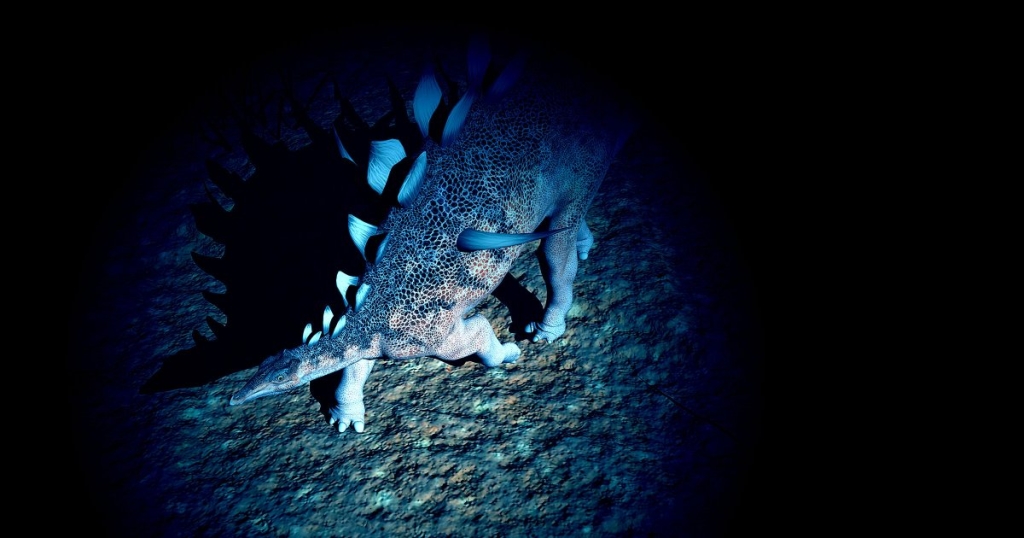
Could Aliens 66 Million Light-Years Away Still See Dinosaurs Roaming Earth?
In a mind-bending exploration of cosmic distances and technological possibilities, astronomer Phil Plait has calculated just how impossible—yet fascinating—it would be for an alien civilization to witness Earth’s prehistoric past from across the galaxy.
Roughly 66 million years ago, a cataclysmic event forever changed our planet’s trajectory. The Chicxulub meteor impact triggered a mass extinction that wiped out approximately 75 percent of all life on Earth, including the vast majority of dinosaur species that had dominated terrestrial ecosystems for over 160 million years. But what if that moment in Earth’s history wasn’t truly lost to time? What if, somewhere in the cosmos, an alien civilization could still witness those magnificent creatures roaming our planet’s surface?
According to Plait’s calculations, published in a thought-provoking column for Scientific American, such a scenario would require technology so advanced it borders on the incomprehensible. The fundamental principle at play is simple: light travels at a finite speed—approximately 186,282 miles per second—meaning that when we observe distant objects in space, we’re essentially looking back in time.
“If aliens were located approximately 66 million light-years from Earth,” Plait explains, “they would theoretically still be able to see dinosaurs roaming the surface of our planet, since that’s how long it would take for light to travel such a distance through space.”
But the practical challenges of actually accomplishing this feat are staggering. Using the Tyrannosaurus rex as his example—a creature measuring approximately 33 feet in length—Plait calculated that such a dinosaur would have an “apparent size of about 10^-21 degrees” when viewed from 66 million light-years away. To put that in perspective, this is far smaller than the smallest detail the human eye can resolve, which is about 0.01 degrees.
To detect such an incredibly tiny object across such vast cosmic distances, Plait applied Dawes’s limit—a formula that defines the maximum theoretical resolving power of a telescope based on its aperture size. The results were, in his words, “dramatically” beyond anything remotely feasible.
“The telescope would need a mirror 3.4 light-years across,” Plait calculated. “That’s a mirror that would span three-quarters the distance to Alpha Centauri!” For context, Alpha Centauri is the closest star system to our own, located about 4.37 light-years away. A mirror of such proportions would be utterly impossible to construct with any known or theoretical materials.
If we assume a mirror thickness of just one millimeter—thinner than a credit card—the mass of such an instrument would be “more than 100 million times the mass of Earth.” To visualize this scale: Earth’s mass is approximately 5.97 × 10^24 kilograms, so we’re talking about a mirror with a mass on the order of 10^32 kilograms. This exceeds the mass of many small stars.
Even highly advanced extraterrestrial civilizations might need to resort to alternative techniques. One possibility is using an array of much smaller telescopes working together as an interferometer, similar to how the Event Horizon Telescope captured humanity’s first image of a black hole. This technique allows multiple telescopes to function as a single instrument with a resolution equivalent to a telescope as large as the distance between the individual components.
However, even this approach presents insurmountable challenges. “We’d still be talking about a billion trillion metric tons of mirror—a decent fraction of the mass of Earth,” Plait noted. The aliens would also need to solve numerous engineering challenges: how to move such an enormous structure, how to track Earth’s position as both planets orbit their respective stars, and how to account for the motion of our entire galaxy as it rotates and moves through the universe.
The light-gathering requirements present another massive hurdle. “From 66 million light-years away, a T. rex is pretty faint,” Plait explains. “At that distance, even the Sun would be too faint to see using something like the Hubble Space Telescope.” The dinosaurs would appear as incredibly dim, tiny points of light against the cosmic background, requiring extraordinary sensitivity to detect.
Our own astronomical achievements provide sobering context for these calculations. NASA’s James Webb Space Telescope has allowed us to peer into the farthest visible reaches of space, observing objects that date to just hundreds of millions of years after the Big Bang, approximately 13 billion years ago. While this represents a much greater distance than 66 million light-years, we’re still nowhere near achieving the resolution needed to make out anything beyond entire galaxy clusters appearing as faint dots in our observations.
The question of whether aliens could spot dinosaurs from across the galaxy is admittedly “somewhat whimsical and fun to fiddle with,” as Plait admits. However, the implications of this thought experiment are profoundly real and relevant to our near future. The calculations reveal the extraordinary technological challenges we would face in our own efforts to study potentially habitable exoplanets.
Even to resolve something as simple as clouds on exoplanets located just ten light-years away—a cosmic stone’s throw compared to 66 million light-years—would require a “telescope array that stretched a few hundred kilometers across.” To put this in perspective, the Large Hadron Collider, the world’s largest particle accelerator, has a circumference of just 27 kilometers.
“We aren’t ready to build that now, but in a few decades, perhaps,” Plait concluded optimistically. “How amazing would it be to see continents on a planet in another star system?”
This thought experiment serves as both a humbling reminder of the vast scales involved in cosmic observation and an inspiring challenge for future astronomers and engineers. While spotting dinosaurs from across the galaxy remains firmly in the realm of science fiction, the pursuit of such knowledge drives technological innovation that could one day allow us to study Earth-like planets around other stars in remarkable detail.
The next time you look up at the night sky, consider this: somewhere out there, light from Earth 66 million years ago is still traveling through space, carrying with it images of creatures that once roamed our planet. Whether any civilization will ever develop the capability to intercept and decode those ancient photons remains one of the great unanswered questions of cosmic exploration.
Tags: aliens, dinosaurs, telescopes, astronomy, extraterrestrial life, cosmic distances, James Webb Space Telescope, exoplanet observation, Phil Plait, scientific american, Chicxulub impact, mass extinction, technological challenges, interferometry, light-years, Dawes’s limit, Event Horizon Telescope, cosmic thought experiment, future technology, space exploration
Viral Sentences:
- “Aliens could theoretically still be watching dinosaurs right now—if they had a telescope bigger than our solar system”
- “The mirror needed to see dinosaurs from 66 million light-years away would weigh more than 100 million Earths”
- “We can see 13 billion years into the past but can’t make out a single dinosaur from ‘just’ 66 million light-years”
- “The ultimate cosmic rewind: what if someone’s watching our planet’s prehistoric past in real-time?”
- “From T. rex to telescope: the mind-bending math of spotting Earth’s ancient giants across the galaxy”
- “James Webb can see the dawn of time but not a dinosaur from yesterday (cosmically speaking)”
- “The aliens are (not) coming: why spotting Earth’s past requires technology beyond imagination”
- “66 million years later: the light from Earth’s dinosaur age is still traveling through space”
- “When whimsy meets astrophysics: the surprisingly serious implications of spotting prehistoric Earth”
- “From Chicxulub to cosmic mirrors: how a meteor impact led to the ultimate telescope thought experiment”
,


Leave a Reply
Want to join the discussion?Feel free to contribute!