
Trump moves to ban Anthropic from the US government
Anthropic’s AI Safety Ethos Sparks High-Stakes Clash with Pentagon Over Military Contracts
In a dramatic escalation of tensions between the tech industry and the U.S. Department of Defense, Anthropic—the AI safety-focused startup founded by Dario Amodei—finds itself at the center of a high-stakes showdown that could reshape how artificial intelligence integrates with national defense operations.
The conflict reached a boiling point this week when Defense Secretary Pete Hegseth met with Anthropic’s CEO for urgent discussions about the company’s contractual restrictions on military use of its AI models. Sources familiar with the meeting, speaking under condition of anonymity, revealed that Hegseth delivered an ultimatum: Anthropic must agree to modify its terms of service to permit “all lawful use” of its technology by Friday, or face potential exclusion from government contracts entirely.
This confrontation represents more than a simple contract dispute—it’s a collision between competing visions of AI’s role in national security. Anthropic, which built its reputation on prioritizing AI safety and ethical development, has maintained contractual language that limits how its models can be deployed, particularly concerning autonomous weapons systems and military applications that could raise ethical concerns.
During the high-level meeting, Hegseth reportedly praised Anthropic’s technological capabilities, emphasizing the Department of Defense’s desire to maintain a working relationship with the company. However, the underlying tension remains palpable: the Pentagon seeks unrestricted access to cutting-edge AI capabilities, while Anthropic continues to advocate for guardrails around potentially dangerous applications.
The dispute has spilled into public view through social media exchanges between officials and company representatives, creating an unusual spectacle of government-contractor conflict playing out in real-time. This transparency, while rare in defense contracting, highlights the fundamental philosophical differences at play.
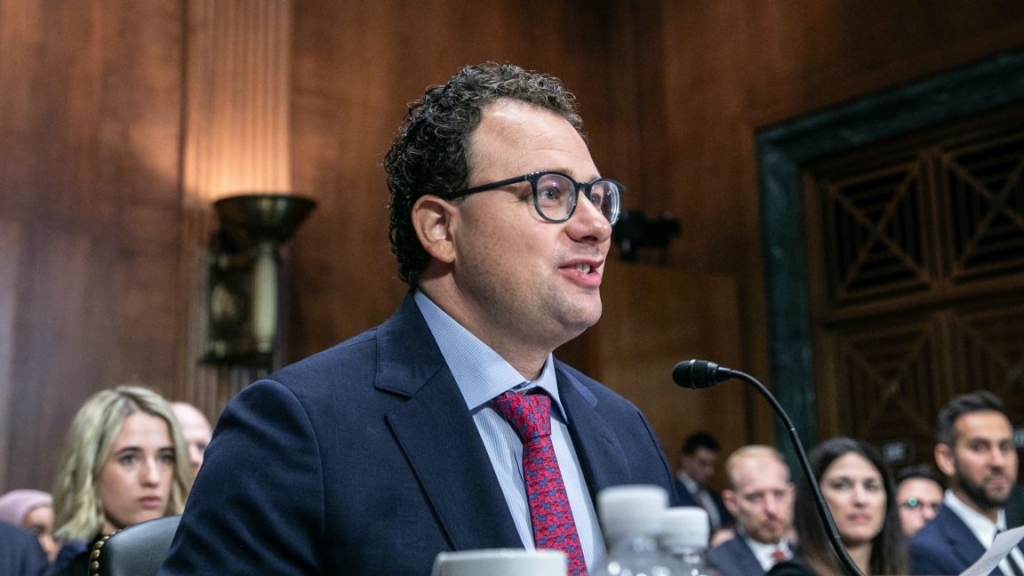
Michael Horowitz, a leading expert on military AI applications and former Deputy Assistant Secretary for Emerging Technologies at the Pentagon, characterizes the conflict as largely theoretical rather than practical. “This is such an unnecessary dispute in my opinion,” Horowitz explains. “It is about theoretical use cases that are not on the table for now.”
Horowitz’s assessment suggests that both parties may be operating from positions of principle rather than addressing immediate operational needs. He notes that Anthropic has already supported all proposed Department of Defense use cases to date, and that there appears to be substantial agreement between the two entities regarding current limitations of AI technology in military contexts.
The roots of this conflict trace back to Anthropic’s founding philosophy. The company emerged from OpenAI in 2021 with a mission centered on developing AI systems that prioritize safety and ethical considerations. This commitment was reinforced in January when Amodei published a widely-discussed blog post examining the risks associated with increasingly powerful AI systems, including autonomous weapons.
In that essay, Amodei acknowledged the legitimate defensive applications of AI-powered weapons while simultaneously warning about their dangers. “These weapons also have legitimate uses in the defense of democracy,” he wrote. “But they are a dangerous weapon to wield.” This nuanced position—recognizing both the utility and peril of advanced military AI—has become increasingly difficult to maintain as geopolitical tensions rise and the demand for technological superiority intensifies.
The current standoff raises fundamental questions about the relationship between Silicon Valley’s ethical frameworks and Washington’s national security imperatives. Should AI companies retain the right to restrict how their technology is used, even when those restrictions might limit government capabilities? Or does the public interest require unfettered access to the most advanced AI tools, regardless of the developers’ concerns?
Industry observers note that Anthropic’s position represents a broader tension within the tech sector about corporate responsibility in the age of powerful AI. While some companies have enthusiastically pursued defense contracts, others—particularly those with roots in AI safety research—have maintained more cautious approaches.
The Friday deadline looms as a critical inflection point. If Anthropic refuses to modify its contractual terms, the Department of Defense may need to seek alternative AI providers or attempt to develop in-house capabilities. Such a scenario would represent a significant setback for Anthropic, potentially costing the company substantial government business and limiting its influence over how AI technology evolves in military contexts.
Conversely, if Anthropic capitulates to the Pentagon’s demands, it may face criticism from its core constituency of AI safety advocates and researchers who have supported the company precisely because of its principled stance on these issues.
The resolution of this dispute could establish important precedents for how AI companies navigate government partnerships in the future. It may also influence the development priorities of other AI firms watching the situation unfold, potentially pushing the entire industry toward either greater openness to military applications or more stringent self-imposed restrictions.
As the Friday deadline approaches, all eyes remain on Anthropic’s headquarters, where executives must weigh the immediate business implications against their long-term vision for responsible AI development. The outcome will likely reverberate far beyond this single contract dispute, potentially shaping the boundaries of corporate responsibility in an era where technology and national security are increasingly intertwined.
Additional reporting by Paresh Dave. This story originally appeared at WIRED.com.
Tags:
AI safety, military AI, Anthropic, Pentagon, Dario Amodei, defense contracts, autonomous weapons, AI ethics, national security, Silicon Valley, government technology, AI regulation, tech industry, military technology, artificial intelligence, Department of Defense, AI development, tech policy, AI governance, ethical AI
Viral Phrases:
“AI safety vs. national security showdown”, “The Friday deadline that could reshape AI defense contracting”, “Silicon Valley’s ethical dilemma meets Washington’s hard power”, “Anthropic’s principled stand against Pentagon pressure”, “The theoretical war that’s really about vibes”, “AI’s adolescence and the dangers of autonomous weapons”, “When your AI company gets an ultimatum from the Defense Secretary”, “The contract dispute that’s really about who controls the future of AI”, “Tech ethics meets realpolitik in this high-stakes AI standoff”, “Why one AI CEO’s blog post sparked a government showdown”
,

Leave a Reply
Want to join the discussion?Feel free to contribute!