
Polymarket defends its decision to allow betting on war as ‘invaluable’
Title: Polymarket’s Controversial Betting on US-Iran Conflict Sparks Ethical Debate as War Erupts
In a shocking turn of events, Polymarket, the popular prediction market platform, finds itself at the center of a heated controversy as its users were allowed to bet on the timing of a potential US strike on Iran. The platform, known for its unconventional approach to forecasting events, is now facing intense scrutiny as the unthinkable has become a reality, with lives lost and geopolitical tensions escalating.
Polymarket, a decentralized prediction market built on the Ethereum blockchain, has gained notoriety for allowing users to wager on a wide array of outcomes, from political elections to celebrity scandals. However, the platform’s decision to enable betting on the possibility of a US military strike on Iran has raised serious ethical questions and drawn criticism from various quarters.
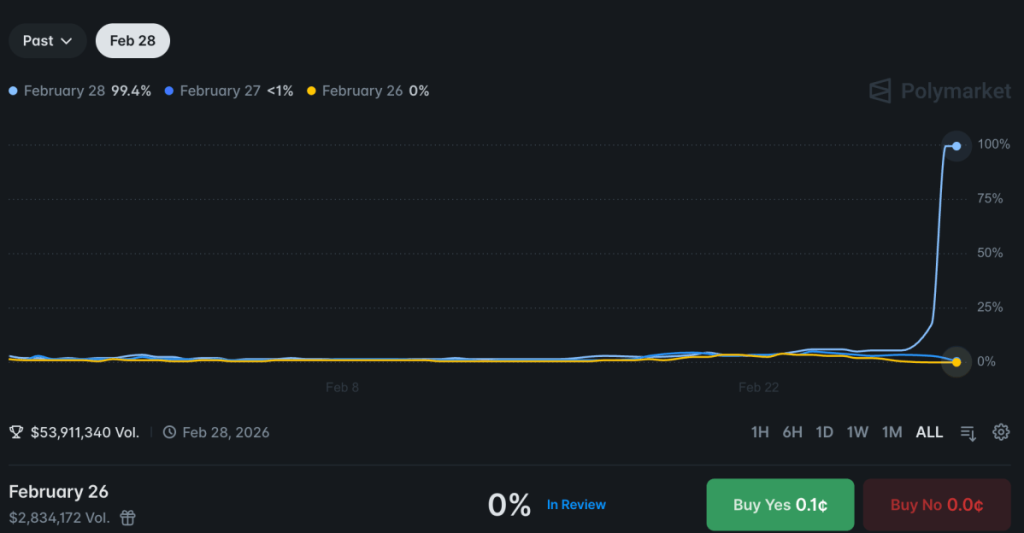
The controversy erupted when it was revealed that Polymarket had been hosting a prediction market titled “US next strikes Iran on…?” This market allowed users to place bets on when they believed the United States would launch a military strike against Iran. The existence of such a market, which essentially turned the prospect of war into a gambling opportunity, has been met with widespread condemnation.
As tensions in the Middle East reached a boiling point, the unthinkable happened. The United States launched a military strike on Iranian targets, resulting in casualties and a significant escalation of hostilities between the two nations. This development has thrust Polymarket into the spotlight, with many questioning the morality and potential consequences of allowing people to profit from the outbreak of armed conflict.
In response to the mounting criticism, Polymarket issued a statement defending its decision to host the controversial betting market. The platform argued that it serves as an “invaluable” source of news and information, claiming that prediction markets can provide unique insights into future events. However, this defense has done little to quell the outrage, with many arguing that the commodification of war is deeply unethical and potentially harmful.
The timing of this controversy is particularly sensitive, given the ongoing global tensions and the devastating consequences of armed conflicts. Critics argue that platforms like Polymarket, by allowing users to bet on such serious matters, are trivializing the gravity of war and potentially influencing public opinion in dangerous ways.
This is not the first time Polymarket has found itself embroiled in controversy. The platform has previously faced allegations of insider trading related to bets on the Super Bowl halftime show and the capture of Venezuelan President Nicolás Maduro. These incidents have raised questions about the integrity of prediction markets and their potential to be manipulated by those with privileged information.
The Iran conflict betting market is just the latest in a series of high-profile controversies surrounding prediction platforms. Competitors like Kalshi have also faced regulatory scrutiny for offering markets on sensitive topics such as political elections and economic indicators. These incidents have sparked a broader debate about the role and regulation of prediction markets in society.
As the situation in the Middle East continues to unfold, the spotlight on Polymarket is likely to intensify. Questions are being raised about the platform’s responsibility in moderating content and the potential real-world consequences of its operations. Some are calling for stricter regulations on prediction markets, arguing that they should be prohibited from offering bets on matters of national security or human life.
The controversy also highlights the growing tension between innovative financial technologies and traditional ethical norms. While proponents argue that prediction markets can provide valuable insights and democratize access to information, critics contend that they can also incentivize harmful behavior and trivialize serious issues.
As the debate rages on, it’s clear that the intersection of technology, finance, and geopolitics is becoming increasingly complex and fraught with ethical dilemmas. The Polymarket incident serves as a stark reminder of the need for careful consideration of the societal impacts of emerging technologies and the importance of robust ethical frameworks in their development and deployment.
In the coming weeks and months, it will be crucial to monitor how this situation develops and what actions, if any, are taken by regulators and policymakers in response to the controversy. The outcome could have far-reaching implications for the future of prediction markets and the broader fintech industry.
As the world grapples with the fallout from the US-Iran conflict and the ethical questions raised by platforms like Polymarket, one thing is certain: the debate over the role of prediction markets in society is far from over. It will require careful consideration from technologists, ethicists, policymakers, and the public to navigate this complex and rapidly evolving landscape.
Tags and Viral Phrases:
- Polymarket controversy
- Betting on war
- US-Iran conflict
- Prediction market ethics
- Blockchain gambling
- War as entertainment
- Geopolitical betting scandal
- Polymarket defends controversial markets
- Prediction platforms under fire
- Commodification of conflict
- Tech ethics in warfare
- Decentralized betting platforms
- Cryptocurrency and war
- Polymarket insider trading allegations
- Kalshi vs Polymarket
- Prediction markets regulation
- Fintech and national security
- Ethical dilemmas in tech
- War profiteering 2.0
- Polymarket statement on Iran
- Prediction markets societal impact
- Blockchain-based gambling platforms
- War betting backlash
- Polymarket Super Bowl controversy
- Venezuelan President Maduro capture bets
- Polymarket defends “invaluable” news source
- Tech companies and war
- Prediction markets and public opinion
- Cryptocurrency platforms under scrutiny
- Ethical framework for emerging tech
- Polymarket Iran strike betting
- Geopolitical tensions and prediction markets
- Decentralized finance and warfare
- Polymarket’s role in modern conflicts
- War as a financial instrument
- Tech innovation vs ethical norms
- Prediction markets and national security
- Blockchain technology and war profiteering
- Polymarket controversy sparks global debate
- The future of prediction markets
- Fintech industry ethical challenges
- War betting platforms face backlash
- Polymarket’s controversial business model
- Prediction markets and information democracy
- Tech companies’ responsibility in conflict
- Cryptocurrency platforms and real-world impact
- Polymarket Iran conflict betting fallout
- Ethical considerations in blockchain development
- Prediction markets: innovation or exploitation?
- Polymarket controversy highlights tech ethics
- War betting platforms face regulatory scrutiny
- The dark side of decentralized prediction markets
- Polymarket’s role in shaping public perception of war
- Blockchain technology’s ethical boundaries
- Prediction markets and the gamification of geopolitics
- Polymarket controversy: A wake-up call for fintech regulation
- The intersection of technology, finance, and warfare
- Polymarket incident sparks debate on tech ethics
- Prediction markets: A new frontier in war profiteering
- Polymarket’s controversial markets highlight need for ethical tech development
- The societal impact of blockchain-based betting platforms
- Polymarket controversy raises questions about the future of decentralized finance
- Tech innovation vs. human cost: The Polymarket dilemma
- Prediction markets and the commodification of global conflicts
- Polymarket incident: A case study in tech ethics gone wrong
- The ethical implications of betting on human suffering
- Polymarket controversy: Navigating the complex landscape of tech and warfare
- Prediction markets: Innovation or exploitation of global tensions?
- Polymarket’s role in the US-Iran conflict: A cautionary tale for fintech
- The dark side of decentralized prediction markets: Lessons from Polymarket
- Polymarket controversy: Examining the ethical boundaries of blockchain technology
- Prediction markets and the future of information warfare
- Polymarket incident: A wake-up call for responsible tech development
- The societal cost of gamifying geopolitical conflicts
- Polymarket controversy: Navigating the ethical minefield of decentralized betting
- Prediction markets: Innovation or exploitation of global tensions?
- Polymarket’s role in the US-Iran conflict: A cautionary tale for fintech
- The dark side of decentralized prediction markets: Lessons from Polymarket
- Polymarket controversy: Examining the ethical boundaries of blockchain technology
- Prediction markets and the future of information warfare
- Polymarket incident: A wake-up call for responsible tech development
- The societal cost of gamifying geopolitical conflicts
- Polymarket controversy: Navigating the ethical minefield of decentralized betting
,


Leave a Reply
Want to join the discussion?Feel free to contribute!