
NASA shakes up its Artemis program to speed up lunar return
NASA Scraps Expensive Moon Rocket Upgrade as Musk’s Influence Grows
In a dramatic pivot that underscores the growing influence of private space companies, NASA has quietly shelved plans to develop an expensive upgrade to its Space Launch System (SLS) rocket, citing chronic delays, budget overruns, and a dangerously low flight rate that insiders say could jeopardize the entire Artemis Moon program.
The decision, first reported by Ars Technica, marks a significant retreat from NASA’s original vision of a continuously evolving super-heavy-lift vehicle. Instead, the agency will now focus on standardizing the SLS into a single, more reliable configuration—potentially launching as frequently as every 10 months—while it waits for commercial alternatives to mature.
The SLS’s Troubled Legacy
Since its inception, the SLS has been plagued by controversy. Originally conceived as a jobs program for legacy aerospace contractors, the rocket has become a symbol of bureaucratic inefficiency in the space community. With each Artemis mission costing over $4 billion—not including the billions more spent on development—the program has drawn sharp criticism from space policy experts and commercial space advocates alike.
The numbers tell a stark story. While NASA launched humans on average once every three months during the Mercury, Gemini, Apollo, and Space Shuttle programs, it has been nearly 3.5 years since Artemis I flew in November 2022. Technical issues, particularly hydrogen and helium leaks during pre-launch preparations, have caused months-long delays for both Artemis I and Artemis II.
“If I recall, the timing between Apollo 7 and 8 was nine weeks,” said one senior NASA official who spoke anonymously to Ars Technica. “Launching SLS every three and a half years or so is not a recipe for success.”
The EUS Cancellation: A Billion-Dollar Reversal
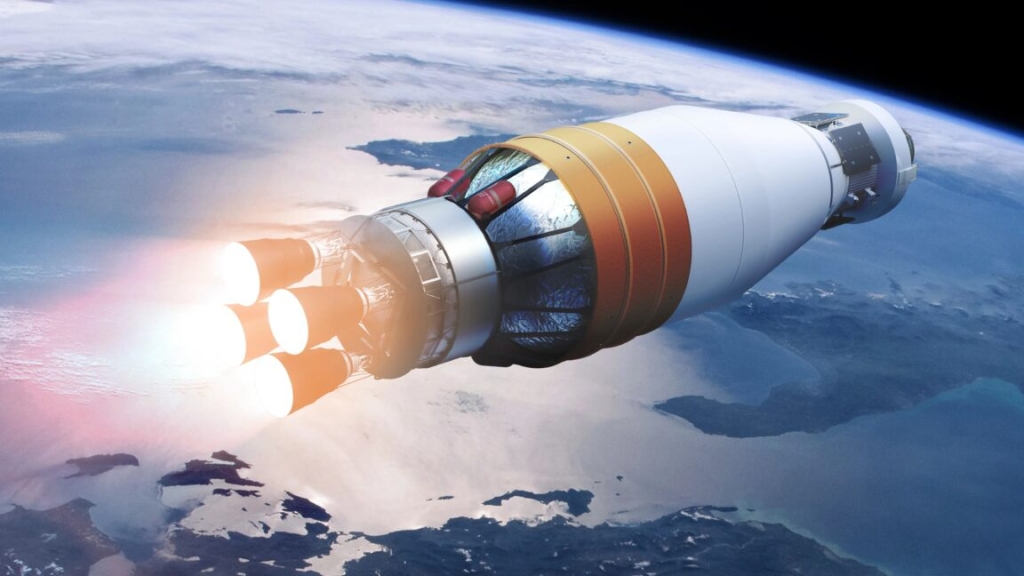
At the heart of this policy shift is the cancellation of the Exploration Upper Stage (EUS), a Boeing-led project that would have significantly enhanced the SLS’s payload capacity and deep-space capabilities. The EUS represented billions in potential revenue for Boeing and was scheduled for its first flight later this decade.
The decision to scrap the EUS appears to be driven by multiple factors. First, there’s the simple reality of budget constraints. With NASA’s overall budget relatively flat and commercial alternatives rapidly maturing, continuing to pour money into an increasingly expensive government rocket became politically untenable.
Second, there’s the influence of Elon Musk and SpaceX. The company’s Starship vehicle, currently in advanced testing at its Boca Chica, Texas facility, promises to deliver significantly more payload to lunar orbit at a fraction of the cost of SLS. NASA has already selected Starship as the Human Landing System for Artemis III and IV, effectively betting the agency’s return-to-Moon strategy on Musk’s company.
The New Strategy: Reliability Over Capability
Under the revised plan, NASA will fly the current Block 1 configuration of the SLS—the version that has already been developed and tested—until commercial alternatives are ready. This approach prioritizes launch frequency and reliability over maximum capability.
The goal is ambitious: standardize the rocket to eliminate the configuration changes that have plagued previous missions, and establish a cadence of launches every 10 months. This would represent a significant improvement over the current glacial pace, though it still falls short of the monthly cadence seen during the Space Shuttle era.
“We need to make each launch as routine as possible,” said another NASA official familiar with the planning. “Right now, every SLS launch is treated like a unique event with its own set of challenges. We need to get to the point where we can launch on demand.”
Industry Reaction: Boeing’s Surprising Acceptance
Perhaps the most surprising aspect of this shift is Boeing’s apparent acceptance of the decision. In a NASA news release, the aerospace giant signaled at least partial support for the revised plans, despite the billions in lost revenue from the cancelled EUS contract.
This acquiescence may reflect Boeing’s own challenges. The company has faced significant difficulties with its commercial aircraft division and defense programs, and may be reluctant to invest further in a rocket program that many consider obsolete before it even reaches operational status.
Other contractors appear more enthusiastic about the change. Northrop Grumman, which builds the SLS’s solid rocket boosters, and Aerojet Rocketdyne, responsible for the RS-25 engines, both stand to benefit from a standardized, frequently-flying rocket that requires less bespoke engineering for each mission.
Political Implications: Congress Divided
The decision to standardize SLS rather than continue its evolution represents a significant shift in NASA’s relationship with Congress, which has historically been the program’s strongest supporter. The rocket was specifically designed to maximize congressional district involvement, with contractors spread across multiple states to ensure broad political support.
However, even some of SLS’s traditional allies in Congress appear to be reassessing their position. With commercial alternatives rapidly maturing and budget pressures mounting, the political calculus may be shifting away from supporting an increasingly expensive government rocket.
“We’ve been hearing more questions from appropriators about the value proposition of SLS,” said one congressional staffer familiar with space policy discussions. “When you can get similar or better capability from commercial providers at a fraction of the cost, it becomes harder to justify the expense.”
The Commercial Competition
The timing of this decision coincides with rapid advancements in commercial spaceflight capabilities. SpaceX’s Starship, despite suffering several explosive test failures, continues to make progress toward becoming a fully reusable super-heavy-lift vehicle. Blue Origin’s New Glenn rocket is also advancing toward its first launch, though it won’t match Starship’s payload capacity.
Perhaps most significantly, United Launch Alliance’s Vulcan Centaur rocket recently completed its first successful flight, demonstrating that traditional aerospace companies can also deliver cost-effective alternatives to SLS. While Vulcan doesn’t match SLS’s payload capacity, it’s more than sufficient for many NASA missions and costs a fraction as much per launch.
What This Means for Artemis
The implications for NASA’s Artemis program are significant. By standardizing SLS and focusing on reliability rather than capability upgrades, the agency is essentially accepting that it will use the rocket for fewer missions than originally planned.
The current manifest calls for Artemis III (the first crewed lunar landing), Artemis IV (which will use Starship as a lunar lander), and Artemis V (which was supposed to debut the EUS). With the EUS cancelled, NASA will need to either fly these missions with the current configuration or look to commercial alternatives.
Industry sources suggest that Artemis V could be the last dedicated SLS mission, with subsequent lunar missions potentially flown on commercial vehicles. This would represent a complete reversal of NASA’s original plan, which called for SLS to be the workhorse of American deep space exploration for decades to come.
The Musk Factor
No discussion of this shift would be complete without acknowledging the role of Elon Musk and his companies. SpaceX has emerged as NASA’s most important commercial partner, with contracts not just for lunar missions but also for regular cargo and eventually crew flights to the International Space Station.
Musk’s vision of rapidly reusable rockets that can dramatically reduce the cost of space access directly challenges the entire premise of expensive, expendable vehicles like SLS. While NASA officials are careful not to criticize the SLS directly, there’s an unmistakable sense that the agency is gradually pivoting toward the commercial model that Musk has championed.
Looking Forward: A New Era for NASA?
The decision to standardize SLS and cancel the EUS may ultimately be remembered as the moment NASA began its transition from a government-led space program to one increasingly driven by commercial innovation. While the SLS will continue to fly for the foreseeable future, its role appears to be diminishing even as commercial alternatives rapidly advance.
For Boeing, the decision represents another setback in a challenging period for the aerospace giant. For NASA, it offers a path to more reliable and frequent launches, even if it means accepting lower capability than originally planned. And for commercial space companies, it opens the door to taking on an even larger role in America’s return to the Moon.
As one industry analyst put it: “NASA is finally admitting what many of us have known for years—that the future of space exploration isn’t in building ever-more-expensive government rockets, but in harnessing the innovation and efficiency of commercial industry. The SLS may have been a necessary step to maintain our industrial base, but it’s increasingly clear that it’s not the vehicle that will take us back to the Moon and on to Mars.”
Whether this represents a pragmatic course correction or a betrayal of NASA’s original vision for deep space exploration depends largely on one’s perspective. What’s clear is that American space policy is undergoing a fundamental shift, with commercial companies moving from supporting roles to center stage in humanity’s return to the Moon.
Tags:
NASA, SLS, Artemis, Space Launch System, Boeing, SpaceX, Elon Musk, Moon mission, lunar exploration, commercial space, EUS cancellation, space policy, aerospace industry, Starship, Blue Origin, New Glenn, Vulcan Centaur, deep space exploration, government contracts, space economics
Viral Sentences:
NASA kills expensive SLS upgrade as Musk’s Starship looms larger, NASA admits SLS is too slow and expensive for Moon missions, Boeing loses billions as NASA cancels rocket upgrade, Space agency pivots to commercial alternatives amid mounting delays, SLS will fly less frequently but more reliably under new plan, Congress questioned about pouring money into failing government rocket, SpaceX emerges as NASA’s preferred partner for lunar return, Industry sources say Artemis V could be SLS’s last dedicated mission, NASA finally embraces commercial model championed by Elon Musk, The future of space exploration isn’t in expensive government rockets, Traditional aerospace giants forced to accept commercial reality, NASA’s Moon program faces existential crisis as costs spiral out of control, Musk’s influence grows as NASA abandons Boeing-led upgrade, Space agency caught between legacy contractors and commercial innovators, The SLS may have been necessary, but it’s not the future
,


Leave a Reply
Want to join the discussion?Feel free to contribute!