
This Theoretical Spaceship Is Longer Than Most Cities Could And Transport Humans For Centuries
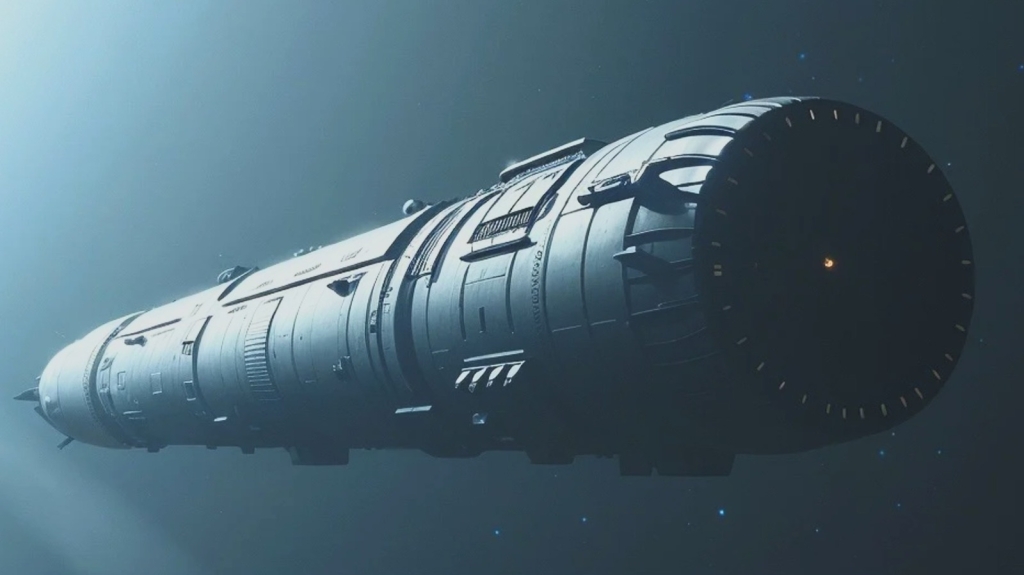
Humanity’s Dream Ship: The Chrysalis—A 36-Mile-Long Generation Starship That Could Carry Thousands to the Stars
For centuries, humanity has gazed at the night sky and dreamed of the stars. Now, a groundbreaking theoretical design called the Chrysalis is bringing that dream closer to reality—and it’s unlike anything we’ve ever imagined. Designed by visionary engineer Giacomo Infelise and his team, the Chrysalis isn’t just a spaceship; it’s a self-sustaining civilization on the move, stretching an astonishing 36 miles in length—longer than Manhattan Island itself.
Why So Big? The Science Behind the Scale
At first glance, the Chrysalis’ massive size might seem excessive. After all, the USS Enterprise from Star Trek: The Next Generation is only 641 meters long. But here’s the catch: the Enterprise has faster-than-light travel and can resupply at outposts across the galaxy. The Chrysalis, however, is built for a 400-year journey to the Alpha Centauri system, our closest stellar neighbor at 4.24 light-years away. This means it needs to carry everything—food, water, oxygen, fuel, and even gravity—to sustain thousands of people for centuries.
The ship’s design is nothing short of revolutionary. It includes farmlands, forests, schools, hospitals, and libraries, all integrated into a self-sustaining ecosystem. But the Chrysalis isn’t just about survival; it’s about preserving civilization. The project brief outlines a governance system that starts with rigorous Antarctic training to weed out those who can’t handle isolation and culminates in a community-based family structure to ensure “technical and cultural continuity.” And yes, an AI will play a key role in decision-making.
The Energy Challenge: A Leap of Faith
One of the biggest hurdles for the Chrysalis is energy. The team proposes a Direct Fusion Drive powered by helium-3 and deuterium, but this technology doesn’t exist yet. In fact, recent trade wars and geopolitical tensions could delay its development for years. Still, the Chrysalis team remains optimistic, believing that such a reactor could be the key to interstellar travel.
A One-Way Ticket to the Stars
When the Chrysalis finally reaches the Alpha Centauri system, its passengers will land on Proxima Centauri b, an Earth-like exoplanet. But what if Proxima Centauri b isn’t habitable? The crew might find themselves stranded, with a ship that’s taken centuries of wear and tear. The project brief acknowledges that society, government, and the economy could be in a precarious state after 400 years of isolation. Yet, despite these challenges, the Chrysalis represents humanity’s best hope for establishing an extra-solar civilization.
The Future of Space Exploration
The Chrysalis is still purely theoretical, but its ambitious design pushes the boundaries of what we think is possible. Could a ship last 400 years? Could thousands of people thrive in isolation? Is Proxima Centauri b even habitable? The answers are uncertain, but the Chrysalis is a bold step toward answering these questions. It’s not just a spaceship; it’s a testament to human ingenuity and our unyielding desire to explore the unknown.
Tags & Viral Phrases:
36-mile-long spaceship, generation starship, Alpha Centauri, Proxima Centauri b, Giacomo Infelise, Direct Fusion Drive, helium-3, deuterium, interstellar travel, self-sustaining civilization, Antarctic training, AI governance, extra-solar colonization, space madness, trade wars, Proxima Centauri b habitability, Earth-like exoplanet, humanity’s dream ship, Chrysalis project, 400-year journey, faster-than-light travel, USS Enterprise comparison, Manhattan Island length, cosmic exploration, future of space exploration, theoretical spaceship design, Proxima Centauri b ocean life, Proxima Centauri life, space exploration challenges, Proxima Centauri b ecosystem, Proxima Centauri b forests, Proxima Centauri b schools, Proxima Centauri b hospitals, Proxima Centauri b libraries, Proxima Centauri b farmlands, Proxima Centauri b gravity, Proxima Centauri b fuel, Proxima Centauri b oxygen, Proxima Centauri b water, Proxima Centauri b food, Proxima Centauri b isolation, Proxima Centauri b societal collapse, Proxima Centauri b AI, Proxima Centauri b governance, Proxima Centauri b community, Proxima Centauri b family structure, Proxima Centauri b technical continuity, Proxima Centauri b cultural continuity, Proxima Centauri b Antarctic station, Proxima Centauri b wear and tear, Proxima Centauri b stranded, Proxima Centauri b precarious state, Proxima Centauri b isolation challenges, Proxima Centauri b human ingenuity, Proxima Centauri b unyielding desire, Proxima Centauri b cosmic exploration, Proxima Centauri b interstellar travel, Proxima Centauri b self-sustaining ecosystem, Proxima Centauri b revolutionary design, Proxima Centauri b bold step, Proxima Centauri b testament, Proxima Centauri b human ingenuity, Proxima Centauri b unyielding desire, Proxima Centauri b cosmic exploration, Proxima Centauri b interstellar travel, Proxima Centauri b self-sustaining ecosystem, Proxima Centauri b revolutionary design, Proxima Centauri b bold step, Proxima Centauri b testament.
,


Leave a Reply
Want to join the discussion?Feel free to contribute!