
Is Reality an Illusion? New Theory Challenges Modern Physics
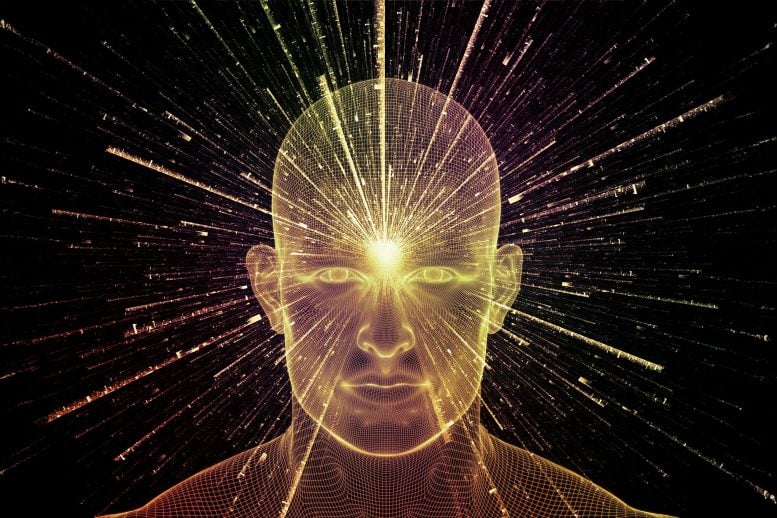
Is Reality an Illusion? New Theory Challenges Modern Physics
In a groundbreaking development that could reshape our understanding of the universe, a new theoretical model proposes that consciousness—not matter—forms the foundation of reality. This radical idea, introduced by Maria Strømme, Professor of Materials Science at Uppsala University, challenges the long-held assumption that consciousness is merely a byproduct of brain activity. Instead, it suggests that consciousness is the primary fabric of existence, with matter and spacetime emerging from it.
The implications of this theory are profound. If consciousness is indeed the bedrock of reality, it would upend centuries of scientific thought, from Newtonian physics to quantum mechanics. It also aligns with ancient philosophical and spiritual traditions that have long posited consciousness as the ultimate reality. But how does this theory hold up under scientific scrutiny, and what does it mean for our understanding of the universe?
The Theory: Consciousness as the Foundation of Reality
Strømme’s model draws on insights from quantum physics, neuroscience, and philosophy to argue that consciousness is not produced by the brain but is instead a fundamental aspect of the universe. In this view, the brain acts more like a receiver or filter, tuning into a broader field of consciousness rather than generating it. This idea is reminiscent of the “observer effect” in quantum mechanics, where the act of observation influences the behavior of particles.
The theory also challenges the materialist paradigm, which holds that physical matter is the basis of reality. Instead, it proposes a “consciousness-first” model, where matter and energy are secondary manifestations of a deeper, more fundamental consciousness. This shift in perspective could have far-reaching consequences for fields as diverse as physics, biology, and even artificial intelligence.
Implications for Science and Philosophy
If consciousness is the foundation of reality, it would resolve some of the most perplexing questions in science and philosophy. For instance, the “hard problem of consciousness”—the question of how subjective experience arises from physical processes—would no longer be a problem. Instead, consciousness would be seen as the underlying reality, with physical processes emerging from it.
This theory also has implications for our understanding of time and space. If consciousness is primary, then spacetime itself could be a construct of consciousness, rather than an objective reality. This aligns with certain interpretations of quantum mechanics, where time and space are seen as emergent properties rather than fundamental aspects of the universe.
Challenges and Criticisms
While the theory is provocative and thought-provoking, it is not without its critics. Many scientists argue that it lacks empirical evidence and relies too heavily on philosophical speculation. They point out that the materialist paradigm has been incredibly successful in explaining the physical world, and that abandoning it in favor of a consciousness-first model would require a monumental shift in scientific thinking.
Moreover, the theory raises difficult questions about the nature of consciousness itself. If consciousness is the foundation of reality, what is its origin? Is it a universal field, as some theories suggest, or is it something more localized? These questions remain open, and further research will be needed to explore them.
The Future of Consciousness Research
Despite the challenges, Strømme’s theory represents an exciting frontier in the study of consciousness. It encourages scientists to think beyond the confines of materialism and consider alternative models of reality. It also highlights the need for interdisciplinary collaboration, bringing together insights from physics, neuroscience, philosophy, and even spirituality.
As research in this area continues, we may find ourselves on the cusp of a paradigm shift—one that redefines our understanding of reality and our place within it. Whether or not consciousness is the foundation of reality, the exploration of this idea is sure to yield new insights and inspire further inquiry.
In the end, the question of whether reality is an illusion may not have a definitive answer. But by challenging our assumptions and pushing the boundaries of scientific thought, we open ourselves to new possibilities and a deeper understanding of the universe.
Tags and Viral Phrases:
consciousness as the foundation of reality, quantum physics and consciousness, materialist paradigm challenged, hard problem of consciousness, observer effect in quantum mechanics, spacetime as a construct, consciousness-first model, interdisciplinary research on consciousness, paradigm shift in science, ancient wisdom meets modern physics, the nature of subjective experience, consciousness and artificial intelligence, universal field of consciousness, redefining reality, scientific revolution, philosophical implications of consciousness theory, consciousness and the brain, emergence of matter from consciousness, spiritual traditions and science, future of consciousness research.
,


Leave a Reply
Want to join the discussion?Feel free to contribute!