
NASA shakes up its Artemis program to speed up lunar return
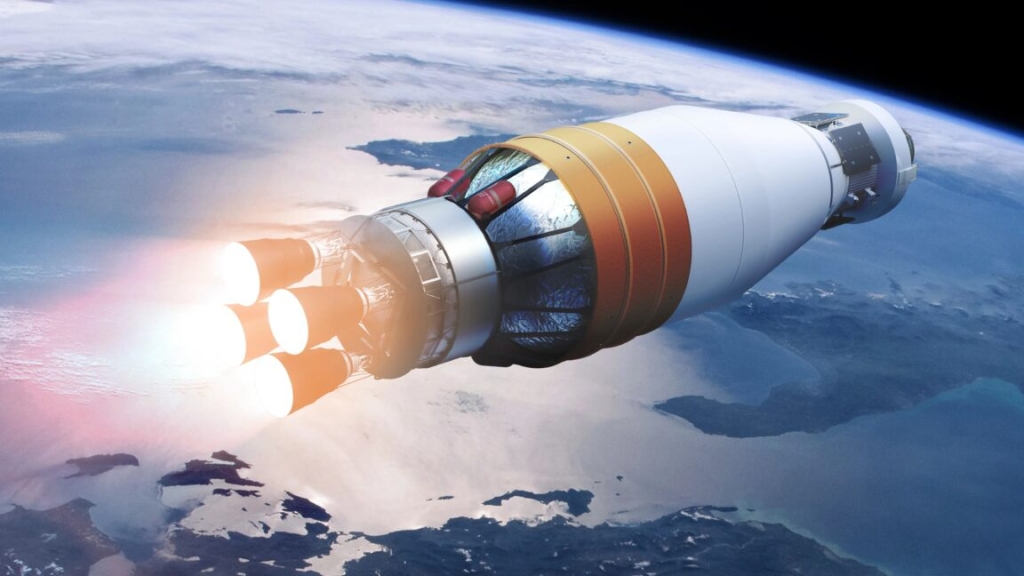
NASA Rethinks Moon Rocket Strategy: A Shift Toward Standardization and Speed
In a dramatic pivot that could reshape America’s return to the Moon, NASA is fundamentally reconsidering how it builds and flies its massive Space Launch System (SLS) rocket. The agency’s plans, still in development but already generating significant buzz across the aerospace community, aim to address what many see as the program’s most glaring weakness: its glacial launch pace.
The Core Problem: A Rocket That Barely Flies
When NASA astronaut Jared Isaacman recently voiced his concerns about the Artemis program’s sluggish progress, he wasn’t just engaging in casual criticism—he was highlighting a fundamental challenge that threatens the entire lunar return effort. The numbers tell a stark story.
During the golden age of American spaceflight, from the pioneering Mercury missions through the workhorse Space Shuttle program, NASA maintained an impressive cadence of launching humans approximately once every three months. This regularity allowed for continuous momentum, steady technological refinement, and most importantly, sustained public and political support.
Fast forward to today’s Artemis era, and the picture couldn’t be more different. It has been nearly 3.5 years since Artemis I successfully launched in November 2022, and the timeline for Artemis II—the first crewed mission—continues to slip. This represents not just a scheduling inconvenience but a potential existential threat to the entire program.
Technical Challenges Behind the Delays
The problems run deeper than simple scheduling issues. According to a senior NASA official who spoke with Ars Technica on background, the agency has encountered persistent technical challenges that have plagued both Artemis I and the preparations for Artemis II.
“Hydrogen and helium leaks have been particularly troublesome,” the official explained. “These aren’t minor issues that can be quickly resolved—they require extensive troubleshooting, component replacement, and often complete system rechecks. Each leak discovery can add months to the launch timeline.”
The official drew a telling comparison to the Apollo era: “If I recall correctly, the timing between Apollo 7 and Apollo 8 was about nine weeks. That’s the kind of cadence we need to maintain—not launching SLS every three and a half years or so.”
This extended timeline between launches creates a cascade of problems. Technical teams lose institutional knowledge as personnel move on to other projects. Manufacturing lines that could be optimized for efficiency sit idle. Most critically, the political and public enthusiasm that fuels expensive space programs begins to wane when progress is measured in years rather than months.
The Proposed Solution: Standardization Over Customization
NASA’s response to these challenges represents a significant philosophical shift in how the agency approaches rocket development. Rather than treating each SLS vehicle as a unique masterpiece—with custom configurations, one-off modifications, and extensive testing protocols—the agency now aims to standardize the rocket into a single, reliable configuration.
“This is about creating a production line mentality,” the NASA official said. “We need to build these rockets like we build commercial airliners, not like we build bespoke luxury yachts. Standardization leads to reliability, and reliability leads to frequency.”
The goal is ambitious but clear: launch the SLS vehicle as frequently as every 10 months once the standardization process is complete. This would represent a dramatic improvement over the current pace and would begin to approach the historical norms that made programs like Apollo and the Space Shuttle successful.
Commercial Alternatives: The Long-Term Vision
While NASA is committed to flying the SLS vehicle for the foreseeable future, the agency’s vision extends beyond this single rocket system. The ultimate goal is to develop commercial alternatives capable of launching crew to the Moon, potentially through Artemis V as Congress has mandated, or perhaps even earlier.
This approach mirrors NASA’s successful strategy with commercial cargo and crew programs to the International Space Station. By fostering competition and innovation in the commercial sector, NASA can reduce its dependence on expensive, government-developed systems while maintaining multiple pathways to achieve its exploration goals.
The transition to commercial alternatives won’t happen overnight. It requires significant investment in technology development, rigorous safety certification processes, and the establishment of reliable commercial supply chains. However, the potential benefits—lower costs, increased launch frequency, and technological innovation—make this a worthwhile long-term investment.
Industry Response: Mixed but Generally Supportive
The proposed changes have generated varied reactions across NASA’s contractor community. Boeing, which serves as the prime contractor for the Exploration Upper Stage (EUS)—a more powerful rocket variant originally scheduled for later this decade—faces the most significant impact from the proposed standardization.
The EUS contract, worth billions of dollars, represents a substantial investment in enhanced SLS capabilities. However, in a NASA news release, Boeing appeared to offer at least conditional support for the revised plans. “While we remain committed to the Exploration Upper Stage program,” a Boeing spokesperson stated, “we understand the need for operational reliability and will work with NASA to support the agency’s exploration goals.”
Other contractors have been more openly supportive of the changes. Aerojet Rocketdyne, responsible for the SLS core stage engines, has emphasized that standardization will allow for more efficient production and testing processes. Northrop Grumman, which provides the solid rocket boosters, has highlighted how regular production schedules will reduce costs and improve quality control.
Political Landscape: Congressional Support Remains Crucial
Any significant changes to NASA’s exploration architecture require careful navigation of the political landscape, particularly given Congress’s role in funding and oversight. Senior leaders in Congress have been briefed on the proposed changes, and initial reactions suggest a willingness to consider the new approach.
The key question for lawmakers will be whether the benefits of increased launch frequency and reduced per-launch costs outweigh the potential delays in developing more capable rocket variants like the EUS. Given the substantial investments already made in SLS development, Congress will likely demand clear evidence that the proposed changes represent a net improvement over the current approach.
The Path Forward: Implementation Challenges
While the vision for SLS standardization is clear, the implementation path presents numerous challenges. The first hurdle is completing the necessary engineering work to identify the optimal standardized configuration. This process must balance competing priorities: maximizing performance, ensuring reliability, minimizing costs, and maintaining schedule flexibility.
Manufacturing infrastructure represents another significant challenge. Current SLS production facilities were designed around a low-volume, high-customization model. Adapting these facilities for high-volume standardized production will require substantial investment and potentially new construction.
Perhaps the most complex challenge involves workforce adaptation. Thousands of engineers, technicians, and support staff have been trained in the current SLS development approach. Retraining this workforce for standardized production while maintaining the expertise needed for ongoing missions will require careful planning and significant resources.
Looking Ahead: The Future of American Lunar Exploration
The proposed changes to the SLS program represent more than just an operational adjustment—they signal a fundamental rethinking of how America approaches deep space exploration. By prioritizing reliability and frequency over customization and capability, NASA is acknowledging that sustainable lunar exploration requires a different mindset than the Apollo-era “flags and footprints” approach.
Success will ultimately be measured not by the power of individual rockets or the sophistication of their payloads, but by the establishment of a permanent human presence on the Moon. This requires infrastructure, logistics, and most importantly, a reliable transportation system capable of supporting regular missions.
The next few years will be critical in determining whether NASA’s new approach delivers on its promise. Artemis II, currently scheduled for 2025 but likely to slip, will serve as an important test case for the standardized production model. The success or failure of this mission could significantly influence the pace and scope of future SLS production.
Conclusion: A Necessary Evolution
NASA’s proposed shift toward SLS standardization represents a pragmatic response to the harsh realities of modern space exploration. The days of blank-check budgets and unlimited timelines are long gone, replaced by a need for efficiency, reliability, and sustainable progress.
Whether this new approach will succeed in establishing the regular launch cadence needed for meaningful lunar exploration remains to be seen. However, the willingness to fundamentally reconsider established practices demonstrates an agency that is learning from its experiences and adapting to new challenges.
As the space community watches closely, the coming months will reveal whether this bold new direction can transform America’s return to the Moon from a sporadic series of high-profile missions into a sustained program of exploration and discovery.
Tags
NASA, SLS, Artemis, Moon missions, Space Launch System, rocket standardization, lunar exploration, aerospace industry, Boeing, commercial spaceflight, space policy, deep space missions, human spaceflight, space technology, exploration architecture
Viral Sentences
NASA finally admits its Moon rocket is too slow and expensive
The Space Launch System might get a major overhaul to fly more often
Boeing’s billion-dollar rocket contract could be in jeopardy
NASA learns from past mistakes with new rocket standardization plan
America’s return to the Moon needs faster, cheaper launches
The SLS rocket has been flying way too infrequently for comfort
NASA’s new approach could revolutionize how we explore space
Space agency shifts gears to compete with commercial alternatives
The future of lunar exploration depends on rocket reliability
NASA’s Moon program gets a much-needed reality check
,


Leave a Reply
Want to join the discussion?Feel free to contribute!