
Lenovo’s Foldable Gaming Handheld Is Too Cool to Remain Just a Concept
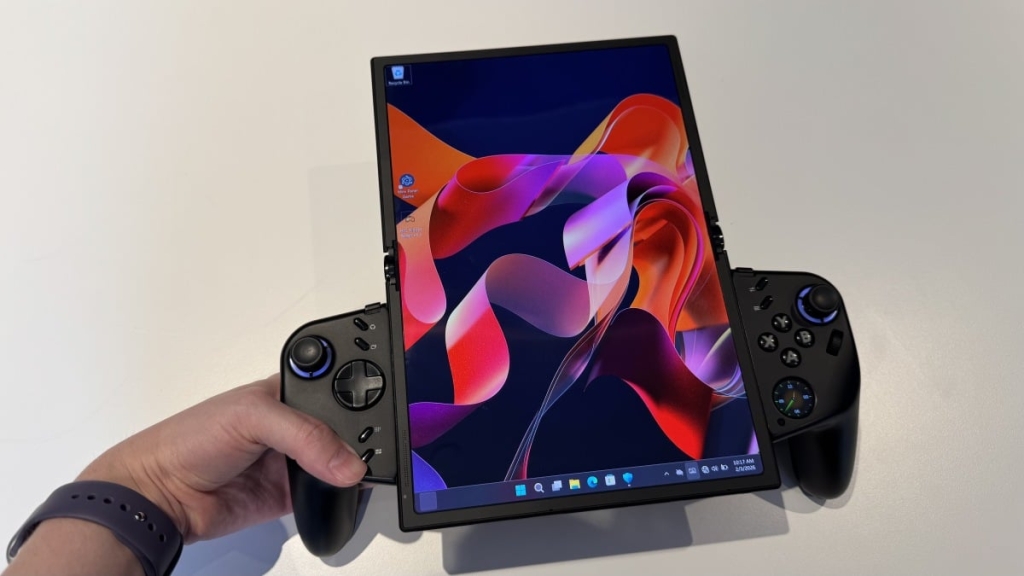
Lenovo’s Legion Go Fold: The Modular Gaming Handheld That Could Change Everything
The gaming handheld market is in turmoil. The Nintendo Switch 2 demands a premium price tag, the Steam Deck remains perpetually out of stock, and the Xbox handheld is plagued with stability issues. Even worse, they’re all bulky bricks that sacrifice portability for performance.
Enter Lenovo, the company that’s quietly been delivering some of the best gaming handhelds in recent years. At Mobile World Congress, they unveiled something that could completely disrupt the handheld gaming space: the Legion Go Fold Concept.
A Tablet That Transforms Into Anything You Need
This isn’t just another gaming handheld—it’s a complete reimagining of what portable gaming can be. The Legion Go Fold is essentially an 11.6-inch OLED tablet that folds in half, but here’s where it gets wild: it comes with two detachable controller halves that can attach in multiple configurations.
Want traditional handheld mode? Attach one controller to each side of the unfolded screen. Prefer a vertical orientation? Rotate the tablet and use it like a dual-screen device. Need something more compact? Fold it over for a 7.7-inch gaming experience. The versatility is staggering.
But Lenovo didn’t stop there. The device includes a stand and Bluetooth keyboard, transforming it into a pseudo-laptop when you need productivity. There’s even a connector piece that lets you use the controller halves as a standalone gamepad, completely separate from the tablet.
FPS Mode Makes a Triumphant Return
For first-person shooter fans, Lenovo’s signature “FPS Mode” is back. Pop the right controller into a special dock, and suddenly you’re using it like a mouse. This level of flexibility means you’re essentially getting multiple devices in one package—no need to own separate handhelds for different gaming scenarios.
The Windows-based tablet promises broader app compatibility than Android alternatives, and one of the controller halves features its own tiny OLED screen for monitoring performance stats in real-time. It’s the kind of thoughtful design that shows Lenovo really understands what gamers want.
The Catch: It’s Just a Concept (For Now)
Here’s the frustrating part—the Legion Go Fold is currently just a concept device. Lenovo has a history of bringing its concepts to market, but they need to see consumer interest first. The prototype I tested featured impressive specs: Intel Core Ultra 7 CPU, 32GB of RAM, and 1TB of storage. If it follows Lenovo’s existing pricing strategy, we’re looking at a starting price around $600, potentially climbing to $1,100 for higher-end configurations.
That’s significantly more expensive than the Switch 2 or Steam Deck, but considering this device could replace multiple gadgets in your tech arsenal, the value proposition becomes much more compelling.
Lenovo’s Modular Revolution Extends Beyond Gaming
The Legion Go Fold wasn’t the only innovative concept Lenovo showcased at MWC. The ThinkBook Modular AI PC Concept appears to be Lenovo’s answer to the Framework Laptop, with a twist that makes Framework’s modularity look basic.
This laptop lets you swap out the keyboard for a second display, which you can use for touch input or prop up as an external monitor using an integrated kickstand. But the real game-changer is the modular ports—you can customize exactly how many USB or Ethernet connections you want. It’s the kind of flexibility we’ve been begging for from major manufacturers.
AI Devices That Are Actually Interesting
Lenovo also showed off the AI Workmate, a concept that’s either brilliant or deeply unsettling depending on your perspective. It’s essentially an AI chatbot attached to an animated touchscreen on an articulating robot arm. The idea is to have a physical AI assistant that can scan documents, create PowerPoint presentations, and generally be your digital coworker.
For the more conventionally minded, there’s the AI Work Companion, which looks like a retro alarm clock but focuses on scheduling and task management. The Yoga Wireless Webcam can stream 4K video from a distance, and the Yoga Book Pro 3D offers glasses-free 3D on a laptop with magnetic pucks that summon specific editing tools.
Why This Matters Right Now
In an industry where companies are playing it safe with incremental upgrades and predictable designs, Lenovo is swinging for the fences with genuinely innovative concepts. While Samsung announces yet another Galaxy S series with minor improvements, Lenovo is asking “what if we completely rethought how we interact with our devices?”
The timing is particularly interesting given the current RAM crisis affecting the entire tech industry. These ambitious concepts might face production delays or cost increases, but they represent the kind of bold thinking that pushes the entire industry forward.
Whether any of these devices make it to market remains to be seen, but one thing is clear: if Lenovo can execute on even half of these concepts, they’re positioning themselves as the most innovative PC manufacturer in the game right now.
The future of portable gaming and computing might not come from Nintendo, Valve, or even Apple—it might come from Lenovo’s experimental lab, where they’re not afraid to ask “what if?” and actually build the answer.
Gaming handhelds are in a bit of a rough spot right now. The Nintendo Switch 2 costs significantly more than its predecessor, the Steam Deck is out of stock in most regions, and the Xbox handheld is prone to bugs. Plus, they’re all huge.
Lenovo has been one of the better companies in this space of late, releasing two of my favorite gaming handhelds running, but the company apparently isn’t done with handhelds yet. At Mobile World Congress, Lenovo showed off its newest concept, the modular Legion Go Fold handheld, a device that tries to solve pretty much every problem in gaming handhelds through one neat trick: It’s also a foldable tablet.
The device is essentially a tablet with an 11.6-inch OLED screen that can fold in half, but it comes with two controller halves that can attach to it in a number of ways. While you can use the full screen horizontally if you like, with one controller half on either side, you can also orient the tablet vertically for a “dual-screen” experience. Or, fold that vertical orientation over itself for a more compact 7.7-inch screen. There’s also a stand and Bluetooth keyboard you can use to turn the tablet into a pseudo laptop, and you can even connect the controller halves to a connector piece to turn it into a standalone controller that doesn’t need to be attached to the tablet. I tried all of these configurations, and they mostly felt comfortable, although I’ll admit the “dual-screen” mode did feel a little top heavy on the early prototype I tested.
Lenovo’s “FPS Mode” even makes a return, so you can take the right-hand controller piece and slot it into a special dock to use it like a mouse. Essentially, this thing can play in pretty much any orientation or form factor you can think of, meaning you won’t need to buy multiple handhelds for different use cases anymore. The tablet is Windows-based, too, promising more app compatibility than Android. And one of the controller halves even has its own tiny OLED screen, for keeping an eye on important performance stats.
The catch? Like a lot of Lenovo’s more interesting devices, the Legion Go Fold is just a concept for now. If you want to see it come to fruition, you’ll have to make your voice heard with an email or social post—Lenovo has a history of making good on its concepts, so you never know if the company is just testing the waters to gauge interest.
Unfortunately, because it’s a concept, there’s no word on what the Legion Go Fold might cost, although I do know the prototype I saw was decked out with an Intel Core Ultra 7 CPU, 32GB of RAM, and 1TB of storage. Based on Lenovo’s other gaming handhelds, I’d have to guess this would start for at least $600, and could go as high as $1,100, which is obviously pricier than the Switch 2 or Steam Deck, but might be worth it for all this device can do.
Lenovo also showed off a Framework competitor
Alongside iterations on existing laptops and consumer tablets that will be making their way to market later this year, Lenovo also showed off the ThinkBook Modular AI PC concept, which reads like the company’s approach to the Framework Laptop. This device seems like a normal laptop at first, but you can swap out the keyboard for a second display if you’d like. You can then use that display for touch input, or continue to use the keyboard you just removed wirelessly. There’s also an integrated kickstand, so you can prop up the second display to become an external monitor instead, and slot the second display into the laptop lid to use the device like a tablet while it’s closed.
So far, none of that is especially Framework-y, but the kicker is that this concept’s ports are modular, so you can mix and match how many USB or ethernet connections you have. That’s something we haven’t really seen from any company other than Framework, so it looked like Lenovo decided to see that laptop’s bet and then raise it.
The Lenovo Workmate is an odd AI device
In the enterprise space, there’s the Lenovo AI Workmate, a concept that basically attaches an AI chatbot to an animated touchscreen and puts it on an articulating robot arm. It’s supposed to be able to do regular computer things, like scan documents or even create PowerPoints, but looking at the thing, I think the idea is to make you greet your new robot overlords with a smile.
Also, while I didn’t get to see them, Lenovo also showed off concepts for the AI Work Companion, which focuses more on scheduling and look like a retro alarm clock, and the Yoga Wireless Webcam, which can stream 4K video to your computer from a distance.
Finally, the company showed off a glasses-free 3D laptop concept, called the Yoga Book Pro 3D. Devices like these have become common among creatives in the past few years, but what sets this one apart is that it comes with magnetic pucks you can place on it to summon certain tools in your editing programs.
Again, these concepts aren’t guaranteed to come to market, but they certainly bring some much-needed oddball energy to the table at a time when other big companies are sticking with tried-and-true designs. Here’s hoping the RAM crisis doesn’t keep them in the lab longer than necessary.
,

Leave a Reply
Want to join the discussion?Feel free to contribute!