
Lenovo’s robot concept can help you digitally sign documents (and maybe annoy coworkers)
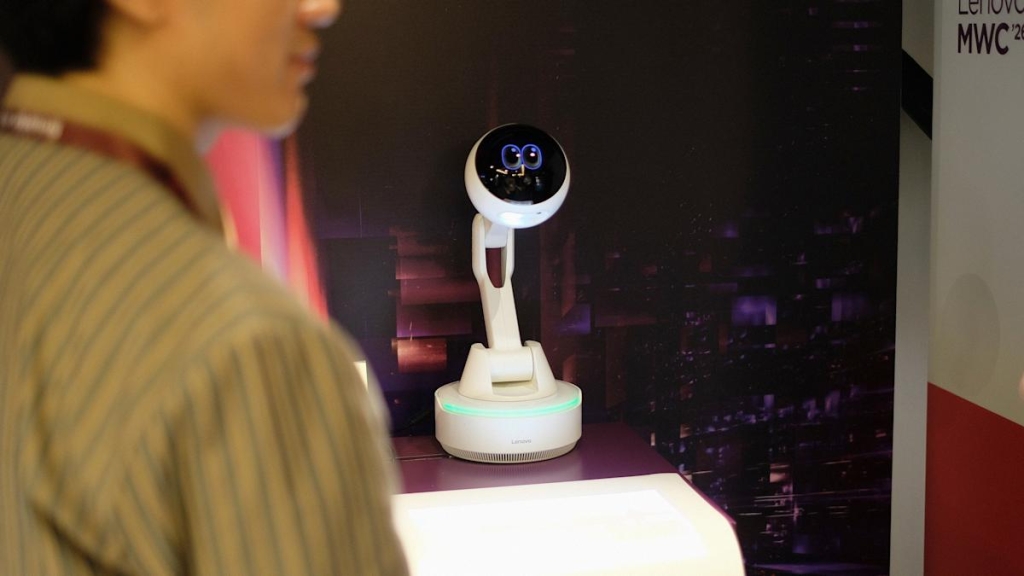
Lenovo’s AI Workmate Concept: A Robot Assistant That Might Just Steal Your Desk
At MWC 2026, Lenovo unveiled something that blurs the line between productivity tool and science fiction—the AI Workmate Concept. While the tech world expected another foldable gaming rig or modular laptop, Lenovo quietly dropped a robotic coworker that could fundamentally change how we think about workplace collaboration.
This isn’t just another smart speaker or voice assistant. The AI Workmate is a physical presence on your desk, complete with an articulated head, LCD face, and enough processing power to make it genuinely useful rather than just a novelty.
The Brains Behind the Bot
Underneath its friendly exterior, the Workmate packs serious hardware. A dedicated Intel Core Ultra processor drives the system, paired with 64GB of memory—essentially making it a standalone AI workstation that doesn’t need to offload processing to the cloud. This on-device approach means faster responses, better privacy, and the ability to function even when your internet connection decides to take a coffee break.
The Pico projector integrated into its head is where things get interesting. Unlike traditional projection systems that require you to awkwardly flip your monitor around during meetings, the Workmate can beam documents, images, or presentations directly onto your desk or a nearby wall. During Lenovo’s demo, the bot projected a Barcelona postcard onto a desk surface, allowing someone to “sign” it with a pen while the robot’s downward-facing 5-megapixel cameras scanned the result.
The Face That Launched a Thousand Tasks
The 3.4-inch LCD display serves as more than just a screen—it’s the bot’s emotional interface. Rather than displaying charts or data visualizations, it shows expressive eyes and subtle animations that communicate what the Workmate is doing. When processing a complex request, the eyes twinkle. When it needs you to repeat something, it cups a virtual hand to its face. And when it’s listening intently? It sips coffee with a digital moustache.
This anthropomorphic approach isn’t just cute—it makes the interaction feel more natural. Instead of talking to an anonymous voice in the cloud, you’re communicating with a physical entity that acknowledges your presence and responds with personality.
Beyond Basic Voice Commands
The Workmate goes well beyond simple question-answering. It can scan both digital documents and physical papers, summarize lengthy reports, and even assist in creating PowerPoint presentations. The demo showed it helping generate a fictional presentation, though Lenovo wisely suggests you might want to review its work—AI still has its quirks when it comes to creative tasks.
Gesture recognition adds another layer of interaction. You can point, wave, or use hand signals to control the bot without speaking, which could be invaluable in shared office spaces where constant voice commands might drive your coworkers to distraction.
The Office Noise Problem
Here’s the catch that Lenovo will need to solve: do we really want more noise in our already cacophonous open offices? The idea of someone barking orders at a robot while others try to concentrate raises some practical concerns. While the on-device processing is great for privacy, it doesn’t solve the acoustic pollution problem.
Hopefully, future iterations will include robust text-based interaction options, allowing users to type commands or receive responses through the LCD display rather than always relying on voice. The robot’s physical presence makes it ideal for visual feedback, so a hybrid approach combining voice, gestures, and text could make it much more office-friendly.
The Simpler Sibling: AI Work Companion
If the Workmate feels like overkill, Lenovo also introduced the AI Work Companion Concept—a completely different approach to workplace AI. This device looks like a premium desk clock with a massive display on the front and a satisfyingly solid dial on top.
But it’s more than just a timepiece. The Work Companion acts as a smart dashboard for your workday, showing calendars, task lists, and other productivity metrics. It syncs across devices using Lenovo’s “Thought Bubble” AI system, which synthesizes your schedule and tasks into actionable daily plans.
The wellness features are particularly noteworthy. The device attempts to monitor screen time and suggest breaks to prevent burnout—a feature that feels almost necessary in our always-on work culture. At the end of each week, it generates an “end-of-week celebration report” detailing your completed tasks, which is either motivating or mildly dystopian depending on your perspective.
The Bigger Picture
Both concepts represent Lenovo’s exploration of “spatial and physical AI experiences” designed to integrate seamlessly into professional environments. They’re not just throwing AI into existing form factors—they’re reimagining how artificial intelligence can physically inhabit our workspaces.
The Workmate, in particular, suggests a future where AI isn’t just a service we access through screens but a physical presence that can interact with both digital and analog elements of our work. The ability to sign a physical document while simultaneously creating a digital copy, or to project collaborative materials without everyone huddling around a single screen, points to genuinely useful applications.
What’s Next?
As proof-of-concept devices, neither product has a confirmed release date. Lenovo is clearly testing the waters, gauging reaction to these more experimental approaches to workplace technology. The question isn’t just whether the technology works—it’s whether people actually want a robot coworker or a smart desk clock monitoring their productivity.
The Workmate’s success will likely depend on how well Lenovo can address the noise issue and expand its interaction methods beyond voice commands. The Work Companion, being simpler, might have an easier path to market if Lenovo decides to commercialize it.
What’s clear is that Lenovo isn’t content to let others define the future of workplace AI. While competitors focus on software and cloud services, Lenovo is betting that the future of office productivity might just have a physical form—one that can sit on your desk, make eye contact, and project your next big idea onto the wall behind you.
Tags and Viral Phrases
- Lenovo AI robot coworker
- MWC 2026 robot assistant
- Desk robot with projector
- AI Workmate Concept unveiled
- Robot that can sign documents
- Lenovo’s Pico projector bot
- 64GB memory AI assistant
- Articulated head robot desk
- LCD face robot coworker
- Voice command office robot
- Gesture recognition work bot
- Physical AI workplace assistant
- Smart desk clock with AI
- Lenovo Thought Bubble AI
- End-of-week productivity report
- Robot that sips digital coffee
- Office noise pollution solution
- On-device AI processing bot
- Document scanning robot assistant
- PowerPoint creation robot helper
- Future of workplace automation
- Lenovo’s spatial AI experience
- Physical presence AI assistant
- Robot coworker proof of concept
- Digital moustache robot personality
- Twinkling eyes AI interaction
- Robot that projects on walls
- 5-megapixel camera robot scanner
- Intel Core Ultra robot brain
- Modular laptop and robot combo
- Lenovo’s bold AI workplace bet
,
Leave a Reply
Want to join the discussion?Feel free to contribute!