
Qualcomm’s Latest Chip Could Lead a New Wave of Camera-Equipped AI Watches and Wearables
Qualcomm’s Snapdragon Wear Elite Chip: The Future of AI-Powered Wearables is Here
The wearable technology landscape is about to undergo a seismic shift, and Qualcomm’s newly announced Snapdragon Wear Elite chip is at the epicenter of this revolution. Unveiled at Mobile World Congress in Barcelona, this cutting-edge processor is designed to power the next generation of AI-infused wearables that could soon be worn virtually everywhere on the human body.
A Chip That Bridges Multiple Categories
For years, Qualcomm has maintained separate chip lines for smartwatches, VR headsets, and smart glasses. The Snapdragon Wear Elite represents a fundamental departure from this approach, creating a unified platform that spans multiple wearable categories. This isn’t just another incremental upgrade—it’s a strategic reimagining of how wearable devices should function in an AI-driven world.
The chip’s architecture is remarkably flexible, capable of powering everything from traditional smartwatches to AI pendants, smart glasses, camera-enabled headphones, and even sensor-connected bands. This versatility is intentional, as the company recognizes that consumers will likely adopt different form factors based on their personal preferences and use cases.
The AI Processing Powerhouse
What makes the Snapdragon Wear Elite truly revolutionary is its enhanced AI processing capabilities. The chip features a neural processing unit that can support AI models with up to 2 billion parameters running directly on the device. This translates to approximately 10 tokens per second of processing power—sufficient for many offline AI tasks without requiring constant cloud connectivity.
This on-device processing capability is crucial for several reasons. First, it enables faster response times since the AI doesn’t need to communicate with remote servers. Second, it enhances privacy by keeping sensitive data local. Third, it allows for functionality even when network connectivity is poor or unavailable.
The chip is specifically optimized for “multimodal AI,” which means it can process various types of input simultaneously—voice commands, camera feeds, sensor data, and text. This holistic approach to AI processing is what will enable the next generation of truly intelligent wearables.
Cameras Everywhere: The New Normal
One of the most striking aspects of the Snapdragon Wear Elite’s capabilities is its support for multiple camera systems. The chip can handle video input and streaming, including 1080p video output to displays. This opens up a world of possibilities for AI applications that rely on visual input.
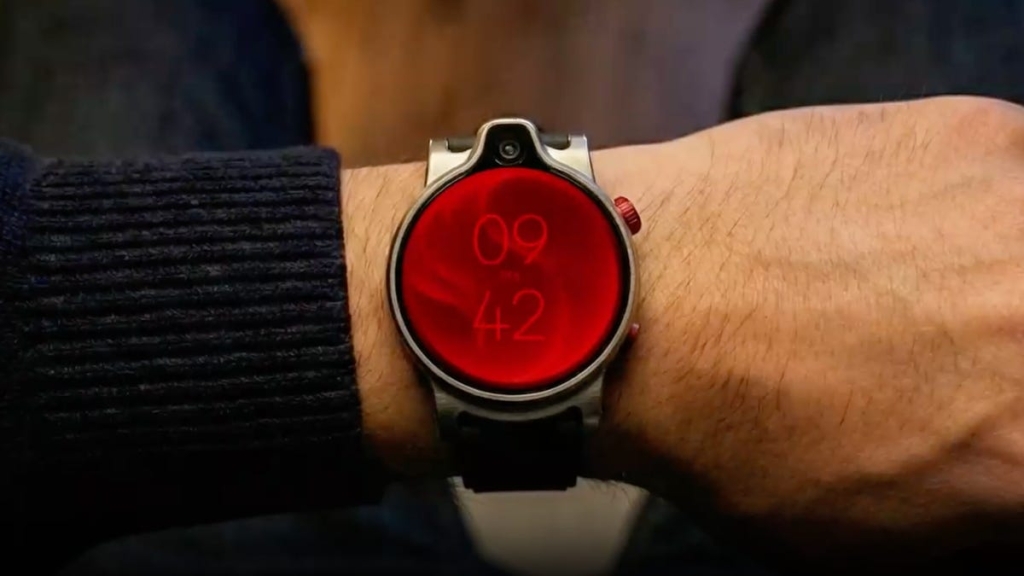
In Qualcomm’s promotional materials, we see concepts of watches with cameras positioned on their top edges, pendants with outward-facing cameras, and smart glasses with integrated imaging systems. These aren’t just for taking photos—they’re designed to feed continuous visual data to AI systems for tasks like facial recognition, object identification, and environmental awareness.
The implications are profound. Imagine a smartwatch that can recognize your face to authorize payments, a pendant that can describe your surroundings to assist with navigation, or glasses that can identify products while you’re shopping. The camera becomes less of a photography tool and more of a sensory organ for AI systems.
Battery Life and Charging: The Critical Differentiators
Battery life has always been the Achilles’ heel of wearable technology, but Qualcomm claims the Snapdragon Wear Elite delivers a 30% improvement over previous generations. This could translate to “days” of use, though real-world performance will depend heavily on how manufacturers implement the chip and what features they enable.
Perhaps more impressive is the chip’s fast-charging capability. Devices powered by the Snapdragon Wear Elite could potentially reach 50% charge in just 10 minutes. This rapid charging feature is essential for wearables designed to be worn continuously, including during sleep. The ability to quickly “top up” during a shower or while getting ready in the morning could eliminate the need for overnight charging—a significant pain point for current wearable users.
Revolutionary Wireless Connectivity
The Snapdragon Wear Elite’s wireless capabilities are perhaps its most underappreciated feature. The chip supports six different wireless protocols: Redcap 5G for high-speed, low-power connections; Bluetooth 6.0; ultra-wideband; GPS; satellite-connected NB-NTN for messaging; and micropower Wi-Fi 802.11ax.
The micropower Wi-Fi support is particularly noteworthy. According to Qualcomm, this feature allows wearables to maintain continuous Wi-Fi connectivity while consuming minimal power. This means devices could stay connected to the internet in the background, enabling always-on AI features without the battery drain typically associated with constant connectivity.
This enhanced connectivity is crucial for the AI-powered future Qualcomm envisions. Imagine smart glasses that can stream video to AI services in real-time, or a pendant that can continuously upload sensor data for analysis. The micropower Wi-Fi feature makes these scenarios feasible from an energy consumption perspective.
The Form Factor Evolution
Qualcomm’s vision for the Snapdragon Wear Elite extends across virtually every wearable category imaginable. The chip is designed to power:
- AI headsets with integrated cameras and processing
- Wireless earbuds with environmental awareness and translation capabilities
- Smartwatches with enhanced AI features and camera integration
- AI glasses with full video streaming and processing capabilities
- Smart rings and bands with advanced sensor arrays
- AI pendants and pins with outward-facing cameras for environmental awareness
This broad applicability reflects the uncertainty in the market about which form factors will ultimately resonate with consumers. Will people prefer wearing AI on their faces, their wrists, or around their necks? Qualcomm is betting on all of the above.
The Privacy and Social Implications
As wearables become more capable and ubiquitous, they also raise significant privacy concerns. Devices with always-on cameras and microphones, constant connectivity, and the ability to process sensitive personal data represent a potential privacy nightmare if not implemented thoughtfully.
There’s also the social aspect to consider. A world where everyone is potentially recording everything around them raises questions about consent, surveillance, and social norms. The “glasshole” phenomenon that emerged with early smart glasses could pale in comparison to what might happen when AI-powered wearables become mainstream.
Manufacturers and regulators will need to grapple with these issues as the technology proliferates. Features like physical camera shutters, clear indicators when recording is active, and robust privacy controls will likely become standard requirements.
The Competitive Landscape
Qualcomm’s announcement comes amid a flurry of activity in the wearable space. Meta is reportedly working on a smartwatch, Google continues to develop its wearable initiatives, and Apple is expected to release multiple AI-powered wearables in the coming year.
The Snapdragon Wear Elite positions Qualcomm as the enabling technology provider for this wearable revolution. Since the company’s chips power the vast majority of non-Apple wearables, its technology choices will significantly influence the direction of the entire industry.
What This Means for Consumers
For consumers, the Snapdragon Wear Elite promises a future where wearable devices are more capable, more intelligent, and more seamlessly integrated into daily life. The enhanced AI processing means devices can understand context better, respond more intelligently to voice commands, and provide more personalized experiences.
The improved battery life and fast charging address two of the biggest pain points with current wearables. The enhanced connectivity enables new use cases that weren’t previously practical. And the flexibility in form factors means consumers can choose the devices that best fit their lifestyles and preferences.
However, this future also comes with challenges. The proliferation of AI-powered devices with cameras and microphones raises legitimate privacy concerns. The potential for distraction and information overload increases as devices become more capable. And the environmental impact of producing and disposing of more electronic devices is a consideration that can’t be ignored.
Looking Ahead
The Snapdragon Wear Elite represents more than just a new chip—it’s a vision for the future of human-computer interaction. As AI systems become more sophisticated and wearable technology more capable, we’re moving toward a world where the line between human and machine intelligence becomes increasingly blurred.
The devices powered by this chip will likely serve as our constant companions, augmenting our capabilities, extending our senses, and providing assistance in ways we’re only beginning to imagine. Whether this future is utopian or dystopian depends largely on how we choose to implement and regulate these technologies.
What’s certain is that the wearable revolution is accelerating, and Qualcomm’s Snapdragon Wear Elite is positioned to be at the heart of it. The first devices using this chip are expected to hit the market this summer, and they promise to redefine what we expect from wearable technology.
Tags: AI wearables, Snapdragon Wear Elite, Qualcomm, smart glasses, AI pendants, wearable technology, MWC 2026, next-gen wearables, on-device AI, multimodal AI, camera-enabled wearables, battery life improvement, fast charging, wireless connectivity, Redcap 5G, micropower Wi-Fi, neural processing, privacy concerns, wearable revolution
Viral Sentences:
- “The future of AI is wearable, and Qualcomm just unlocked it.”
- “Cameras everywhere: The new normal in wearable tech.”
- “30% better battery life? Qualcomm just solved wearables’ biggest problem.”
- “AI pendants with outward-facing cameras: The next big thing you didn’t know you needed.”
- “Smartwatches with cameras? Qualcomm says get ready for the revolution.”
- “The chip that could power Apple, Meta, and Google’s wearable dreams.”
- “Micropower Wi-Fi: The feature that makes always-on AI actually possible.”
- “From watches to glasses to pendants: One chip to rule them all.”
- “2 billion parameter AI models running directly on your wrist.”
- “10 minutes to 50% charge: The fast-charging future of wearables.”
- “The privacy paradox: More capable wearables mean bigger privacy questions.”
- “The glasshole phenomenon is about to get a whole lot worse.”
- “Qualcomm’s bet: Consumers will wear AI everywhere.”
- “The wearable form factor wars: Who will win the battle for your body?”
- “The end of the smartphone era? Wearables are coming for its throne.”
,


Leave a Reply
Want to join the discussion?Feel free to contribute!