
Apple’s New M4 iPad Air Looks More Like The Pro Than Ever
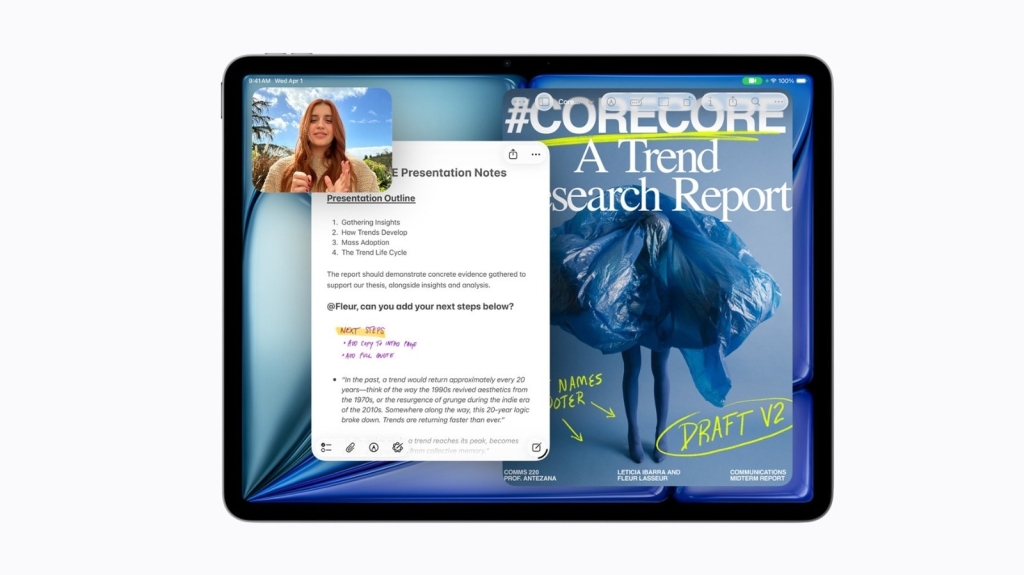
Apple Unleashes the M4-Powered iPad Air: A Closer Look at the Subtle Yet Powerful Upgrade
Apple has once again shaken up the tablet market, but this time with a twist—one that’s more about what’s under the hood than what meets the eye. The tech giant has just unveiled the new M4 iPad Air, a device that, at first glance, looks almost identical to its predecessor. Yet beneath that familiar exterior lies a powerhouse of performance, memory, and connectivity upgrades that promise to redefine what users can expect from a mid-range tablet.
A Familiar Face with a New Heart
When Apple launched the M3 iPad Air nearly a year ago, it was already a formidable contender in the tablet arena. Fast forward to today, and Apple is rolling out the M4 iPad Air, swapping out the previous chip for the latest and greatest from its silicon lineup. At first glance, you’d be forgiven for thinking nothing has changed. Apple is even reusing some of the same imagery from the M3 model on the product page, making the new iPad Air blend seamlessly with its predecessor.
But don’t let the unchanged design fool you. Apple is betting big on the idea that improved performance, expanded memory, and enhanced connectivity are the real game-changers here. In fact, the M4 iPad Air is now closer than ever to the capabilities of the latest M5 iPad Pro, but at a price point that won’t break the bank.
Under the Hood: What’s New?
The headline upgrade is, of course, the M4 processor. Apple claims this new chip makes the iPad Air up to 30% faster than the previous model. That’s a significant leap, especially for users who rely on their tablets for demanding tasks like video editing, 3D rendering, or intensive multitasking.
But the improvements don’t stop there. The M4 iPad Air also inherits several internal specs from the M5 iPad Pro, including Wi-Fi 7 support and Apple’s proprietary connectivity chips—the N1 wireless networking chip and the C1X modem. These additions promise to make Wi-Fi and Bluetooth connections more reliable and faster, especially when juggling multiple Apple devices. There’s even a new privacy feature that lets users hide their location from carriers, a perk recently rolled out with the iOS 26.3 update.
Another surprising upgrade is the memory bump. Despite global shortages driving up prices for RAM, Apple is outfitting the new iPad Air with 12GB of memory—50% more than before. This, combined with a 120GB/s memory bandwidth, means the tablet should feel snappier and more capable than ever, especially when running iPadOS 26’s new multitasking features.
Storage: Still a Sticking Point
One area where Apple hasn’t budged is storage. The iPad Air still starts at 128GB, which is half the base storage of the iPad Pro (which starts at 256GB). For some users, this might be a dealbreaker, especially as apps and media files continue to grow in size. However, for the majority of users, 128GB should still be plenty, especially with the cloud storage options available today.
Pricing and Accessories: Business as Usual
In terms of pricing, the M4 iPad Air sticks to its roots. The 11-inch model starts at $599, while the 13-inch version remains at $799. These prices are competitive, especially considering the performance upgrades on offer.
The new iPad Air also supports the same accessories as the iPad Pro, including the Magic Keyboard ($269), the Apple Pencil Pro ($129), and the USB-C Apple Pencil ($79). This compatibility means users don’t have to worry about buying new accessories if they’re upgrading from a previous model.
Pre-orders for the M4 iPad Air begin this Wednesday, March 4, with the official launch set for March 11. If you’ve been holding off on upgrading your tablet, now might be the perfect time to take the plunge.
The Bigger Picture: Is This Upgrade Worth It?
Apple’s strategy with the M4 iPad Air is clear: make sure users can get top-tier hardware whenever they’re ready to upgrade. By keeping the design consistent and focusing on internal improvements, Apple is betting that performance and future-proofing will be enough to entice users to make the switch.
However, this approach also highlights a broader trend in the tech industry: the diminishing returns of frequent upgrades. The M1 iPad Air, released in 2022, is still a capable device that can run the latest iPadOS 26 software. For many users, the differences between the M1, M3, and M4 models might not be immediately noticeable in day-to-day use.
That said, for power users, creatives, and anyone who wants to future-proof their device, the M4 iPad Air offers a compelling package. It’s faster, more capable, and better connected than ever before, all while maintaining the sleek, familiar design that has made the iPad Air a favorite among tablet users.
Viral Tags & Buzzworthy Phrases
-
iPadAirM4
-
AppleM4Chip
-
TabletUpgrade
-
TechNews2026
-
AppleEvent
-
M4Performance
-
iPadOS26
-
AppleEvent2026
-
TabletRevolution
-
AppleSilicon
-
iPadProKiller
- “Apple’s M4 iPad Air: Familiar on the outside, beastly on the inside”
- “30% faster, 50% more memory—meet the new iPad Air”
- “Is the M4 iPad Air worth the upgrade? Here’s what you need to know”
- “Apple’s subtle yet powerful tablet refresh”
- “The iPad Air just got a serious performance boost”
- “Why the M4 iPad Air might be the best mid-range tablet yet”
- “Apple’s strategy: Keep the design, upgrade the guts”
- “M4 iPad Air vs. M5 iPad Pro: How close are they really?”
- “The iPad Air M4: A masterclass in iterative innovation”
- “Apple’s M4 chip: The secret sauce behind the new iPad Air”
- “Is Apple’s frequent upgrade cycle sustainable?”
- “The M4 iPad Air: A tablet for the future, today”
- “Apple’s latest tablet: More than meets the eye”
- “Why the M4 iPad Air is a win for Apple fans everywhere”
,


Leave a Reply
Want to join the discussion?Feel free to contribute!