
For modern professionals AI is about smarter habits, not shortcuts
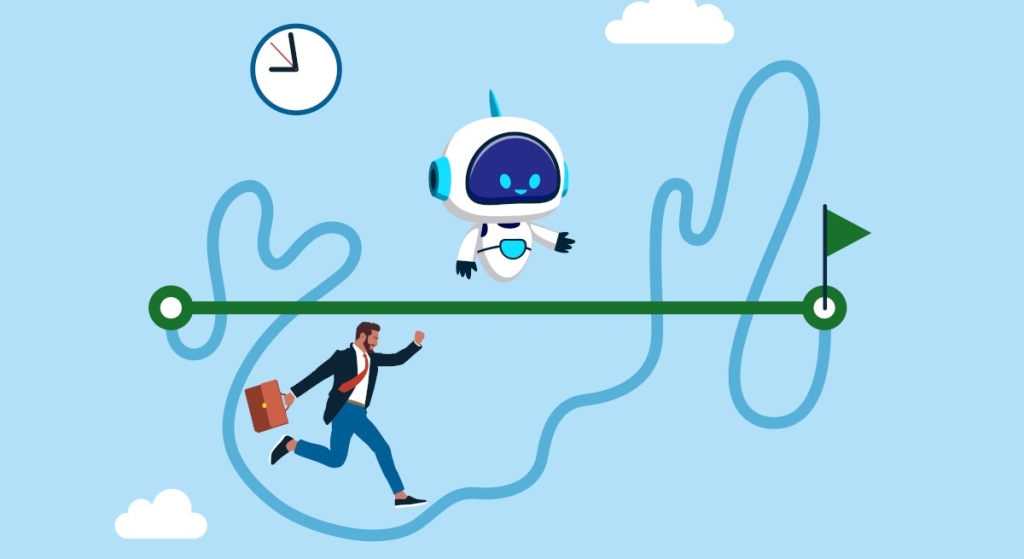
AI and Automation: The Human Revolution Reshaping Work in 2026
In a world where artificial intelligence and automation are no longer futuristic concepts but daily realities, three industry leaders from Accenture, BearingPoint, and Workhuman are revealing how these technologies are fundamentally transforming the workplace—not by replacing humans, but by amplifying our most essential capabilities.
The Practical Magic of AI: Removing Friction, Not Jobs
David Burke, Senior Director of Global Talent Acquisition at Workhuman, cuts through the hype with refreshing clarity. “It’s much more practical than that,” he explains to SiliconRepublic.com. “We’re using AI across our internal systems to reduce manual work, improve decision-making, and help teams move faster.”
The transformation isn’t about replacing roles—it’s about removing friction. In hiring, performance enablement, and cross-functional collaboration, automation handles repeatable tasks while surfacing better data. This shift means teams spend less time chasing information or managing processes and more time solving problems and focusing on work that actually moves the business forward.
AI as Cognitive Partner: Thinking Better, Not Just Faster
Wendy Walsh, Talent and Organisation Lead at Accenture, describes a profound shift in how she personally approaches her work. “On a very practical level, I use AI every single day to think better,” she reveals. “I use it to explore ideas, challenge my own assumptions, shape early thinking, and get to a stronger point of view before anything ever becomes a document.”
For Walsh, AI isn’t about productivity shortcuts—it’s about cognitive support. “It helps me move faster to insight and clarity, not simply faster to output. The biggest difference is that my time has shifted away from preparing information and towards interpreting it.”
The Rise of Agentic AI: From Automation to Augmentation
Barry Haycock, Senior Manager of Data Analytics and AI at BearingPoint, has observed a fascinating trend over the past 12 months: people are increasingly using AI as an augmentation tool rather than pure automation. “In my personal day-to-day, I use AI to draft code I plan to write, or as a sounding board to discuss and tease out ideas before I start developing a slide deck or a document.”
The applications are diverse—from performing detailed searches of in-house documents to summarizing upcoming weeks and helping plan goals. Haycock finds it particularly useful for flagging upcoming deadlines and prioritizing them every Monday.
The Soft Skills Revolution: Why Human Capabilities Matter More Than Ever
As AI becomes ubiquitous, the most valuable skills are becoming distinctly human. Walsh predicts that by 2030, many of the fastest-growing core skills will be deeply human ones. “AI can analyse, generate, and optimise at incredible speed. But it can’t build trust. It can’t create belonging. It can’t decide what matters most in a moment of uncertainty.”
Technology remains a powerful enabler, but it still needs people to shape it, question it, and use it with purpose. The organizations that thrive will be those that invest just as seriously in human capability as they do in AI.
The New Technical Literacy: Business Analytics as the Universal Language
In software development, MLOps, and AIOps roles, business analytics is emerging as the most important skill. Haycock notes that while the latest frontier AI models are excellent at coding or creating scripts, developers still need to explain what’s required clearly. “This is traditionally considered a soft skill,” he explains. “In times gone by, a developer might write the code to explain their thoughts. I’ve noticed that ‘explain-in-plain-language’ skills are developing across many technical roles lately.”
The Irony of Progress: As AI Advances, Human Skills Become Priceless
Burke emphasizes that while technical skills remain important, they’re increasingly learnable at speed. “AI can help people acquire knowledge and capabilities faster than ever. What’s harder to automate and therefore more valuable, are human skills.”
These include judgement, communication, the ability to trust, context-setting, ethical decision-making, and leading through ambiguity. As professionals are expected to adopt and understand tech advancements, these capabilities become even more critical.
“The differentiator won’t be who knows the most,” Burke predicts. “It will be who can interpret, connect, and lead. The irony is that the more advanced AI becomes, the more deeply human capability becomes alongside it. That’s what ultimately drives sustained performance.”
The Future is Human-Centered Automation
This transformation represents a fundamental shift in how we think about work. Rather than viewing AI and automation as threats to employment, forward-thinking organizations are seeing them as tools that free humans to do what we do best: create, connect, strategize, and lead.
The message from these industry leaders is clear: the future belongs to those who can combine technological fluency with distinctly human capabilities. As AI handles the routine and predictable, humans will focus on the creative, the strategic, and the deeply interpersonal aspects of work that machines cannot replicate.
The organizations that will thrive in this new era are those that recognize this fundamental truth: technology is only as powerful as the humans who wield it, and the most successful companies will be those that invest equally in both their technological infrastructure and their human capital.
Tags: AI transformation, workplace automation, future of work, human skills, cognitive support, agentic AI, business analytics, technical literacy, soft skills revolution, trust building, belonging, ethical decision-making, leading through ambiguity, technological fluency, human-centered automation, sustainable performance
Viral Sentences:
- “AI can analyse, generate, and optimise at incredible speed. But it can’t build trust.”
- “The irony is that the more advanced AI becomes, the more deeply human capability becomes alongside it.”
- “Technology is a powerful enabler, but it still needs people to shape it, question it, and use it with purpose.”
- “As AI handles the routine and predictable, humans will focus on the creative, the strategic, and the deeply interpersonal aspects of work.”
- “The differentiator won’t be who knows the most. It will be who can interpret, connect, and lead.”
- “The organizations that will thrive in this new era are those that recognize this fundamental truth: technology is only as powerful as the humans who wield it.”
,


Leave a Reply
Want to join the discussion?Feel free to contribute!