
Macintosh II launch: A worthy sequel: Today in Apple history
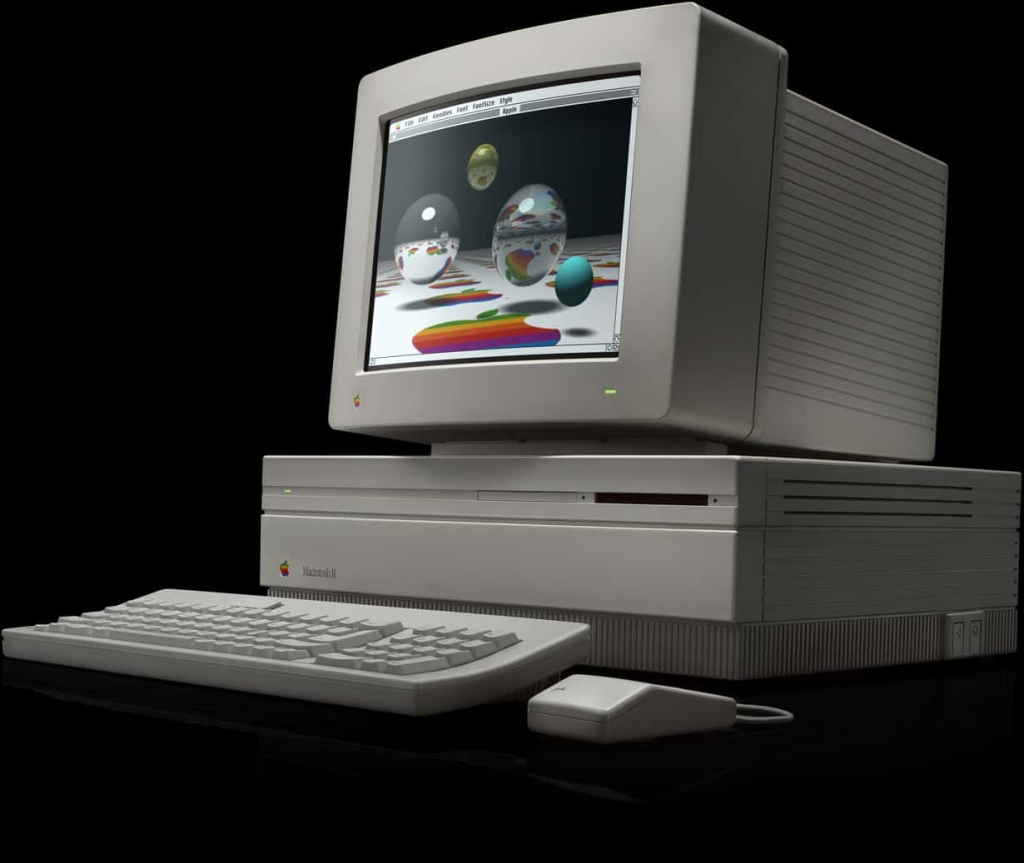
The Macintosh II: Apple’s Revolutionary Leap into the Open-Architecture Era
On March 2, 1987, Apple Computer unveiled what would become one of the most transformative products in its history: the Macintosh II. This wasn’t merely an incremental upgrade to the original Macintosh 128K; it was a fundamental reimagining of what a personal computer could be, marking a pivotal moment that would shape Apple’s trajectory for decades to come.
Breaking Free from the Monolithic Design
The Macintosh II represented a dramatic departure from Steve Jobs’ original vision of a completely sealed, “appliance-like” computer. Jobs had famously insisted that the original Macintosh be a closed system—a machine you would never need (or want) to open. His philosophy was that computers should “just work,” without users having to tinker with internal components.
However, by 1987, Jobs had been ousted from Apple and was busy building his NeXT Computer. Without his influence, Apple’s engineers embraced a radically different philosophy—one that owed more to the Apple II’s open architecture than to Jobs’ closed-system approach. The result was a machine that could be expanded, upgraded, and customized by its users without voiding their warranties.
This shift was so significant that industry observers began referring to the Macintosh II as the “Open Mac.” The computer featured six NuBus slots, allowing for component upgrades and the insertion of expansion cards. It was a machine designed not just for what users needed today, but for what they might want tomorrow.
A Quantum Leap in Display Technology
Perhaps the most visually striking feature of the Macintosh II was its optional color display. In 1987, color on personal computers was still relatively rare and often limited to basic, washed-out palettes. The Macintosh II shattered these limitations with support for a 16.7 million true color palette—an almost unimaginable spectrum at the time.
While the system could only display 256 colors simultaneously (due to the technical constraints of the era), this was still revolutionary. Users could finally experience the Macintosh’s groundbreaking graphical interface in full color, bringing applications, games, and creative tools to life in ways that monochrome displays simply couldn’t match.
The Macintosh II also broke free from the small 9-inch monitors that had defined previous Macs. The freestanding 13-inch color monitor, while modest by today’s standards, felt positively expansive to users accustomed to cramped displays. For creative professionals, scientists, and business users alike, this represented a genuine productivity boost.
Raw Power That Redefined Performance
Under the hood, the Macintosh II was equally impressive. At its heart pulsed a 16 MHz Motorola 68020 processor—a chip that delivered performance levels that seemed almost science fiction compared to the original Macintosh’s modest 8 MHz 68000. This was paired with a 68881 floating-point coprocessor, which accelerated complex mathematical calculations crucial for scientific, engineering, and graphics applications.
The machine could be configured with up to 4MB of RAM—a staggering amount for 1987—and storage options extended up to an 80MB hard drive. To put this in perspective, the original Macintosh 128K came with just 128KB of RAM and no hard drive option. The Macintosh II represented roughly a 30-fold increase in memory capacity and processing power.
Audio capabilities also saw dramatic improvements. The Macintosh II introduced a four-voice stereo custom sound chip, delivering a maximum frequency of 7.5 kHz and a sample rate of 44.1 kHz. This wasn’t just about playing beeps and boops; it was about enabling real audio production, voice synthesis, and multimedia applications that would become increasingly important in the coming years.
The Price of Progress
All this power and flexibility came at a considerable cost. A fully configured Macintosh II with all the bells and whistles carried a retail price tag of $7,145 in 1987 dollars. Adjusted for inflation, that’s equivalent to more than $20,450 today—a figure that would make even the most expensive modern Macs seem like bargains.
This pricing strategy aligned with what became known as Apple’s “high right” strategy, where the company positioned the Macintosh as a premium product commanding premium prices. The rationale was straightforward: by offering performance that surpassed expensive workstations from companies like Sun and Apollo, the Macintosh II could justify its high price tag for business and professional users who needed serious computing power.
Legacy and Impact
The Macintosh II’s influence extended far beyond its impressive specifications. It established Apple as a serious player in the professional and business markets, opening doors that had previously been closed to the Macintosh platform. Graphic designers, desktop publishers, scientists, and engineers suddenly had a powerful, flexible tool that could handle their demanding workloads.
More importantly, the Macintosh II’s open architecture philosophy would influence Apple’s product development for years to come. While subsequent Macintosh models would oscillate between open and closed designs (often influenced by Steve Jobs’ return to Apple in 1997), the Macintosh II demonstrated that there was a substantial market for expandable, upgradeable computers.
The machine also helped establish the foundation for Apple’s professional product lines. The Power Mac series, the Mac Pro, and even today’s Mac Studio all owe conceptual debts to the Macintosh II’s vision of a powerful, expandable desktop computer.
Looking Back
For those who experienced the Macintosh II firsthand, it represented more than just a computer—it was a glimpse into the future of personal computing. It showed that personal computers could be both powerful and flexible, capable of growing with users’ needs rather than becoming obsolete within a couple of years.
The Macintosh II proved that Apple could compete in the high-performance computing market, that color graphics were essential for mainstream adoption, and that openness and expandability had real value for professional users. These lessons would echo through Apple’s product development for decades, even as the company occasionally seemed to forget them.
Today, as we debate the merits of Apple’s current approach to Mac expandability (or lack thereof), the Macintosh II stands as a reminder of a time when Apple embraced openness and user empowerment—a philosophy that, perhaps, deserves reconsideration in our current computing landscape.
Tags & Viral Phrases:
- The Macintosh II that changed everything
- Apple’s forgotten revolution in open architecture
- Why the Macintosh II was ahead of its time by decades
- The color Mac that professionals couldn’t ignore
- How Apple almost lost its way before finding it again
- The $20,000 Mac that made history
- What Apple learned from the Macintosh II (and forgot)
- The computer that proved Apple could compete with the big boys
- Why the Macintosh II still matters today
- The open Mac that Steve Jobs never wanted
- How one machine transformed Apple’s future
- The Macintosh II: Apple’s most important computer you’ve never heard of
- When Apple embraced expandability (and why it mattered)
- The Macintosh II’s color display that blew minds in 1987
- How the Macintosh II paved the way for today’s Mac Pro
- The $7,145 question: Was the Macintosh II worth it?
- Why the Macintosh II’s philosophy still resonates
- The machine that made Apple a serious business contender
- How the Macintosh II changed personal computing forever
- The Macintosh II: Apple’s bold bet on the future
,
Leave a Reply
Want to join the discussion?Feel free to contribute!