
Iran Crypto Outflows Rose 700% After US-Israel Attack
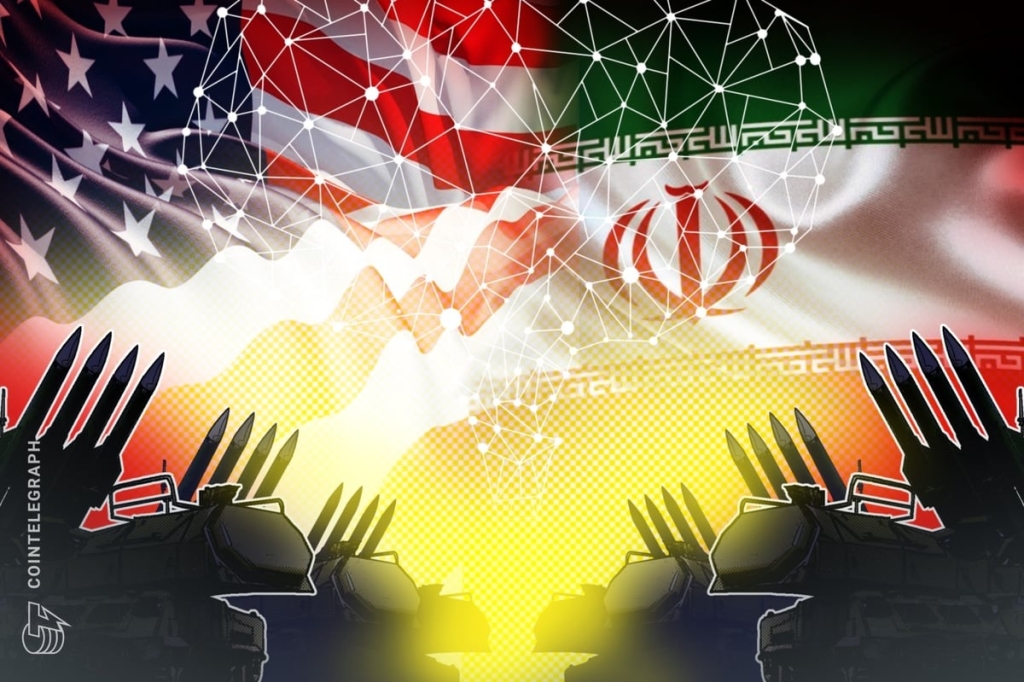
Iran’s Crypto Exodus: $500K Outflows Spike as US-Israel Strikes Ignite Capital Flight Fears
In a dramatic turn of events that has sent shockwaves through the global crypto community, Iran’s largest cryptocurrency exchange, Nobitex, experienced a staggering 700% surge in digital asset withdrawals within minutes of US and Israeli airstrikes hitting Tehran on Saturday. The sudden exodus of crypto funds, potentially representing capital flight from the Islamic Republic, has raised serious questions about the stability of Iran’s financial infrastructure and the role of digital assets in geopolitical conflicts.
The Numbers Don’t Lie: $500K to $3M in 60 Minutes
According to blockchain analytics firm Elliptic, crypto outflows from Nobitex skyrocketed from an average of $70,000 per hour to over $500,000 within minutes of the first explosions echoing through Tehran’s streets. The chart tells the story – a near-vertical spike that peaked at nearly $3 million in a single hour later that day.
“This isn’t just people panic-selling their Bitcoin,” explained Tom Robinson, co-founder of Elliptic. “The timing, the scale, and the destination of these funds strongly suggest this represents capital flight – Iranian citizens and businesses moving their wealth out of the country before potential sanctions tighten or the situation deteriorates further.”
Internet Blackout: The Digital Iron Curtain
However, the crypto exodus story took an unexpected twist when Iran’s internet connectivity plummeted by approximately 99% shortly after the conflict escalated. Fellow crypto forensics platform TRM Labs attributes the sharp decline in subsequent outflows to this draconian measure.
“It appears that the country’s crypto ecosystem is not showing signs of acceleration or capital flight, but instead experiencing a downturn in both transactions and volume as the regime enforces strict internet blackouts,” TRM stated in a contradictory analysis.
This digital blackout represents a modern twist on capital controls, effectively creating a “financial Berlin Wall” that prevents Iranians from moving their wealth beyond the regime’s reach. The irony isn’t lost on observers – cryptocurrency, designed to be censorship-resistant, is being thwarted by the oldest trick in the authoritarian playbook: cutting off communication.
Nobitex: Iran’s Crypto Behemoth Under Pressure
Nobitex handles roughly 87% of Iran’s crypto transaction volume, processing about $7.2 billion in trades for more than 11 million users in 2025 alone. The exchange’s dominance makes it the perfect barometer for measuring financial sentiment in a country where traditional banking has become increasingly unreliable.
The platform’s significance extends beyond mere trading volumes. In a country crippled by US sanctions and a collapsing banking system, Nobitex represents one of the few remaining avenues for Iranians to store and transfer value internationally. When the bombs started falling, those crypto wallets became digital escape hatches.
Banking Collapse: The Perfect Storm
Iran’s crypto boom isn’t happening in a vacuum. In October, one of the country’s largest private banks, Ayandeh Bank, went bankrupt after accumulating $5.1 billion in losses and nearly $3 billion in debt, impacting more than 42 million customers – roughly half of Iran’s population.
The central bank has warned that eight other local banks are at risk of dissolution unless they implement reforms. For millions of Iranians, cryptocurrency has become less of an investment opportunity and more of a financial lifeboat in a sea of economic uncertainty.
The Great Crypto Debate: Flight or Freeze?
The conflicting analyses from Elliptic and TRM Labs highlight a fundamental question: Is Iran experiencing capital flight, or is the crypto market simply freezing under government pressure?
Elliptic’s data shows funds moving to foreign exchanges, suggesting people are indeed trying to get their money out. But TRM’s observation about the internet blackout paints a picture of a crypto market that’s been effectively neutered by the regime.
The truth likely lies somewhere in between. While some Iranians successfully moved funds before the blackout, the vast majority found their digital escape routes suddenly cut off, leaving them trapped in a country on the brink of potential regime change.
Geopolitical Earthquake: US-Israel vs. Iran
The crypto outflows come as the US and Israel seek to topple the current Iranian regime and wipe out its nuclear and missile programs. Iran responded with airstrikes of its own on neighboring countries, creating further instability in the region.
Bitcoin, often called “digital gold,” has historically served as a safe haven during times of geopolitical uncertainty. In Iran’s case, it’s become something more – a tool for preserving wealth in a country where the government has lost the trust of its citizens.
The $81 Million Question: Security Concerns
Nobitex’s troubles extend beyond geopolitical pressures. In June, the exchange suffered an $81 million hack, raising serious questions about its security infrastructure. For Iranians already nervous about their financial future, such breaches represent another layer of vulnerability in an already fragile system.
The Bigger Picture: Crypto as Resistance
What’s happening in Iran represents a fascinating case study in how cryptocurrency functions in authoritarian regimes. When traditional financial systems fail or become unreliable, crypto often steps in as an alternative – but only if the regime allows it.
Iran’s experience shows both the promise and limitations of cryptocurrency as a tool for financial freedom. While it can facilitate capital flight when networks are operational, it remains vulnerable to the same censorship tactics used against traditional finance.
What’s Next for Iran’s Crypto Market?
As the situation continues to evolve, several scenarios could play out:
-
Gradual Normalization: If tensions de-escalate, crypto outflows might return to normal levels, though trust in traditional banking may be permanently damaged.
-
Tightened Controls: The regime could implement stricter KYC requirements or even ban crypto trading altogether to prevent future capital flight.
-
Underground Economy: A black market for crypto could emerge, with peer-to-peer trading becoming the norm for those seeking to move money out of the country.
-
International Pressure: If evidence of widespread capital flight emerges, it could lead to increased scrutiny of crypto exchanges operating in sanctioned countries.
The Human Element
Behind the charts and statistics are millions of ordinary Iranians caught in an economic and geopolitical crossfire. For them, cryptocurrency represents hope – the possibility of preserving their life savings and maintaining some control over their financial destiny in an increasingly unpredictable world.
Whether this hope will be realized or crushed under the weight of geopolitical maneuvering remains to be seen. But one thing is clear: in Iran, as in many other parts of the world, cryptocurrency has evolved from a speculative investment to a tool of economic survival.
Tags: Iran crypto exchange, Nobitex outflows, capital flight Iran, US Israel strikes Tehran, crypto geopolitical conflict, Iranian banking collapse, internet blackout crypto, Elliptic TRM Labs analysis, digital gold safe haven, sanctions cryptocurrency, Bitcoin Iran crisis, financial freedom crypto, authoritarian regime crypto, blockchain analytics, geopolitical uncertainty Bitcoin
Viral Sentences:
- “Iran’s crypto exodus: $500K to $3M in 60 minutes as bombs fall”
- “Internet blackout cuts off crypto escape routes for millions”
- “When traditional banking fails, crypto becomes digital life insurance”
- “The great crypto debate: flight or freeze in Iran?”
- “Cryptocurrency: the ultimate tool for preserving wealth in chaos”
- “How a 99% internet blackout became Iran’s new financial Berlin Wall”
- “Nobitex: Iran’s crypto behemoth caught between bombs and blackouts”
- “The $81 million hack that exposed Iran’s crypto vulnerabilities”
- “Why Bitcoin is becoming the go-to safe haven in geopolitical hotspots”
- “Crypto as resistance: how digital assets challenge authoritarian control”
,


Leave a Reply
Want to join the discussion?Feel free to contribute!