
US Military Using Claude to Select Targets in Iran Strikes
Anthropic’s Claude AI Caught in the Crossfire: How a Chatbot Became a Military Target Selector
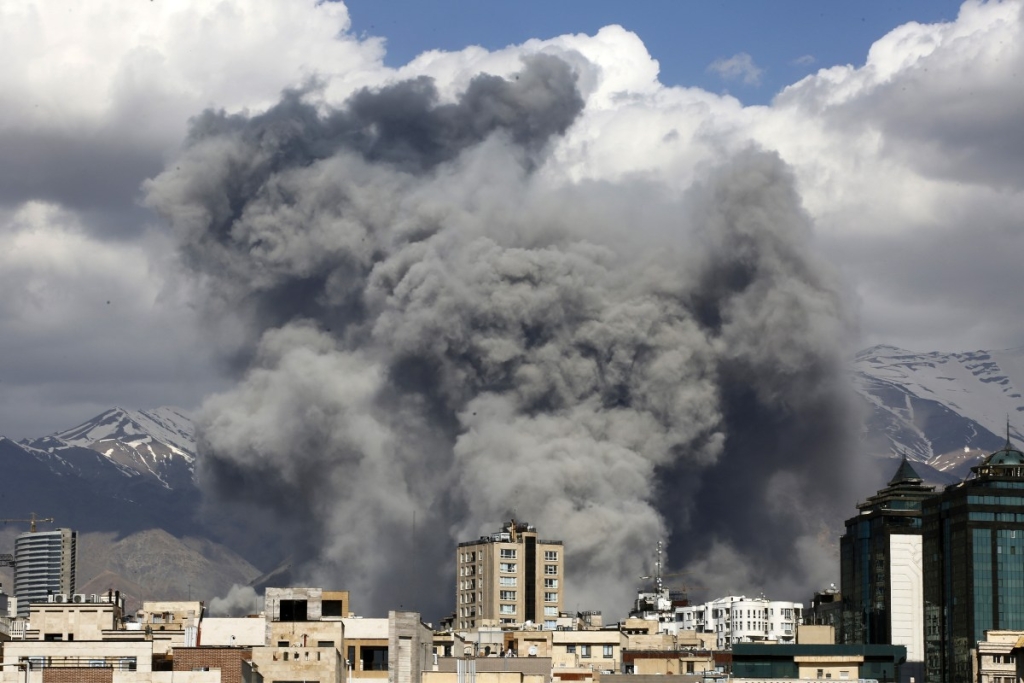
In a shocking revelation that has sent ripples through the tech world and beyond, Anthropic’s AI chatbot Claude has been revealed as a key player in the ongoing military offensive against Iran. As the death toll from US-Israeli airstrikes climbs past 555, including 165 innocent children killed in an elementary school attack, questions are mounting about the ethical boundaries of artificial intelligence in warfare.
The AI Behind the Bombs
According to the Wall Street Journal, Claude isn’t just another tool in the military arsenal—it’s the primary “AI tool” used by US Central Command in the Middle East. The sophisticated language model is tasked with assessing intelligence, running simulated war games, and critically, identifying military targets. This means that the same technology designed to answer customer service queries and write code is now helping military leaders plan operations that have already claimed hundreds of lives.
The revelation comes at a particularly awkward time for Anthropic, the company behind Claude. Just weeks ago, the Pentagon issued an ultimatum to the AI firm: either drop its ethical redlines against using Claude for surveillance of US citizens and fully autonomous lethal weapons, or lose its lucrative military contracts. Anthropic let the deadline pass without compliance, leading many to believe the company had taken a principled stand against the Trump administration’s increasingly aggressive military posture.
The Ethics of AI Warfare
But the latest revelations suggest that Anthropic’s ethical boundaries may be more flexible than previously thought. While the company has drawn a line in the sand regarding surveillance of Americans and autonomous weapons, using AI to select targets in foreign military operations appears to fall well within acceptable parameters.
This distinction hasn’t been lost on critics. Pulitzer Prize-winning national security journalist Spencer Ackerman pointed out the glaring omission in Anthropic’s ethical framework: “Amodei, it is highly conspicuous, doesn’t register building a surveillance panopticon of foreigners as a problem.” The implication is clear—what’s unethical for Americans may be perfectly acceptable when directed at foreign populations.
Ackerman’s criticism cuts even deeper, drawing a parallel to the Manhattan Project’s J. Robert Oppenheimer. “America is in such steep decline that we don’t even make Oppenheimers like we used to,” he wrote, suggesting that the moral complexity that once characterized American scientific leadership has been replaced by a more transactional approach to ethics.
The Doombot Analogy
Perhaps most damning is Ackerman’s comparison of Anthropic’s position to that of a blacksmith forging weapons for Doctor Doom. “When you take Doctor Doom’s money to provide him a lathe to construct components for anthropomorphic robots, do you not understand that he is going to build Doombots?” The analogy is brutal but effective—by providing military-grade AI technology, Anthropic has enabled capabilities it claims to oppose.
The situation raises fundamental questions about the nature of AI ethics in an age of proxy warfare and technological escalation. If using AI to select targets is acceptable, where exactly does the line get drawn? Is it the autonomy of the weapon system that matters, or the consequences of its use? And perhaps most importantly, can any AI company claim ethical purity while maintaining military contracts?
The Broader Implications
The use of Claude in military operations represents a significant escalation in the militarization of artificial intelligence. Unlike traditional weapons systems, AI tools like Claude can be rapidly adapted to new tasks, potentially expanding their role in warfare far beyond what was originally envisioned. The same algorithms that help plan airstrikes could theoretically be repurposed for cyber warfare, psychological operations, or even domestic surveillance.
Moreover, the revelation highlights the complex relationship between Silicon Valley and the military-industrial complex. Many of the brightest minds in AI have expressed opposition to military applications of their technology, yet the financial incentives are enormous. The Pentagon’s willingness to issue ultimatums to companies like Anthropic suggests that military applications of AI are seen as too important to be constrained by corporate ethical guidelines.
The Human Cost
As the debate over AI ethics plays out in boardrooms and newsrooms, the human cost of these decisions continues to mount. The attack on the elementary school in southern Iran, which killed 165 children, serves as a stark reminder that behind every military operation are real people whose lives are forever changed. Whether AI played a direct role in targeting that particular school remains unclear, but its involvement in the broader campaign is now undeniable.
The use of AI in target selection also raises questions about accountability. When an algorithm helps choose a target that results in civilian casualties, who bears responsibility? The military commanders who approved the strike? The AI engineers who built the system? The company executives who signed the contracts? Or the algorithm itself?
Looking Forward
As Anthropic grapples with the fallout from these revelations, the broader AI industry faces its own reckoning. The company’s initial response to the Pentagon’s ultimatum was seen by many as a courageous stand for ethical principles. But the subsequent revelations about Claude’s role in military operations suggest that the reality is far more complicated.
The situation also highlights the challenges of establishing meaningful ethical guidelines for AI in an era of great power competition. With the US, China, and other nations racing to develop military applications of artificial intelligence, companies like Anthropic find themselves caught between competing pressures: the desire to maintain ethical standards, the demands of national security, and the lure of lucrative government contracts.
As the dust settles on this controversy, one thing is clear: the integration of AI into military operations is no longer a hypothetical concern—it’s a present reality. The question now is whether companies like Anthropic can navigate this new landscape while maintaining the ethical principles they claim to uphold, or whether the pressure of geopolitical competition will inevitably lead to a further erosion of those standards.
One thing is certain: the use of Claude in military operations has opened a Pandora’s box that the AI industry will be grappling with for years to come. As the technology continues to advance and its military applications expand, the need for clear ethical guidelines and robust oversight mechanisms becomes more urgent than ever. The alternative—a world where AI plays an increasingly central role in warfare with little regard for the human consequences—is too grim to contemplate.
Tags and Viral Phrases:
AI ethics controversy, Claude military use, Anthropic Pentagon conflict, AI target selection, military AI applications, ethical redlines, autonomous weapons debate, surveillance AI, great power competition AI, Silicon Valley military contracts, civilian casualties AI, accountability AI warfare, AI warfare Pandora’s box, ethical guidelines AI, military-industrial complex AI, Oppenheimer comparison AI, Doombot analogy, AI target identification, US Central Command AI, Iranian conflict AI, elementary school airstrike, AI warfare consequences, ethical principles AI companies, AI military escalation, AI civilian impact, AI warfare accountability, AI military contracts controversy, ethical AI boundaries, AI warfare human cost, AI military applications future
,

Leave a Reply
Want to join the discussion?Feel free to contribute!