
Sad News! AI’s RAM Hunger Finds a New Victim in the Orange Pi Neo Linux Handheld
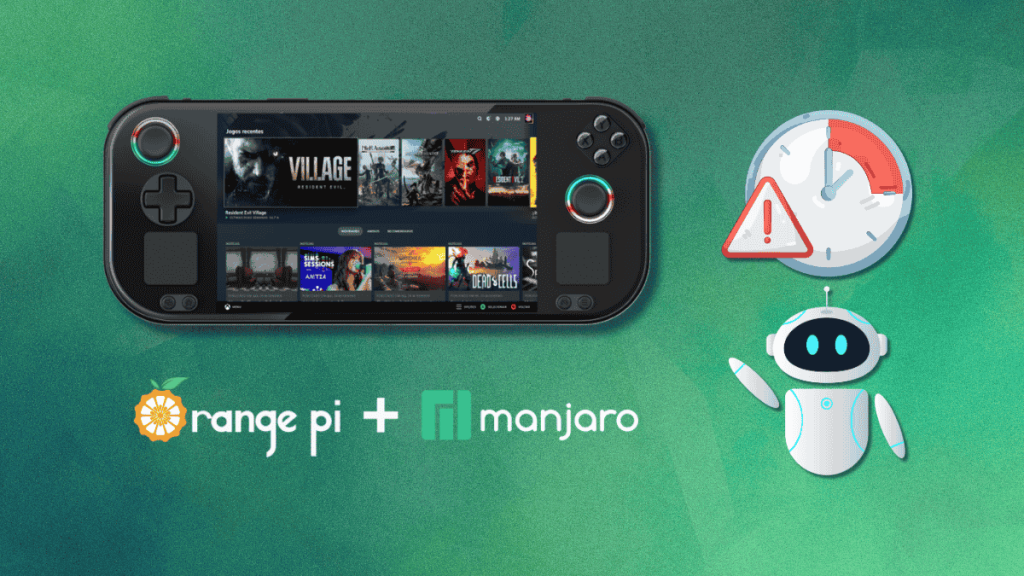
Orange Pi Neo Linux Handheld Delayed Indefinitely Due to Soaring RAM and SSD Prices
The handheld gaming PC market has exploded since Valve introduced the Steam Deck in 2022, establishing itself as the undisputed champion of Linux-powered portable gaming. Its robust build quality, comprehensive support, and expanding library of games running smoothly have made it the go-to choice for gamers seeking a handheld experience without Windows. However, the landscape has evolved dramatically, with numerous competitors emerging to challenge Valve’s dominance.
From Lenovo’s Legion Go S offering SteamOS as a native option to AYANEO’s AYANEO 3 attracting Linux enthusiasts searching for Steam Deck alternatives, the market has become increasingly diverse and competitive. Now, a highly anticipated entrant—the Orange Pi Neo—faces an unexpected setback that has sent ripples through the Linux gaming community.
The Orange Pi Neo: Ambitious Linux-First Gaming on Hold
The Orange Pi Neo represents a collaborative effort between Orange Pi and Manjaro Linux, positioning itself as a Linux-first handheld gaming device built from the ground up for open-source enthusiasts. This partnership promised to deliver a premium handheld experience with Manjaro’s renowned Linux distribution at its core, potentially offering a compelling alternative to SteamOS-based devices.
Development has been progressing steadily since early 2024, with the Manjaro team providing regular updates through their official forums. These updates covered extensive ground, from hardware revisions and software optimizations to regulatory certification progress and even Valve’s direct involvement in testing the device’s compatibility with Steam’s ecosystem.
However, the most recent development update has delivered disappointing news to eager fans. In a brief but impactful statement, the Manjaro team announced that the Orange Pi Neo project is currently on indefinite hold due to economic factors beyond their control.
Economic Headwinds: When AI Demand Crushes Consumer Hardware
The primary culprit behind this delay is the astronomical surge in prices for critical components—specifically DDR5 RAM and SSD storage. The situation has deteriorated so severely that what was once a manageable cost structure has become financially untenable for a consumer-focused product.
To illustrate the magnitude of this crisis, consider that a DDR5 memory chip priced at $6.84 in late September 2025 had skyrocketed to $27.20 by December 1st—representing a staggering nearly fourfold increase in just two months. This unprecedented price volatility stems directly from the AI boom, where data centers are voraciously consuming memory supplies at unprecedented rates.
Manufacturers, faced with the choice between selling components to AI companies at premium prices or to individual consumers at traditional margins, have naturally prioritized the more lucrative data center market. The profit differential is simply too significant to ignore, leaving consumer hardware projects like the Orange Pi Neo caught in the crossfire.
Progress Continues Behind the Scenes
Despite this setback, the Manjaro team hasn’t been idle during this holding pattern. The development update revealed that the Orange Pi Neo has successfully cleared both CE certification (required for legal sale in Europe) and FCC certification (mandatory for United States markets). These regulatory approvals represent significant milestones, as they demonstrate the device’s compliance with safety, electromagnetic compatibility, and other essential standards.
Additionally, the team has continued refining Manjaro Gaming Edition, the custom operating system that will ship with the device. This immutable OS, built atop Manjaro Linux with the Plasma desktop environment, is designed to provide a seamless gaming experience. It defaults to SteamUI for gaming sessions but allows users to switch to traditional desktop mode when needed—offering the best of both worlds for Linux enthusiasts.
Technical Specifications: What Could Have Been
For those unfamiliar with the device’s ambitious specifications, the Orange Pi Neo centers around AMD’s Ryzen 7 7840U processor, a powerful APU capable of handling modern gaming workloads while maintaining reasonable battery life. The handheld features a 7-inch 1920×1200 display with a 120Hz refresh rate, promising smooth visuals for fast-paced games.
The control scheme takes inspiration from the Steam Deck while introducing its own innovations, including dual touchpads similar in concept to Valve’s design and Hall effect joysticks with customizable RGB lighting. These Hall effect sensors offer superior longevity compared to traditional potentiometer-based sticks, addressing one of the common failure points in handheld gaming devices.
The software stack is particularly noteworthy for Linux enthusiasts. Manjaro Gaming Edition represents a significant investment in creating a gaming-optimized Linux experience, with the immutable design ensuring system stability while allowing users to install games and applications in designated mutable spaces.
Industry-Wide Impact: A Symptom of Broader Market Forces
The Orange Pi Neo’s predicament isn’t an isolated incident but rather a symptom of broader market dynamics affecting the entire consumer electronics industry. The AI boom has created unprecedented demand for high-performance components, fundamentally reshaping supply chains and pricing structures.
This situation raises questions about the viability of niche hardware projects in an era where AI infrastructure commands premium pricing for components. Small companies and open-source initiatives, lacking the purchasing power and long-term contracts of major corporations, find themselves particularly vulnerable to these market fluctuations.
The delay also highlights the interconnected nature of modern technology markets, where developments in one sector (AI) can have cascading effects on seemingly unrelated products (gaming handhelds). It serves as a reminder that even well-planned projects with strong community support can be derailed by macroeconomic forces.
Looking Ahead: Uncertainty and Hope
While the Manjaro team has stated they’re waiting for “a good time to launch the product,” they’ve provided no specific timeline or concrete indicators of when conditions might improve sufficiently to proceed. This uncertainty leaves potential customers in limbo, forced to weigh their enthusiasm for a Linux-first handheld against the reality of an indeterminate delay.
The situation underscores the challenges facing open-source hardware initiatives in a market increasingly dominated by large corporations with deep pockets and guaranteed supply chains. However, it also demonstrates the resilience of projects like the Orange Pi Neo, which continue development work even during holding patterns.
As the AI boom continues to reshape technology markets, the future of consumer-focused Linux gaming hardware remains uncertain. The Orange Pi Neo’s journey from concept to (hopefully) reality will serve as a case study for similar projects navigating these turbulent waters.
For now, the Linux gaming community waits—hoping that RAM and SSD prices will stabilize, that supply chains will rebalance, and that this ambitious handheld will eventually reach the hands of enthusiasts eager for a truly open gaming experience on the go.
Tags: Orange Pi Neo, Manjaro Linux, handheld gaming PC, Steam Deck alternative, Linux gaming, DDR5 RAM prices, SSD costs, AI market impact, AMD Ryzen 7 7840U, gaming handheld, open-source hardware, portable gaming, CE certification, FCC certification, Manjaro Gaming Edition, gaming market delays, component shortages, Linux-first device, gaming innovation
Viral Phrases: “Linux gaming revolution on hold,” “AI boom crashes handheld dreams,” “DDR5 prices through the roof,” “The wait continues for Linux gamers,” “Open-source hardware hits economic wall,” “Gaming handheld caught in AI crossfire,” “When AI eats your gaming dreams,” “The price of progress in silicon,” “Waiting game for Linux enthusiasts,” “Supply chain chaos strikes again”
,

Leave a Reply
Want to join the discussion?Feel free to contribute!