
This Banned X-Files Episode Is Still One Of Its Most Terrifying
Here’s the rewritten news article with a detailed, tech-focused, and viral tone, followed by tags and viral phrases at the end:
Banned “X-Files” Episode “Home” Still Reigns as One of TV’s Most Disturbing Masterpieces
In the annals of television history, few episodes have managed to shock audiences and network executives quite like “The X-Files” Season 4’s “Home.” This infamous installment, which first aired in 1996, was so unsettling that it received a TV-MA rating and was banned from Fox for three years after its initial broadcast. Now, as we approach the era of Ryan Coogler’s highly anticipated reboot of the sci-fi classic, it’s time to revisit this groundbreaking episode and explore why it continues to terrify viewers more than two decades later.
“Home” represents a pivotal moment in “The X-Files” evolution, pushing the boundaries of what was acceptable on prime-time television. Directed by Kim Manners, a veteran of the series who helmed 52 episodes, and written by the formidable trio of Glen Morgan, James Wong, and John Shiban, this episode is a masterclass in psychological horror and suspense.
The story begins with FBI agents Fox Mulder (David Duchovny) and Dana Scully (Gillian Anderson) investigating the burial of a deformed infant in a remote Pennsylvania field. Their inquiries lead them to the Peacock family, a reclusive clan living in a dilapidated farmhouse. The Peacocks, with their inbred lineage and unsettling appearance, are reminiscent of the antagonists in later horror films like “Wrong Turn,” but “Home” predates that 2003 cult classic by seven years.
What sets “Home” apart is its unflinching portrayal of human depravity. Unlike many “X-Files” episodes that dabble in the supernatural, this story is grounded in a horrifying reality. The Peacock brothers, played with chilling effectiveness by Chris Nelson Norris, Ken Kirzinger, and William B. Davis, embody a primal, animalistic brutality that’s all the more terrifying for its plausibility.
The episode’s cold open is a work of art in itself, immediately establishing a tone of dread and unease. As the camera pans over a serene countryside, the sound of a baby’s cry leads to a shocking discovery that sets the stage for the nightmare to come. This opening sequence is a prime example of how “Home” uses visual storytelling to maximum effect, creating an atmosphere of tension that permeates the entire episode.
One of the most remarkable aspects of “Home” is its use of practical effects and prosthetics. The makeup and special effects teams outdid themselves in creating the grotesque appearance of the Peacock family, particularly the mother, whose shocking reveal is a moment that has seared itself into the memories of all who have witnessed it. This commitment to practical effects gives the episode a visceral quality that CGI often fails to replicate, making the horror feel more immediate and real.
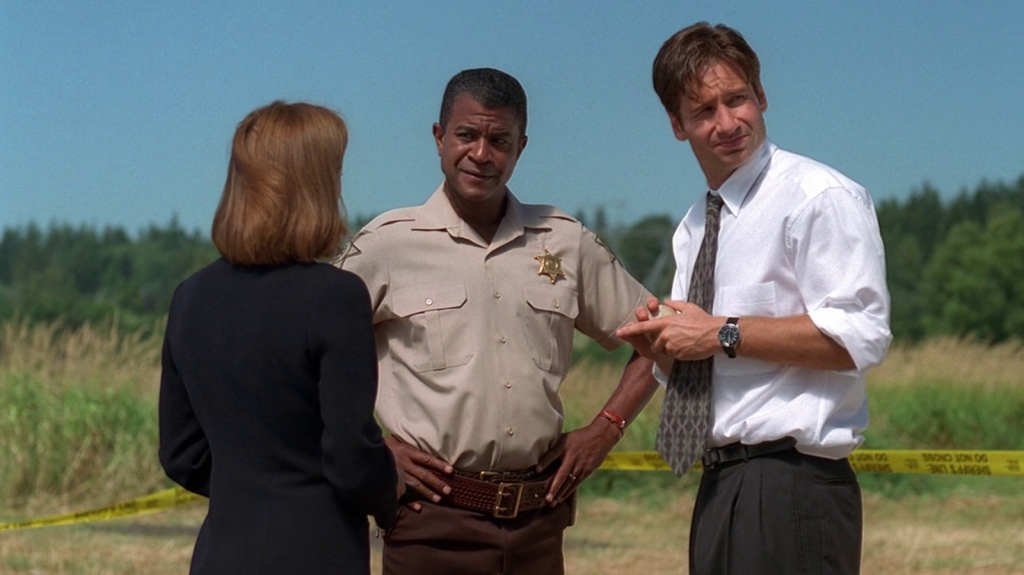
The performances in “Home” are uniformly excellent, with the regular cast delivering some of their strongest work. Duchovny and Anderson’s chemistry is on full display as they navigate this disturbing case, their characters’ reactions to the Peacock family’s lifestyle adding depth to the already complex narrative. Supporting actors like Tucker Smallwood, who plays the sympathetic Sheriff Andy Taylor, provide crucial emotional anchors in a story that could easily veer into pure shock value.
“Home” also benefits from its cinematography and sound design. The use of shadows and claustrophobic framing in the Peacock farmhouse creates a sense of inescapable dread. Meanwhile, the sound design, particularly the use of silence and subtle ambient noises, heightens the tension to almost unbearable levels.
The episode’s impact extends beyond its immediate shock value. It sparked discussions about censorship in television, the limits of storytelling, and the nature of horror itself. “Home” challenged viewers to confront uncomfortable truths about human nature and the darkness that can exist in seemingly ordinary places.
As we look forward to the future of “The X-Files” with Ryan Coogler at the helm, it’s worth reflecting on episodes like “Home” that helped define the series’ legacy. Coogler, known for his work on films like “Black Panther” and “Creed,” has the potential to bring a fresh perspective to the franchise while honoring its roots in psychological horror and conspiracy theories.
For those brave enough to revisit “Home” or experience it for the first time, be prepared for a journey into some of the darkest corners of the human psyche. This episode remains a testament to the power of television to shock, disturb, and provoke thought in equal measure. It’s a reminder that sometimes, the most terrifying monsters are not the ones that come from outer space or the supernatural, but the ones that lurk within the human heart.
As we celebrate the legacy of “The X-Files” and anticipate its future, “Home” stands as a shining example of the series at its most daring and effective. It’s a episode that continues to resonate with viewers, not just for its ability to scare, but for its unflinching examination of the human condition in all its flawed, frightening complexity.
Tags and Viral Phrases:
- Banned X-Files episode
- TV-MA rating controversy
- Psychological horror masterpiece
- Practical effects triumph
- Disturbing family secrets
- Rural American Gothic
- Inbreeding horror
- Prime-time television limits
- Kim Manners direction
- Chris Carter’s legacy
- Scully and Mulder’s darkest case
- Peacock family nightmare fuel
- Groundbreaking television
- Horror that stands the test of time
- Unsettling prosthetic work
- Sheriff Andy Taylor’s tragic role
- “Home” episode analysis
- The X-Files reboot anticipation
- Ryan Coogler’s vision
- Television censorship debate
- Human depravity on screen
- Cold open shock value
- Sound design in horror
- Cinematography of dread
- “Wrong Turn” predecessor
- Charlie Chaplin biography inspiration
- Fox network controversy
- Cult classic horror
- Psychological thriller television
- Disturbing television history
- The X-Files at its most daring
- Viewer discretion advised
- Not for the faint of heart
- Television that pushed boundaries
- Horror that haunts dreams
- Uncomfortable truths in entertainment
- The power of suggestion in horror
- Behind the scenes of “Home”
- Fan theories and discussions
- Impact on horror genre
- Legacy of controversial episodes
- Revisiting classic television
- The evolution of TV ratings
- Exploring the dark side of America
- Family secrets gone wrong
- The art of building tension
- Memorable television moments
- Television that leaves a mark
- The psychology of fear in media
- How “Home” changed television
- The lasting impact of shock value
- Why “Home” still resonates today
- The anatomy of a banned episode
- Television’s most disturbing hour
- The X-Files’ most controversial episode
- A masterclass in horror storytelling
- The power of suggestion in terror
- When television went too far
- The episode that defined a series
- A look back at TV’s darkest moments
- How “Home” influenced modern horror
- The legacy of “The X-Files” controversy
- Exploring the limits of broadcast television
- The art of the unsettling reveal
- Why some stories are too dark for TV
- The lasting impact of “Home” on pop culture
- How one episode changed a series forever
- The psychology behind TV’s most disturbing moments
- When practical effects trump CGI
- The role of sound in building dread
- How “Home” pushed the boundaries of network television
- The lasting legacy of “The X-Files” most controversial episode
- Why “Home” remains a benchmark in horror television
- The impact of “Home” on future television storytelling
- How one episode sparked a censorship debate
- The art of creating lasting unease in viewers
- Why “Home” is still discussed decades later
- The role of setting in creating horror
- How “Home” influenced the portrayal of rural America in media
- The lasting impact of “Home” on David Duchovny and Gillian Anderson’s careers
- Why “Home” is considered a must-watch for horror fans
- The legacy of Kim Manners’ direction in “Home”
- How “Home” changed the way we think about family in horror
- The lasting cultural impact of “The X-Files” most controversial episode
,


Leave a Reply
Want to join the discussion?Feel free to contribute!