
Fallout 3 lead Emil Pagliarulo tried to stuff it to the gills with Deus Ex DNA: ‘As much immersive sim as was humanly possible’
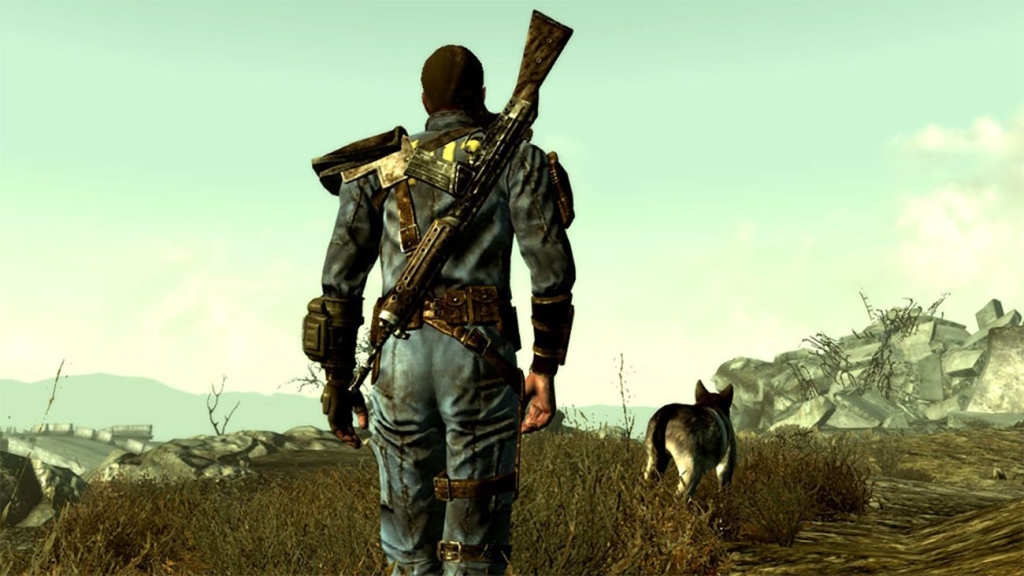
Fallout 3: The Hidden Immersive Sim That Redefined Open-World Gaming
When most gamers think of Fallout 3, their minds immediately jump to post-apocalyptic exploration, VATS combat, or the iconic wasteland of Washington D.C. But according to Emil Pagliarulo, the lead designer of Fallout 3, the game was secretly an ambitious attempt to bring immersive sim mechanics to the mainstream—channeling the spirit of classics like Deus Ex and Thief into Bethesda’s groundbreaking RPG.
“I admit it, when I think of Fallout 3, the immersive sims of yore are not the comparisons I leap to instinctively,” Pagliarulo recently revealed in a candid discussion with Rock Paper Shotgun. “But having checked out a recent RPS chat, you know what? I see it. I see the vision.”
The DNA of immersive simulation runs deep in Pagliarulo’s career. Before joining Bethesda, he worked on Thief 2 and Thief 3, games renowned for their emergent gameplay and player freedom. When he transitioned to Fallout 3, he brought that philosophy with him, determined to push the boundaries of what an open-world RPG could be.
“We let you play as any type of character you want, and there are all these systems,” Pagliarulo explained. “And so, if you want to shoot your way through or sneak your way through, we have to support all of it.” This approach marked a significant evolution from the days of Thief 1, where developers added fire arrows simply to appeal to players who wanted a “rocket launcher” experience.
The ambition was clear: Pagliarulo wanted to infuse Fallout 3 with “as much immersive sim as was humanly possible.” This meant creating a game where player choice truly mattered, where multiple approaches to any situation were valid, and where the world responded dynamically to your actions. “We had done Oblivion, but I knew that we could take it even further in Fallout 3,” he said.
One of the most direct translations of immersive sim DNA was the crippled limbs system—almost directly ported over from Deus Ex‘s injury mechanics. Remember those frantic moments when you’d accidentally blow your own legs off with a misplaced grenade, then had to drag your crippled character across the map to find a stimpak? That’s pure immersive sim design, forcing players to deal with the consequences of their actions in creative ways.
“You see this with a lot of people who worked at Looking Glass, or Ion Storm Austin,” Pagliarulo noted. “Those are folks who went on to work for Arkane on Dishonored, so that DNA has definitely spread throughout our organisation.” The lineage is clear: from Thief to Deus Ex to Fallout 3 to Dishonored, the immersive sim philosophy evolved and spread through the industry.
The stealth system in Fallout 3, while admittedly “profoundly exploitable” as Pagliarulo himself admits, represented another attempt to bring immersive sim depth to a broader audience. Players could crouch in shadows, use environmental distractions, and employ silenced weapons to avoid detection—mechanics that rewarded thoughtful, patient play rather than just brute force.
What makes Pagliarulo’s revelation so fascinating is how it reframes our understanding of Fallout 3‘s legacy. While the game is often celebrated (and sometimes criticized) for its open-world design and narrative choices, this hidden layer of immersive sim ambition suggests a more complex development philosophy than many realized.
The game’s multiple solution paths—whether you’re hacking terminals, lockpicking doors, talking your way past guards, or simply shooting everything that moves—all stem from that immersive sim DNA. Even the VATS system, while unique to Fallout, embodies the same philosophy of giving players tactical choices rather than forcing a single playstyle.
This revelation also helps explain why Fallout 3 felt so revolutionary when it launched in 2008. It wasn’t just another open-world RPG; it was an attempt to smuggle immersive sim complexity into a mainstream package, making sophisticated gameplay mechanics accessible to millions of players who might never have experienced Thief or Deus Ex.
The influence of this approach can be seen in subsequent Bethesda titles and beyond. Fallout: New Vegas doubled down on these systems, adding even more player choice and consequence. Meanwhile, other developers took note of how successfully Fallout 3 balanced accessibility with depth.
Pagliarulo’s vision represents a fascinating “what if” scenario in gaming history. What if Fallout 3 had leaned even harder into its immersive sim roots? What if the game’s systems had been even more interconnected, its emergent possibilities even more wild? While we can only speculate, it’s clear that the game achieved something remarkable by bringing immersive sim philosophy to a massive audience.
As we look back on Fallout 3 a decade and a half later, this new perspective adds another layer to its legacy. It wasn’t just a landmark RPG or a successful franchise revival—it was also a stealth carrier for immersive sim design principles, quietly influencing how we think about player freedom and systemic game design to this day.
The fact that Pagliarulo has discussed these influences before, including in previous interviews with Rock Paper Shotgun, suggests he’s been quietly proud of this aspect of Fallout 3‘s design all along. It’s a reminder that sometimes the most influential games are the ones that successfully hide their true ambitions beneath accessible exteriors.
So the next time you load up Fallout 3, remember: you’re not just playing a post-apocalyptic RPG. You’re experiencing a carefully crafted immersive sim in disguise, one that brought Looking Glass-style design philosophy to millions of players who might never have discovered it otherwise. That’s a legacy worth celebrating.
Tags & Viral Phrases:
- Fallout 3 immersive sim secrets
- Deus Ex DNA in Bethesda games
- Emil Pagliarulo game design philosophy
- Hidden immersive sim mechanics
- Fallout 3 stealth system exploitation
- VATS combat immersive sim roots
- Crippled limbs system Deus Ex influence
- Looking Glass Studios legacy
- Arkane Dishonored DNA spread
- Fallout 3 multiple solution paths
- Post-apocalyptic immersive simulation
- Bethesda open-world RPG evolution
- Game design philosophy revealed
- Immersive sim mainstream breakthrough
- Fallout 3 legacy reexamined
- Player choice consequence systems
- Emergent gameplay mechanics
- Game development behind the scenes
- RPG design innovation
- Gaming industry influence analysis
,


Leave a Reply
Want to join the discussion?Feel free to contribute!