
Scientists Uncover “Mouse Bite” Defects Inside Computer Chips
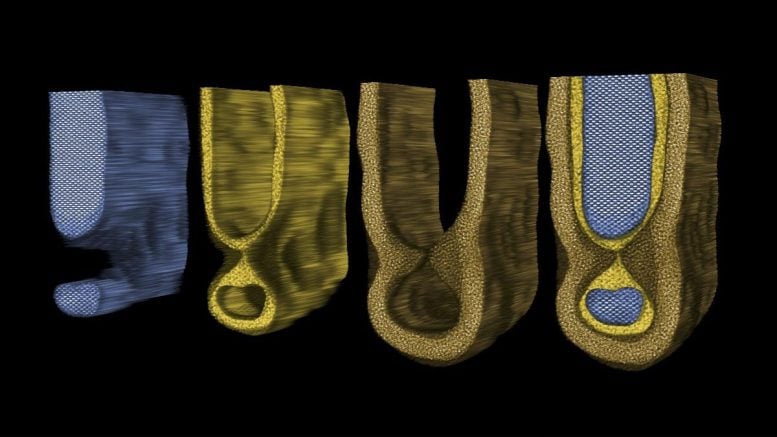
In a breakthrough that could reshape the future of semiconductor manufacturing, scientists at Cornell University have achieved what the industry has long dreamed of: direct, high-resolution 3D visualization of atomic-scale defects buried deep within computer chips. This pioneering imaging feat not only reveals flaws previously invisible to engineers but also opens the door to smarter, more reliable chip design—an achievement that could ripple across everything from smartphones to supercomputers.
For decades, chipmakers have operated with a frustrating blind spot. Modern processors are marvels of miniaturization, cramming billions of transistors into spaces smaller than a fingernail. Yet, hidden within these dense labyrinths of silicon are microscopic imperfections—atomic-scale “mouse bites” and voids—that can quietly undermine performance or reliability. Detecting and correcting these defects has been a guessing game, relying on statistical sampling or destructive testing. Now, thanks to Cornell’s innovation, those days may be numbered.
The research team, led by materials scientist Lena Kourkoutis, harnessed a powerful combination of advanced electron microscopy and sophisticated image reconstruction algorithms. By peering inside the layered structures of transistors—specifically the silicon dioxide and hafnium oxide layers that form the heart of modern chip channels—they were able to map out atomic positions in three dimensions with unprecedented clarity. The result is a kind of “X-ray vision” for chip defects, revealing the precise locations and shapes of flaws that were once only theorized.
These atomic defects, sometimes called “mouse bites” because of their irregular, nibbled appearance, can act like tiny traps for electrons, disrupting the flow of current and leading to inefficiencies or even failures. In the race for ever-smaller, faster, and more energy-efficient chips, such imperfections are more than just nuisances—they are potential showstoppers. By identifying and characterizing these flaws, engineers can now work toward eliminating them at the source, potentially boosting chip performance and longevity.
The implications are vast. As the semiconductor industry pushes toward new materials and architectures—such as gate-all-around transistors and 3D-stacked chips—the ability to see and fix atomic defects will be crucial. This breakthrough could accelerate the development of next-generation processors, making them not only faster but also more reliable and energy-efficient. For consumers, that could mean longer-lasting devices, snappier performance, and new capabilities we haven’t yet imagined.
But the impact doesn’t stop at consumer electronics. Industries that rely on high-performance computing—such as artificial intelligence, scientific research, and data centers—stand to benefit enormously. Even fields like quantum computing, where atomic precision is paramount, could see advances thanks to these new imaging techniques.
Of course, translating this scientific achievement into widespread industrial practice won’t happen overnight. The imaging process is still complex and resource-intensive, and integrating it into high-volume chip manufacturing will require further innovation and investment. Yet, the mere fact that these defects can now be seen and studied in detail marks a turning point. It’s a reminder that, even in an age of incredible technological progress, the smallest details can make the biggest difference.
As the semiconductor industry faces ongoing challenges—from supply chain disruptions to the physical limits of Moore’s Law—breakthroughs like this offer a glimmer of hope. By shining a light on the atomic-scale imperfections that have long plagued chipmakers, Cornell’s researchers have not only advanced our understanding of materials science but also laid the groundwork for a new era of chip reliability and performance.
In the end, this isn’t just a story about better images or smarter microscopes. It’s about the relentless pursuit of perfection in an industry where every atom counts. As we look to the future, the ability to see—and fix—the invisible flaws inside our devices could prove to be one of the most important technological leaps of our time.
#Tags: #ChipInnovation #AtomicImaging #SemiconductorBreakthrough #CornellResearch #ComputerChipDefects #HighResolutionImaging #SiliconTechnology #TransistorDesign #MaterialsScience #NextGenChips #ElectronMicroscopy #ChipReliability #TechAdvancement #AtomicScale #SemiconductorManufacturing #FutureOfComputing #AIHardware #QuantumComputing #TechNews #ScienceDaily
#ViralSentences: Scientists uncover atomic flaws inside computer chips, Cornell researchers achieve first 3D imaging of chip defects, Atomic-scale mouse bites revealed in groundbreaking study, New imaging technique could revolutionize chip manufacturing, See the invisible flaws that affect your devices, Breakthrough in semiconductor technology promises faster, more reliable chips, How atomic defects could be holding back your smartphone, The future of chip design just got a lot clearer, Why seeing the smallest details matters in tech, From lab to fab: Cornell’s imaging breakthrough explained, The race to perfect the next generation of computer chips, What mouse bites in silicon mean for your tech, Can this discovery extend the life of your devices?, The science behind the smallest imperfections in chips, How electron microscopy is changing the game for chipmakers, Inside the atomic world of modern semiconductors, The hidden flaws that could crash your computer, Why chipmakers are excited about Cornell’s new imaging method, The next leap in semiconductor reliability and performance, From theory to reality: seeing atomic defects for the first time,

Leave a Reply
Want to join the discussion?Feel free to contribute!