
Supreme Court refuses to challenge ruling that denied copyright for AI art
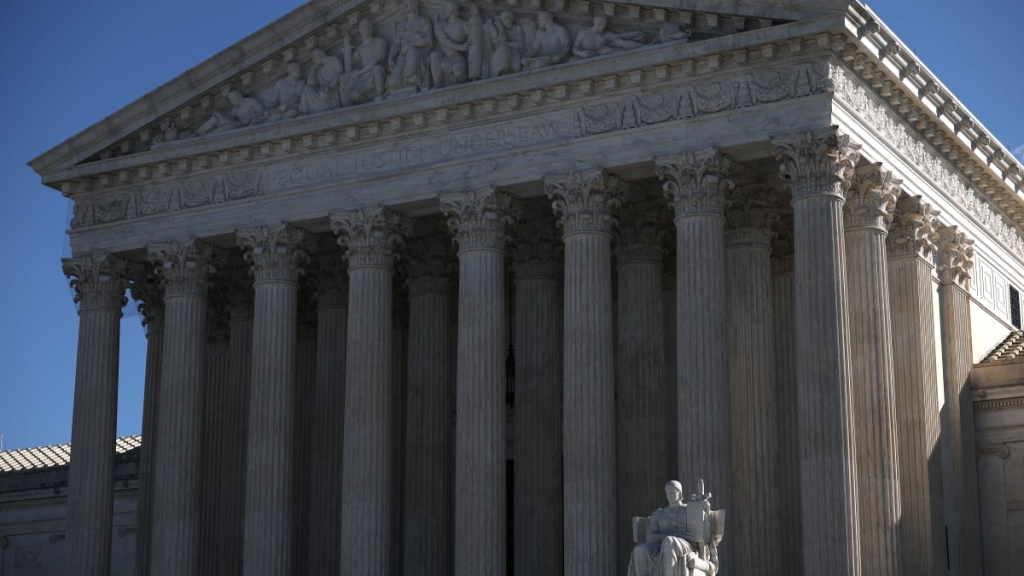
U.S. Supreme Court Declines to Hear Landmark AI Art Copyright Case — Leaving Tech Industry in Legal Limbo
In a decision that has sent ripples through the tech and creative industries, the U.S. Supreme Court has opted not to hear a pivotal case that could have defined the legal boundaries of AI-generated art in the United States. The case, brought forward by computer scientist Stephen Thaler, challenged the U.S. Copyright Office’s refusal to grant copyright protection for artwork created by his proprietary AI system.
The case centers on a piece of digital art titled “A Recent Entrance to Paradise,” a mesmerizing, evolving visual composition generated by Thaler’s AI model. When Thaler attempted to register the work with the U.S. Copyright Office in 2018, his application was swiftly denied in 2022. The Office’s reasoning? Only works created by human authors are eligible for copyright protection under current U.S. law.
This isn’t just a legal technicality—it’s a fundamental question about the nature of creativity in the age of artificial intelligence. As AI tools become increasingly sophisticated, capable of producing everything from hyper-realistic paintings to symphonies, the legal system is struggling to keep pace.
The Broader Context: AI and Copyright Law
The Supreme Court’s decision not to hear the case comes on the heels of a comprehensive 2025 report from the U.S. Copyright Office that attempted to clarify the murky waters of AI and intellectual property. The report made a crucial distinction: while “unedited outputs of generative AI tools” cannot be copyrighted, works that are “facilitated by AI but retain the centrality of human creativity” may still qualify for protection.
This nuanced stance reflects the Copyright Office’s attempt to balance innovation with the protection of human creative expression. However, it also leaves many questions unanswered. What constitutes “human creativity” in a piece of AI-assisted art? How much human input is required to transform an AI output into a copyrightable work?
The Industry Impact
The implications of this legal uncertainty are profound. For tech companies developing AI art tools, the lack of clear copyright guidelines creates a risky environment. Artists using these tools face similar uncertainty—is their AI-assisted work protected? Can they license it? What happens if someone else claims it?
The situation becomes even more complex when considering commercial applications. A marketing agency using AI to generate campaign visuals, a game developer incorporating AI-created assets, or a film studio employing AI for special effects—all operate in a legal gray area where the copyright status of their AI-generated or AI-assisted content remains unclear.
Thaler’s Broader Legal Battle
Stephen Thaler isn’t limiting his fight to copyright. He has also petitioned the Supreme Court regarding patent applications for AI-generated inventions, pushing the boundaries of what constitutes inventorship and ownership in the age of artificial intelligence. The Trump administration had been actively lobbying the Court to reject hearing Thaler’s copyright case, according to reports from CNBC, suggesting the political sensitivity of these emerging technology issues.
Industry Reactions
The tech community’s response to the Supreme Court’s decision has been mixed. Some view it as a missed opportunity to provide much-needed clarity, while others see it as a prudent wait-and-see approach given the rapidly evolving nature of AI technology.
Legal experts point out that by declining to hear the case, the Court has effectively left the current Copyright Office guidelines in place, at least for now. This means that AI-generated art without significant human creative input remains unprotectable under U.S. copyright law.
The Road Ahead
The copyright battle over AI-generated art is far from over. As AI systems become more autonomous and creative, pressure will likely mount on the legal system to address these issues more comprehensively. Some experts predict that Congress may need to step in to create new categories of intellectual property rights specifically designed for AI-generated content.
Meanwhile, the creative industry continues to grapple with these questions. Some artists are embracing AI as a collaborative tool, while others view it as a threat to human creativity. The legal uncertainty adds another layer of complexity to these debates.
Global Perspectives
It’s worth noting that the U.S. isn’t alone in struggling with these issues. Countries around the world are taking different approaches to AI and copyright. The UK, for instance, has specific provisions for computer-generated works, while the EU is working on comprehensive AI regulations that will likely address intellectual property concerns.
The Human Element
At the heart of this debate is a fundamental question about what constitutes creativity and artistic expression. Can a machine be creative in the same way a human can? If an AI creates something beautiful or moving, who owns that emotional impact—the machine’s creator, the user who prompted it, or no one at all?
These philosophical questions are now legal questions, and the Supreme Court’s decision not to weigh in means they’ll continue to be debated in courtrooms, studios, and tech companies across the country.
Looking Forward
As AI technology continues to advance at breakneck speed, the gap between technological capability and legal frameworks grows wider. The Supreme Court’s decision not to hear Thaler’s case may be seen in retrospect as a pivotal moment when the legal system chose to let the technology evolve before imposing potentially restrictive definitions.
For now, creators, companies, and legal professionals must navigate this uncertain landscape, balancing innovation with protection, and human creativity with machine capability. The question of who owns AI art remains unanswered, and the courts have chosen not to provide that answer—at least not yet.
Tags: AI art copyright, Supreme Court AI, Stephen Thaler, AI-generated content, copyright law, artificial intelligence art, U.S. Copyright Office, AI creativity, machine learning art, digital art copyright, AI patent law, generative AI, technology law, creative industry AI, intellectual property AI, AI legal battle, Supreme Court technology, copyright protection AI, AI art ownership, machine creativity
Viral Phrases: “Who owns AI art?”, “The creativity question in the age of machines”, “Legal limbo for AI creators”, “Supreme Court passes on AI copyright”, “The human element in machine creativity”, “AI art: innovation vs. protection”, “Copyright Office draws the line at human creativity”, “Thaler’s fight for AI rights”, “The gray area of AI-assisted art”, “Technology outpaces the law”, “Machine-made masterpieces and legal mysteries”, “The future of creativity is uncertain”, “AI art in legal limbo”, “When machines create, who benefits?”, “The copyright conundrum of the digital age”
,


Leave a Reply
Want to join the discussion?Feel free to contribute!