
GNOME Mutter 50.rc Released With Better NVIDIA Performance, SDR-Native & Better HDR
GNOME 50 RC Unleashed: Mutter 50.rc Brings NVIDIA Boost, HDR Fixes, and More
As the GNOME 50 stable release approaches in just two weeks, the open-source desktop environment community is buzzing with excitement over the release of Mutter 50.rc—the release candidate for the core Wayland compositor that powers GNOME’s visual experience. This latest iteration packs a punch with performance optimizations, cutting-edge display technology support, and critical bug fixes that promise to elevate the Linux desktop experience to new heights.
NVIDIA Users Rejoice: Performance Unlocked
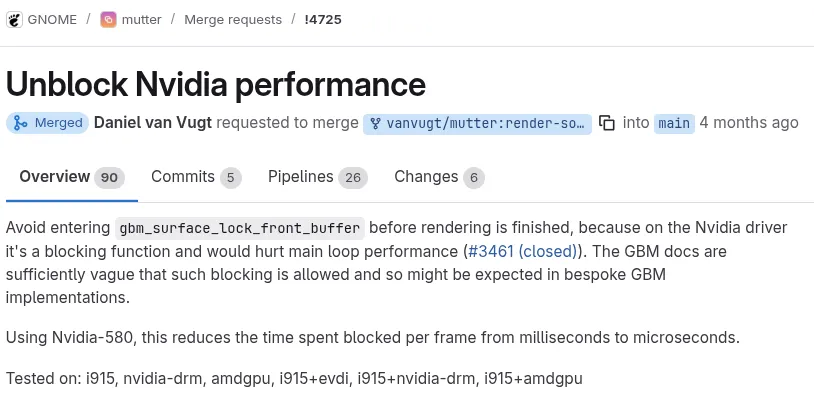
The headline feature of Mutter 50.rc is undoubtedly the dramatic performance improvements for NVIDIA users running the proprietary R590 Linux driver. For years, NVIDIA users on Wayland have experienced frustrating frame drops and stutters, but that era appears to be ending. The development team implemented a series of workarounds that have slashed the time spent blocked per frame from milliseconds to microseconds—a difference that transforms the user experience from choppy to buttery smooth.
This optimization is particularly significant because it addresses one of the most persistent pain points in the Linux desktop ecosystem. The merge request notes reveal that using NVIDIA 580, these changes have reduced blocking time by several orders of magnitude. For gamers, video editors, and anyone who demands responsive graphics performance, this is nothing short of revolutionary.
Technical Deep Dive: FBOs Over EGL
The performance gains come from a clever architectural change: switching from EGL surfaces to Framebuffer Objects (FBOs) for secondary GPU rendering. This might sound like arcane technical jargon, but the implications are profound. Not only does this approach benefit NVIDIA drivers specifically, but it also maintains compatibility with other graphics drivers while reducing code complexity—a win-win scenario that exemplifies elegant software engineering.
For NVIDIA users specifically, this change enables 10 bits per color channel in scanout buffers, which translates to richer, more accurate color reproduction. This is particularly important for creative professionals who demand color fidelity in their work.
HDR and Color Management: The Future Is Bright
Mutter 50.rc doesn’t just focus on performance—it’s also pushing the boundaries of what’s possible with modern display technology. The compositor now includes SDR-Native color mode support for wide color gamut displays, ensuring that content looks exactly as intended regardless of the display technology being used. This feature is crucial as more users adopt high-end monitors capable of displaying colors beyond the traditional sRGB spectrum.
The implementation of Wayland color management v2 protocol support represents another significant step forward. This allows applications to communicate their color requirements directly to the compositor, enabling more accurate color reproduction across the entire desktop environment. Whether you’re a photographer editing images in GIMP or a video producer working in Kdenlive, you’ll notice more consistent and accurate colors throughout your workflow.
HDR Screen Sharing: Breaking New Ground
One of the more exciting additions is HDR screen sharing support. As remote work and online collaboration continue to grow, the ability to share high dynamic range content accurately becomes increasingly important. Whether you’re presenting HDR video content in a meeting or demonstrating HDR-capable applications, this feature ensures that what you see is what others see—maintaining the full richness and depth of HDR content even when shared across networks.
Variable Refresh Rate and Advanced Display Features
The integration of wp_commit_timing with Variable Refresh Rate (VRR) support is another technical achievement that will delight gamers and video enthusiasts. VRR eliminates screen tearing and stuttering by synchronizing the display’s refresh rate with the content’s frame rate, resulting in smoother motion and a more immersive experience. This is particularly valuable for gaming on Linux, where VRR support has been inconsistent in the past.
The Little Things That Matter
Beyond the headline features, Mutter 50.rc includes numerous quality-of-life improvements. The fix for direct scanout when using software cursors eliminates visual artifacts that some users experienced, while crash fixes and memory leak resolutions contribute to a more stable desktop experience. These behind-the-scenes improvements might not be glamorous, but they’re essential for creating a polished, professional desktop environment.
The DevKit tool, which is used for testing and development, now includes clipboard integration and multi-monitor support, making it more versatile for developers working on multi-display setups or applications that rely heavily on clipboard functionality.
GNOME Shell 50.rc: Complementary Improvements
Alongside Mutter 50.rc, the GNOME team also released GNOME Shell 50.rc with its own set of refinements. Notable among these is improved support for logind inhibitors in system actions. This might sound technical, but it addresses a common frustration: when your system prevents certain actions (like suspending) because something important is happening, GNOME Shell now handles these situations more gracefully.
What This Means for the Final Release
With two weeks until the GNOME 50 stable release, the 50.rc versions represent the final opportunity for the community to test these changes and provide feedback. The fact that these releases are happening on schedule suggests that the GNOME development team is confident in the stability and readiness of the new features.
For users, this means that when GNOME 50 launches, it will come with a significantly improved foundation. The combination of better NVIDIA performance, advanced color management, HDR support, and various stability improvements represents a substantial upgrade over previous versions.
The Bigger Picture
These improvements in Mutter 50.rc reflect a broader trend in the Linux desktop ecosystem: a commitment to catching up with and even exceeding the capabilities of proprietary operating systems. For years, Linux users have accepted compromises in areas like graphics performance and color management. With GNOME 50, those compromises are becoming increasingly rare.
The focus on NVIDIA performance is particularly noteworthy because it demonstrates that the open-source community can work effectively with proprietary hardware vendors when there’s mutual benefit. The workarounds implemented in Mutter 50.rc show that performance limitations aren’t necessarily inherent to the technology but often stem from implementation details that can be optimized.
Looking Ahead
As we approach the GNOME 50 stable release, the excitement in the community is palpable. The improvements in Mutter 50.rc suggest that this release could be one of the most significant in GNOME’s recent history. For users, this means a more responsive, visually impressive, and reliable desktop experience. For developers, it means a more capable platform for building the next generation of Linux applications.
The attention to detail—from the microsecond-level performance optimizations to the careful implementation of color management protocols—demonstrates the GNOME team’s commitment to excellence. As Linux continues to gain traction in both consumer and professional markets, these kinds of improvements help to close the gap with competing operating systems while maintaining the flexibility and openness that Linux users value.
Whether you’re a long-time GNOME user or someone considering a switch to Linux, the upcoming GNOME 50 release promises to deliver a desktop experience that’s more polished, powerful, and capable than ever before. The Mutter 50.rc release is just the beginning of what promises to be an exciting new chapter in the evolution of the Linux desktop.
Tags & Viral Phrases:
NVIDIA performance boost, Wayland compositor revolution, HDR screen sharing breakthrough, 10-bit color nirvana, Variable Refresh Rate gaming bliss, GNOME 50 excitement building, Linux desktop supremacy, color management v2 protocol, Mutter 50.rc game changer, NVIDIA R590 driver optimization, SDR-Native color mode magic, Wayland color accuracy, GNOME Shell 50.rc refinements, Linux gaming performance unlocked, open source graphics innovation, desktop environment evolution, frame rate perfection, color gamut expansion, software cursor fixes, memory leak elimination, multi-monitor DevKit integration, logind inhibitor improvements, Linux creative professional tools, Wayland protocol advancements, GNOME development excellence, desktop stability revolution, Linux display technology leadership, NVIDIA Linux driver synergy, open source Wayland dominance, GNOME 50 countdown, Linux desktop renaissance, color fidelity breakthrough, VRR support implementation, GNOME community excitement, Linux professional workstation upgrade, Wayland compositor performance, open source graphics engineering, Linux display innovation, GNOME 50 feature completeness, Wayland protocol maturity, Linux creative workflow enhancement, desktop environment optimization, open source desktop evolution, Linux user experience revolution, GNOME 50 anticipation, Wayland technology advancement, Linux graphics performance, open source software excellence.
,

Leave a Reply
Want to join the discussion?Feel free to contribute!