
Google’s Industrial Robotics AI Play Is Now a Physical AI Priority
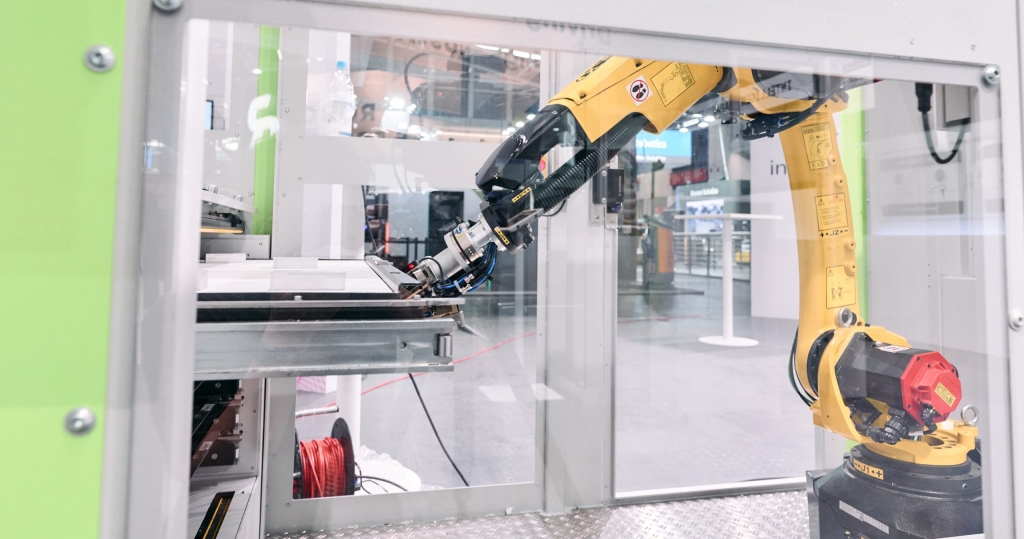
Google’s Bold Move: Intrinsic Joins the Tech Giant to Revolutionize Industrial Robotics
In a strategic maneuver that signals Google’s serious commitment to the future of robotics, Alphabet’s Intrinsic has officially joined Google’s core operations. This isn’t just another corporate reshuffling—it’s a calculated bet on the transformative potential of artificial intelligence in manufacturing and industrial automation.
When Google folds a moonshot into its core operations, it’s not cleaning house. It’s placing a bet. On February 25, Alphabet-owned Intrinsic—which builds AI models and software designed to make industrial robotics more accessible—officially joined Google. The company will remain a distinct group within Google, working closely with Google DeepMind and tapping into Gemini AI models and Google Cloud. No purchase price was disclosed.
At first glance, this might seem like a routine internal restructuring. But beneath the surface, this move represents something far more significant—a deliberate consolidation of robotics capability that positions Google to offer manufacturers something no competitor has assembled quite as cleanly: AI models from DeepMind, deployment software from Intrinsic, and cloud infrastructure from Google Cloud—all under one roof.
From Moonshot to Mandate
Intrinsic’s journey began five years ago within Alphabet’s X, the moonshot research division that gave us Waymo and Wing. After graduating into an independent Alphabet-owned company in 2021, Intrinsic set out on a mission that would prove both ambitious and timely: making industrial robotics AI accessible to manufacturers who don’t have armies of specialist engineers.
The challenge they tackled is deceptively simple to state but incredibly complex to solve. While hardware like robotic arms has become cheaper, programming them remains incredibly complex, often requiring hundreds of hours of manual coding by specialized engineers that can vary based on the particular robot. This complexity has created a bottleneck that prevents many companies from adopting automation technologies that could dramatically improve their operations.
Intrinsic’s answer to this challenge is Flowstate—a web-based platform that allows users to build robotic applications without having to write thousands of lines of code. Think of it less as a product and more as an operating layer—one that Google CEO Sundar Pichai has reportedly compared directly to Android. “He said this is the Android of robotics,” Intrinsic CEO Wendy Tan White said, noting that Pichai worked on Chrome and Android before becoming CEO.
Why Now, Why Google?
The timing of this integration isn’t arbitrary. The sequence of events leading to this moment—hiring Boston Dynamics’ CTO, releasing a standalone robotics SDK, and now absorbing Intrinsic—represents a deliberate consolidation of robotics capability inside Google’s core.
Last month, Google also teamed up with Boston Dynamics to integrate Gemini into Atlas humanoid robots built for manufacturing environments, while Google DeepMind hired the former CTO of Boston Dynamics in November. These moves aren’t isolated incidents but part of a coherent strategy to dominate the industrial robotics AI space.
The industrial robotics AI market that Google is chasing is substantial. McKinsey projects that the market for general-purpose robots could reach US$370 billion by 2040. But beyond the raw market size, there’s something more fundamental at play here: Google is positioning itself to be the default platform for intelligent automation in manufacturing.
What It Means for the Enterprise
For enterprise decision-makers, the more interesting signal here isn’t the technology—it’s the accessibility shift. Google plans to integrate Intrinsic’s robotics development platform and vision models with its broader AI ecosystem, combining advanced reasoning, perception, and learning capabilities with industrial-grade robotics software to allow machines to interpret sensor data better, adapt to dynamic environments, and execute complex tasks.
Intrinsic has also expanded through strategic acquisitions—acquiring Open Source Robotics Corp. in 2022, the for-profit arm of the foundation behind the Robot Operating System (ROS). This gives Google access to a vibrant open-source community and a mature robotics software stack that’s already widely adopted in the industry.
The company’s commercial pipeline is already in motion: in October 2025, Intrinsic formed a strategic partnership with Foxconn focused on developing general-purpose intelligent robots for full factory automation within electronics manufacturing. This partnership alone could serve as a proving ground for Google’s integrated robotics solution at massive scale.
White framed the integration in terms enterprise leaders will find hard to ignore: production economics, operational transformation, and what she described as truly advanced manufacturing—all within reach once Google’s infrastructure is fully behind it.
That’s a significant claim. But with Gemini, DeepMind, and Google Cloud now aligned behind it, the infrastructure to back it up is, for the first time, actually there.
The Android of Robotics: A Platform Play
What makes this integration particularly interesting is how it positions Google not just as a technology provider but as a platform company in the robotics space. By creating what amounts to an Android for industrial robotics, Google is setting up a scenario where it could become the default operating system for intelligent automation.
This is a classic Google play—they’ve done it before with Android in mobile, Chrome in web browsing, and now they’re attempting to do it again in a completely different domain. The strategy is to create a platform so compelling that hardware manufacturers, software developers, and end users all gravitate toward it, creating a network effect that becomes self-reinforcing.
The implications for the robotics industry could be profound. Just as Android democratized mobile app development and created a vibrant ecosystem of applications, Google’s robotics platform could do the same for industrial automation. Small and medium-sized manufacturers who previously couldn’t afford custom robotics solutions might suddenly find themselves able to deploy sophisticated automation systems at a fraction of the previous cost.
The Competitive Landscape
Google isn’t the only tech giant eyeing the robotics market. Amazon has been investing heavily in warehouse automation, Microsoft has partnerships in manufacturing AI, and NVIDIA is pushing its AI and GPU capabilities into robotics applications. But Google’s integrated approach—combining world-class AI models, purpose-built robotics software, and enterprise-grade cloud infrastructure—gives it a unique advantage.
The acquisition of Intrinsic gives Google something else that’s crucial: a team that understands the unique challenges of industrial robotics. These aren’t just AI researchers or cloud engineers; they’re people who have spent years wrestling with the messy realities of getting robots to work reliably in factory environments.
Looking Ahead: The Future of Work
As this technology matures, we’re likely to see a fundamental shift in how manufacturing and industrial work gets done. The combination of accessible robotics software, powerful AI models, and cloud-based deployment could democratize automation in much the same way that cloud computing democratized access to computing power.
This doesn’t necessarily mean massive job displacement—at least not immediately. Instead, it could mean that the nature of industrial work changes, with humans moving from performing repetitive manual tasks to overseeing, maintaining, and improving automated systems. The companies that adapt quickly to this new paradigm could see dramatic improvements in productivity, quality, and operational flexibility.
The Bottom Line
Google’s absorption of Intrinsic isn’t just a corporate reorganization—it’s a statement of intent. By bringing together its AI capabilities, robotics software, and cloud infrastructure, Google is positioning itself to be a dominant player in the next wave of industrial automation.
For manufacturers, this could mean access to automation technologies that were previously out of reach. For competitors, it represents a formidable new challenger with the resources and expertise to move quickly. And for Google, it’s a bet on a future where intelligent automation is as ubiquitous in factories as smartphones are in our pockets.
The Android of robotics is here. And it’s coming to a factory near you.
#GoogleRobotics #IndustrialAI #AutomationRevolution #FutureOfManufacturing #DeepMind #GeminiAI #SmartFactories #RoboticsPlatform #ManufacturingTech #AIInnovation #TechConsolidation #IndustrialTransformation #FactoryOfTheFuture #AutonomousSystems #GoogleDeepMind #PhysicalAI #ManufacturingRevolution #TechStrategy #AIInfrastructure #IndustrialAutomation
– Google’s moonshot becomes core business
– Intrinsic joins Google’s robotics revolution
– Android of robotics platform announced
– Google DeepMind robotics integration
– Industrial automation gets AI makeover
– Manufacturing transformed by smart technology
– Google bets big on industrial robotics
– Robotics software made accessible
– Factory automation reaches new heights
– AI-powered manufacturing future
– Google’s robotics consolidation strategy
– Intrinsic Flowstate platform explained
– Foxconn partnership signals market intent
– Industrial robotics market boom
– Google’s competitive advantage in automation
– Robotics development democratized
– Smart factories coming to life
– AI models meet industrial hardware
– Google Cloud powers robotics future
– Manufacturing productivity revolution
– Robotics accessibility breakthrough
– Enterprise automation simplified
– Google’s platform play in robotics
– Industrial AI ecosystem emerging
– Manufacturing transformation accelerates
– Robotics software development made easy
– Google’s bet on physical AI
– Industrial automation for everyone
– Smart manufacturing becomes reality
– Robotics technology reaches maturity
– Google’s integrated robotics solution
– Industrial automation economics shift
– Robotics platform war heating up
– Manufacturing technology convergence
– AI-powered industrial transformation
– Google’s robotics strategy revealed
– Industrial automation market disruption
– Robotics software innovation breakthrough
– Smart factories become mainstream
– Google’s moonshot pays off
– Industrial robotics simplified
– Manufacturing efficiency revolution
– AI meets physical world
– Google’s robotics ecosystem grows
– Industrial automation democratization
– Smart manufacturing technology
– Robotics platform battle begins
– Google’s industrial AI vision
– Manufacturing technology leap forward,

Leave a Reply
Want to join the discussion?Feel free to contribute!