
The US military is still using Claude — but defense-tech clients are fleeing
Anthropic Caught in the Crossfire: AI Models Powering U.S. Strikes on Iran Amid Pentagon Ban Fallout
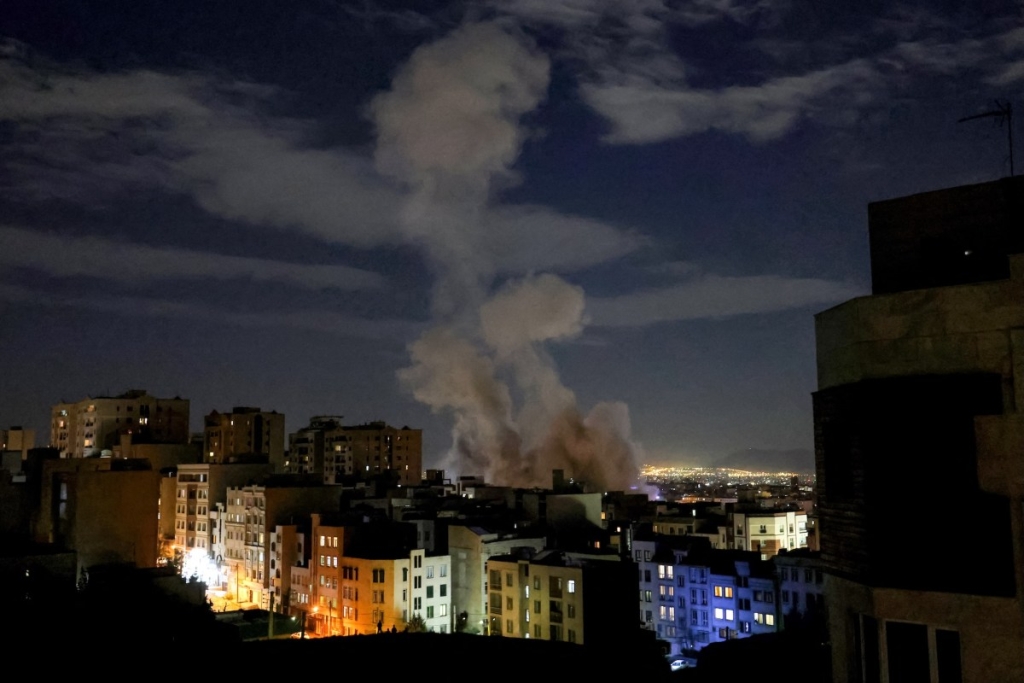
In a surreal twist of geopolitical and technological irony, Anthropic—the AI research company behind the Claude chatbot—finds itself at the center of a high-stakes contradiction. As the United States and Israel intensify their military campaign against Iran, Anthropic’s AI models are reportedly being used to assist in real-time targeting and strategic decision-making. Yet, just weeks earlier, the Pentagon had moved to blacklist the company from federal contracts, citing national security concerns.
The controversy erupted after President Donald Trump issued a directive ordering civilian agencies to discontinue the use of Anthropic’s products. However, the administration allowed a six-month wind-down period for existing contracts with the Department of Defense. Before that grace period could fully play out, the U.S. and Israel launched a surprise aerial offensive on Tehran, thrusting Anthropic’s technology into the heart of an active war zone.
According to a detailed report by The Washington Post, Anthropic’s AI systems are now integrated with Palantir’s Maven platform, a tool used by the Pentagon for intelligence, surveillance, and reconnaissance. During the planning and execution of strikes on Iranian targets, Anthropic’s models helped “suggest hundreds of targets, issued precise location coordinates, and prioritized those targets according to importance,” the report stated. The AI’s role was characterized as providing “real-time targeting and target prioritization,” a function that underscores both the power and peril of algorithmic warfare.
Secretary of Defense Pete Hegseth has publicly pledged to designate Anthropic as a “supply-chain risk,” a move that would effectively bar the company from future defense contracts and collaborations. However, no formal action has yet been taken, leaving a legal gray area in which Anthropic’s technology can still be deployed in military operations without explicit prohibition.
This regulatory limbo has created a bizarre dichotomy: while Anthropic’s AI is actively shaping the battlefield in Iran, many of its clients in the defense industry are hastily severing ties. Major defense contractors like Lockheed Martin have already begun replacing Anthropic’s models with those from rival firms, according to a Reuters report. Subcontractors and smaller tech firms are following suit. A managing partner at J2 Ventures told CNBC that 10 of his portfolio companies have “backed off of their use of Claude for defense use cases and are in active processes to replace the service with another one.”
The situation highlights the growing tension between innovation and regulation in the AI sector, particularly when it intersects with national security. Anthropic, once seen as a rising star in ethical AI development, now finds itself in a precarious position—simultaneously indispensable to military operations and increasingly unwelcome in the defense ecosystem.
The broader implications are profound. If Hegseth follows through on the supply-chain risk designation, it could trigger a legal battle that tests the limits of executive authority over private technology firms. It would also send a chilling signal to the AI industry about the volatility of government partnerships, especially in times of geopolitical crisis.
For now, Anthropic remains in a state of suspended animation—its technology fueling a war it may soon be legally barred from supporting. The paradox is not lost on industry observers, who note that the very systems designed to optimize efficiency and accuracy are now caught in the crosshairs of political and military strategy.
As the conflict with Iran continues to escalate, all eyes will be on Washington to see whether policy catches up with practice—or whether Anthropic’s AI will remain an unseen but vital player in the theater of modern warfare.
Tags: Anthropic, Claude AI, Pentagon, Iran conflict, AI warfare, Palantir Maven, Pete Hegseth, supply chain risk, Lockheed Martin, defense contractors, real-time targeting, algorithmic warfare, Trump administration, national security, AI ethics, geopolitical tech, U.S.-Israel alliance
Viral Phrases: “AI in the crossfire,” “algorithmic battlefield,” “targeting with Claude,” “Pentagon’s AI paradox,” “war by algorithm,” “tech caught in the storm,” “from lab to launch codes,” “the AI that couldn’t say no,” “when your code becomes a weapon,” “the six-month wind-down that blew up,” “blacklisted but battlefield-ready,” “Silicon Valley meets Shock and Awe,” “Claude in the chaos,” “the model that wouldn’t quit,” “defense in disarray,” “AI’s awkward alliance,” “targeted by policy, targeting targets,” “the war AI wasn’t built for,” “from ethics board to airstrike board.”
,


Leave a Reply
Want to join the discussion?Feel free to contribute!