
Big Tech Signs White House Data Center Pledge With Good Optics and Little Substance
Tech Giants Sign White House Pledge to Shield Consumers from Data Center Energy Costs
In a high-profile White House ceremony Wednesday, President Donald Trump gathered executives from seven of America’s most influential technology companies to sign a nonbinding pledge aimed at preventing data center construction from driving up consumers’ electricity bills.
“Data centers… they need some PR help,” President Trump declared during the event, flanked by representatives from Microsoft, Meta, OpenAI, xAI, Google/Alphabet, Oracle, and Amazon. “People think that if the data center goes in, their electricity is going to go up.”
The gathering represents a significant political maneuver by the Trump administration as it doubles down on artificial intelligence development while attempting to address mounting public concern about infrastructure costs. The pledge emerged from bipartisan frustration that has intensified over the past year, with voters increasingly worried about how massive data center projects might impact their monthly utility expenses.
However, energy policy experts are questioning the actual enforceability of the administration’s approach. “This is theater,” stated Ari Peskoe, director of the Electricity Law Initiative at Harvard Law School’s Environmental and Energy Law Program. “This is a press release designed to make it seem like they are addressing this issue. But this issue can only really be addressed by utility regulators or Congress. The White House doesn’t really have a lot of moves here, and I don’t think the tech companies themselves are the most important parties on cost issues.”
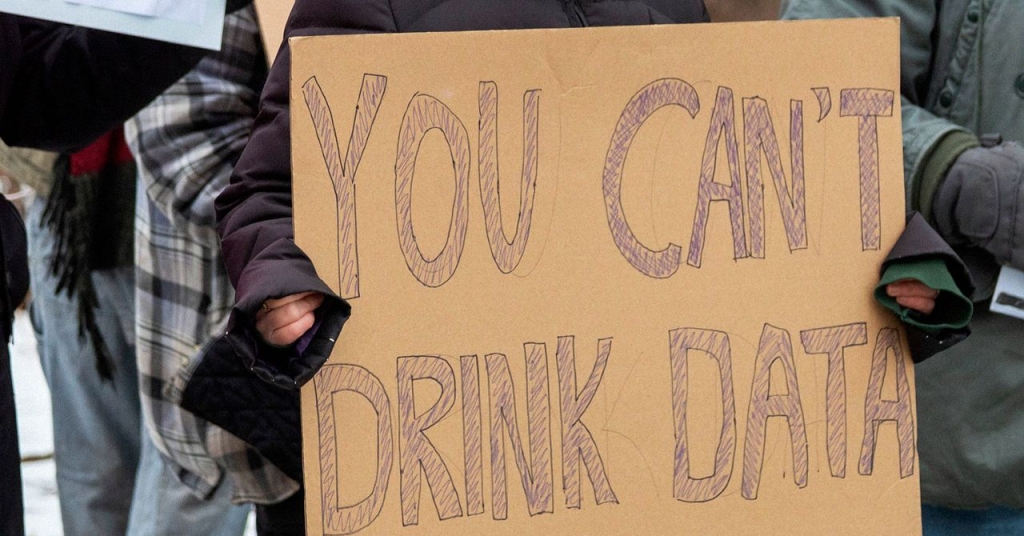
The timing of the pledge reflects the growing political potency of data center opposition. These facilities played pivotal roles in several state elections last year, particularly in Georgia and Virginia, and are now influencing primary races across multiple states in the current election cycle. A recent Heatmap News poll revealed that fewer than 30 percent of American voters would support a data center being built near their homes, highlighting the depth of public skepticism.
Several states have responded by introducing moratoriums on new data center construction in their legislatures this year. Others are considering legislation that would shift the financial burden from consumers to the technology companies themselves, potentially altering the economic landscape of AI infrastructure development.
The White House’s announcement follows months of behind-the-scenes negotiations and independent commitments from major tech players. In late January, President Trump posted on Truth Social that Democrats were responsible for high electricity costs and that he was “working with major American Technology Companies” to ensure “Americans don’t ‘pick up the tab’ for their POWER consumption, in the form of paying higher Utility bills.” Less than a month later, during his State of the Union address, he promised to introduce a “ratepayer protection pledge.”
“We’re telling the major tech companies that they have the obligation to provide for their own power needs,” Trump told Congress. “They can build their own power plants as part of their factory, so that no one’s prices will go up and, in many cases, prices of electricity will go down for the community, and very substantially then.”
The commitments made by individual companies in recent months, culminating in Wednesday’s collective pledge, largely reiterate initiatives that many tech giants were already pursuing independently. Microsoft, for instance, unveiled plans earlier this year to ensure its data center expansion wouldn’t translate to higher consumer electricity rates. Anthropic, the AI research company, announced similar measures to cover electricity price increases.
Google’s blog post announcing its participation in the White House pledge highlighted several ongoing initiatives that predate the administration’s involvement. These include substantial investments in nuclear and geothermal energy, framework agreements with electric utilities, and pledges to create jobs in communities where data centers operate.
The nonbinding nature of the agreement raises questions about its practical impact. Unlike regulatory mandates or legislation, the pledge relies on voluntary compliance and public pressure to ensure adherence. Energy experts note that actual cost protections for consumers typically come through state public utility commissions, which have the authority to approve or deny rate increases based on infrastructure investments.
The political theater surrounding the pledge underscores the complex intersection of technological advancement, energy policy, and electoral politics. As artificial intelligence development accelerates, requiring increasingly massive computational infrastructure, the tension between innovation and affordability continues to grow. The White House’s approach attempts to navigate this challenge by securing voluntary commitments while maintaining momentum for AI development.
The effectiveness of this strategy remains to be seen, but the administration has clearly identified data center costs as a potential vulnerability that could undermine public support for its broader technology agenda. Whether the pledge translates into meaningful consumer protections or simply serves as political cover for aggressive AI expansion will likely become apparent in the coming months as new data centers come online and utility bills continue to be scrutinized by increasingly skeptical voters.
Tags and Viral Phrases:
Data center backlash, tech companies pledge, White House AI strategy, consumer electricity costs, Trump administration energy policy, Microsoft data center commitments, Google infrastructure investments, Meta AI expansion, OpenAI power requirements, xAI energy demands, Oracle cloud growth, Amazon Web Services, bipartisan data center opposition, state moratoriums on data centers, utility ratepayer protection, artificial intelligence infrastructure, geothermal energy for tech, nuclear power for data centers, tech industry PR challenges, election-year technology politics, consumer advocacy victory, Silicon Valley meets Washington, energy independence for AI, voluntary corporate commitments, Harvard Law School energy analysis, Truth Social tech policy, State of the Union technology mentions, community impact of data centers, public utility commission authority, AI development acceleration, infrastructure cost shifting, voluntary compliance challenges, political theater in tech policy, voter skepticism of Big Tech, local elections data center influence, corporate social responsibility in energy, voluntary corporate pledges, tech industry accountability, consumer protection theater, regulatory versus voluntary approaches, electoral vulnerability of tech expansion, infrastructure affordability crisis, voluntary commitments versus mandates, tech industry image rehabilitation, political cover for AI expansion, public support for technological innovation, voluntary compliance effectiveness, corporate goodwill versus regulation, infrastructure development political balancing act, electoral politics of technological progress
,

Leave a Reply
Want to join the discussion?Feel free to contribute!