
Sam Altman Says AI Will Cause Massive Deflation, Making Money Worth Vastly More
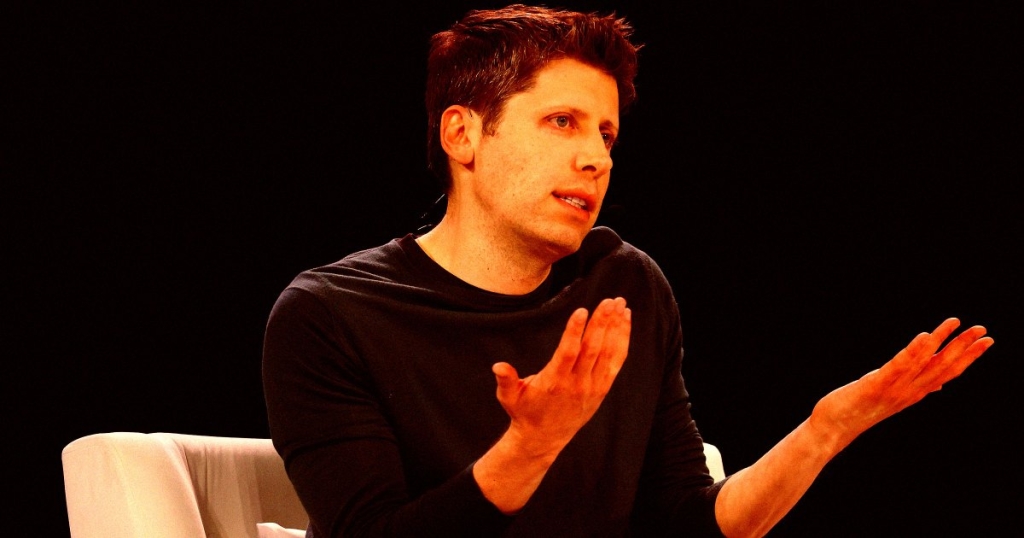
OpenAI CEO Sam Altman Predicts “Massively Deflationary” AI Revolution That Could Reshape the Global Economy
In a bold economic forecast that has sent shockwaves through Silicon Valley and Wall Street alike, OpenAI CEO Sam Altman has declared that artificial intelligence will usher in an era of unprecedented “massively deflationary” pressure on the global economy. Speaking during a livestreamed town hall meeting, Altman outlined his vision of an AI-driven future where productivity skyrockets, costs plummet, and individual empowerment reaches levels previously unimaginable.
The timing of Altman’s prediction is particularly striking, coming as OpenAI faces mounting financial pressures and has announced plans to dramatically slow its hiring pace. The company, which is burning through billions of dollars each quarter, is simultaneously planning to invest over $1 trillion in massive data center infrastructure—a bet that could either revolutionize the world or become one of the most expensive gambles in tech history.
The Deflationary Promise
“When asked if AI can be used to ‘solve economic gaps that have existed for decades,’ the executive argued that it’s ‘going to be massively deflationary,'” reported observers of the town hall. Altman’s reasoning centers on the transformative potential of AI to dramatically increase individual productivity while simultaneously reducing the cost of goods and services.
“Given, certainly, progress with work you can do in front of a computer, but also what looks like it will soon happen with robotics and a bunch of other things, we’re going to have massively deflationary pressure,” Altman predicted with characteristic confidence. This deflationary pressure, he argues, will make things “radically cheaper” and increase “the empowerment of individual people” as money becomes more valuable.
The implications of such a shift would be revolutionary. Throughout history, economic systems have overwhelmingly been inflationary, with the value of currency gradually eroding over time. An AI-driven deflationary economy would represent a complete inversion of this fundamental economic principle, potentially reshaping everything from personal finance to global trade.
The $1,000 Productivity Revolution
Altman’s vision extends beyond abstract economic theory into concrete, near-term possibilities. He suggested that by the end of this year, an individual spending just $1,000 on AI inference—essentially the cost of running an AI model—could complete a piece of software in a short period of time. This same task, he noted, would have previously taken an entire team a much longer period to accomplish.
This prediction aligns with Altman’s broader thesis about AI’s potential to democratize productivity and innovation. If true, it would mean that individuals with access to AI tools could accomplish what previously required entire teams or organizations, potentially leveling the playing field between large corporations and individual entrepreneurs.
The Abundance Narrative
Altman’s deflationary predictions are part of a larger narrative about AI-driven abundance that has been promoted by tech leaders for years. This vision suggests a future where the cost of living decreases dramatically, making it possible for people to choose not to work if they don’t want to. It’s a utopian vision that has been championed not just by Altman, but by other tech luminaries including Elon Musk and Anthropic CEO Dario Amodei.
Musk has gone so far as to prophesy that “there will be no poverty in the future, and so no need to save money.” Amodei has argued that we could one day work far less as a result of AI. These predictions paint a picture of a future where AI doesn’t just change how we work, but fundamentally transforms the nature of human existence and economic participation.
The Reality Check
However, the current economic reality presents a stark contrast to these optimistic predictions. Despite the hype surrounding AI, researchers have shown that AI is largely failing to boost productivity in its current form. Surveys have found that the number of people using AI at work is actually falling—a troubling trend that contradicts the promises made by tech leaders.
Many workers report that AI is essentially useless to them, despite their employers’ insistence that it’s revolutionary, productivity-boosting technology. The Federal Reserve has held interest rates steady, citing ongoing concerns over “elevated” inflation. Long-term unemployment hit a four-year high earlier this year as jobseekers struggled to find new work, and the cost of living has continued to climb, particularly in larger US cities.
The Existential Questions
Beyond the immediate economic concerns, there are deeper questions about whether AI can deliver on its promised potential at all. Some researchers and industry observers have begun to wonder if AI might be a technological dead end—a path that, despite enormous investment and hype, fails to deliver meaningful economic transformation.
Critics have suggested that OpenAI itself could be a house of cards, one run on the banks away from collapsing in on itself. The company’s enormous spending commitments, coupled with its current inability to generate sustainable profits, have led some to question whether the entire AI boom is built on unsustainable foundations.
The Policy Challenge
Even Altman, despite his optimism about AI’s potential, acknowledges that realizing this vision requires getting the policy framework right. “As long as we don’t screw up the policy around it in a big way, which could happen,” he warned during the town hall.
This acknowledgment points to the complex interplay between technology and governance that will ultimately determine whether AI delivers on its promises or becomes another cautionary tale of technological hype outpacing reality. The policy challenges range from managing the transition for workers displaced by AI to ensuring that the benefits of increased productivity are broadly shared rather than concentrated in the hands of a few tech giants.
The Stakes
The stakes of this AI bet are enormous. If Altman and his counterparts are correct, we could be on the cusp of an economic transformation that makes the Industrial Revolution look minor by comparison. A world of AI-driven abundance could solve some of humanity’s most pressing problems, from poverty to climate change to disease.
But if they’re wrong, we could be looking at a massive misallocation of resources, with trillions of dollars invested in technology that fails to deliver meaningful economic benefits. The current trajectory—with AI companies burning through cash while struggling to demonstrate clear economic value—suggests that the path to this promised future may be more complicated than its advocates suggest.
The Bottom Line
Sam Altman’s prediction of a “massively deflationary” AI future represents both an inspiring vision of what technology might achieve and a massive gamble on unproven technology. While the potential benefits are enormous, the current evidence suggests that the path to this AI-driven abundance is far from certain.
As OpenAI continues to invest billions in infrastructure while simultaneously slowing its hiring, the tech world watches to see whether this bet on AI will pay off or become one of the most expensive miscalculations in business history. The answer will have profound implications not just for OpenAI and the tech industry, but for the global economy and the future of work itself.
The coming years will reveal whether Altman’s deflationary vision represents a genuine glimpse of the future or another chapter in the long history of technological hype that promised more than it could deliver. One thing is certain: the stakes have never been higher, and the world is watching closely to see which prediction proves correct.
Tags & Viral Phrases:
AI revolution, deflationary economy, Sam Altman prediction, OpenAI financial crisis, AI productivity boost, universal basic income, technological abundance, AI dead end, trillion-dollar bet, economic transformation, future of work, AI hype cycle, mass unemployment, cost of living crisis, AI policy challenges, Silicon Valley optimism, technological dead end, AI investment bubble, future of humanity, economic inequality solution
,


Leave a Reply
Want to join the discussion?Feel free to contribute!