
Trump’s War on Iran Could Screw Over US Farmers
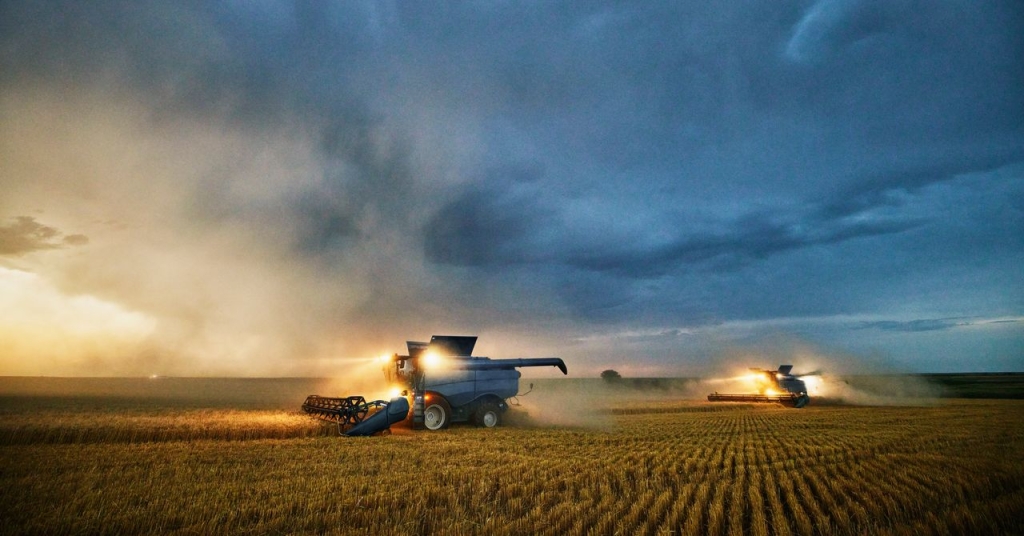
Global Fertilizer Crisis Looms as Middle East Conflict Disrupts Key Supply Chains
A devastating ripple effect from escalating Middle East tensions is threatening global agriculture just as farmers prepare for the critical spring planting season. The conflict, which has already sent oil and gas prices soaring, is now choking off vital fertilizer supplies that could have catastrophic consequences for food production worldwide.
Industry experts warn that the timing couldn’t be worse. With spring planting approaching, farmers are facing unprecedented uncertainty about their ability to secure essential crop nutrients. “This literally could not be happening at a worse time,” says Josh Linville, vice president of fertilizer at financial services company StoneX.
The crisis centers on three critical macronutrients that form the backbone of modern agriculture: phosphates, nitrogen, and potash. Each plays a unique role in plant development, and the disruption to their supply chains threatens to create a perfect storm for global food security.
Nitrogen fertilizers, produced using natural gas, are particularly vulnerable. Qatar, the world’s second-largest urea exporter, has suspended production following drone strikes on its facilities. The shutdown has effectively removed nearly 20% of global natural gas supply from the market, causing European gas prices to spike dramatically. On Tuesday, Qatar Energy announced it would halt production of downstream products, including urea, sending shockwaves through agricultural markets.
The situation becomes even more dire when considering Iran’s role in the nitrogen fertilizer market. As the third-largest urea exporter and a key ammonia producer, Iran’s participation in the conflict has created additional supply vulnerabilities. Prices for urea in the United States have already jumped nearly 15% in just one week, according to data provided to WIRED by Linville.
The Strait of Hormuz, a critical maritime chokepoint through which roughly 20% of global oil passes, has become a flashpoint for the crisis. Islamic Revolutionary Guard Corps have threatened ships attempting to transit the strait, causing traffic to slow to a crawl. Even if naval escort initiatives succeed in protecting oil tankers, the immediate priority will likely be securing energy resources rather than agricultural inputs.
Veronica Nigh, senior economist at the Fertilizer Institute, provides sobering statistics on the scale of the disruption. “When we look at ammonia, we’re looking at almost 30% of global production being either involved or at risk in this conflict,” she explains. “It gets worse when we think about urea. Urea is almost 50%.”
Phosphate supplies face their own challenges. Saudi Arabia, which supplies approximately 40% of all US phosphate imports, represents a critical link in the agricultural supply chain. Other regional producers including Jordan, Egypt, and Israel also play significant roles in global phosphate markets.
The crisis has forced manufacturers to make difficult decisions. “We are already hearing reports that some of those Persian Gulf manufacturers are shutting down production,” Linville reports. “They’re saying, ‘I have a finite amount of storage for my supply. Once I reach the top of it, I can’t do anything else. So I’m going to shut down my production in order to make sure I don’t go over above that.'”
For American farmers already battered by months of tariff wars, this represents yet another devastating blow. The timing is particularly cruel, as decisions about fertilizer application must be made well in advance of planting season. Many farmers are now facing the prospect of reduced yields or switching to less fertilizer-intensive crops, potentially affecting food prices and availability for months to come.
The Trump administration has announced initiatives to protect oil tankers traveling through the strait, including providing naval escorts. However, the shipping industry has expressed skepticism about the effectiveness of these measures. Even if successful, the immediate focus will likely be on securing energy resources rather than agricultural inputs.
As the crisis unfolds, the fertilizer industry is scrambling to find alternative supply routes and sources. However, the specialized nature of these products and the concentration of production in the Middle East make rapid substitution difficult. Some companies are exploring options to increase production in other regions, but such efforts take months or even years to implement.
The broader implications extend far beyond immediate agricultural concerns. Food security experts warn that disruptions to fertilizer supply could lead to reduced crop yields globally, potentially exacerbating existing food insecurity in vulnerable regions. The crisis also highlights the vulnerability of modern agriculture to geopolitical disruptions, particularly given the concentration of key resources in volatile regions.
As spring planting season approaches, farmers, agricultural economists, and food security experts worldwide are watching developments with growing concern. The coming weeks will be critical in determining whether the global food supply can weather this latest challenge or whether consumers will face the consequences of disrupted agricultural production.
Tags: Middle East conflict, fertilizer shortage, global agriculture, food security, nitrogen fertilizer, urea prices, phosphate supply, potash mining, Qatar Energy, Strait of Hormuz, spring planting season, agricultural supply chain, US farmers, global food prices, crop yields, natural gas prices, geopolitical risks, farming crisis, spring 2026 planting
Viral Phrases: “This literally could not be happening at a worse time,” “Fertilizer is not going to be the most valuable thing that’s gonna transit the strait,” “When we look at ammonia, we’re looking at almost 30% of global production being either involved or at risk,” “It gets worse when we think about urea. Urea is almost 50%,” “Once I reach the top of it, I can’t do anything else,” “A really challenging situation,” “The perfect storm for global food security,” “Devastating ripple effect,” “Catastrophic consequences for food production,” “Critical maritime chokepoint,” “Agricultural Armageddon,” “Food price explosion,” “Planting season panic,” “Supply chain strangulation,” “Global hunger threat,” “Crop catastrophe looming”
,

Leave a Reply
Want to join the discussion?Feel free to contribute!