
AI and X-Ray Scans Turn Thousands of Ants Into Stunning 3D Models
AI and X-Ray Scans Turn Thousands of Ants Into Stunning 3D Models
In a groundbreaking leap at the intersection of artificial intelligence, advanced imaging technology, and biodiversity research, scientists have unveiled an ambitious project that is transforming thousands of ant specimens into breathtakingly detailed 3D models. This innovative initiative, spearheaded by evolutionary biologist Evan Economo and his team at the Okinawa Institute of Science and Technology (OIST), is rapidly building a comprehensive digital library of Earth’s insect biodiversity—one high-resolution scan at a time.
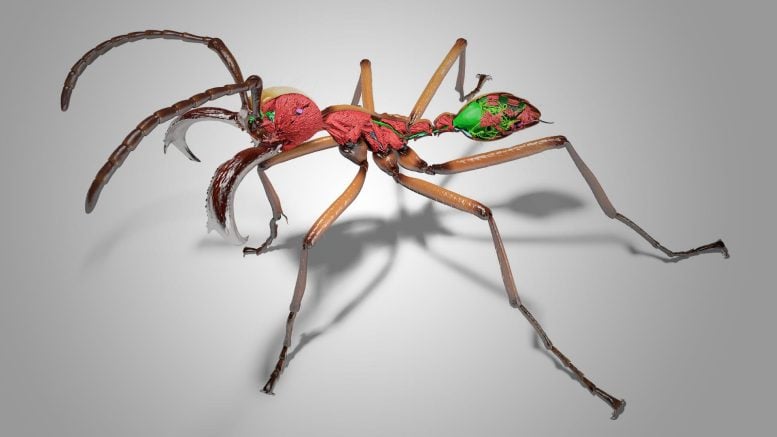
For over a decade, Economo’s lab has been pioneering the use of micro-CT (micro-computed tomography) scanners to capture intricate, three-dimensional images of insect specimens. These X-ray-based scans function much like a medical CT scan, but at a microscopic scale, allowing researchers to peer inside and outside of tiny creatures without ever touching or damaging them. The technology reveals not just the external morphology of ants, but also their internal anatomy—skeletons, muscles, and even the delicate structures of their brains—with unprecedented clarity.
Now, with the integration of cutting-edge artificial intelligence, the process has been supercharged. AI algorithms are being employed to automate the segmentation and reconstruction of these scans, turning raw X-ray data into vivid, interactive 3D models in a fraction of the time it once took. This fusion of AI and micro-CT is enabling researchers to process thousands of specimens at an unprecedented pace, creating a digital Noah’s Ark of ant diversity that could serve as an invaluable resource for scientists, educators, and conservationists worldwide.
The project is not just about creating pretty pictures. Ants, as one of the most ecologically dominant groups of insects on the planet, play crucial roles in ecosystems—from soil aeration to seed dispersal to pest control. Yet, despite their importance, much about ant biodiversity remains a mystery. Many species are still undescribed, and others are vanishing before they can even be studied, victims of habitat loss, climate change, and other environmental pressures.
By digitizing thousands of ant specimens, Economo and his team are effectively freezing a moment in time, preserving the intricate details of species that might otherwise disappear without a trace. The 3D models are not just static images; they are interactive, allowing scientists to rotate, zoom, and dissect the models virtually. This opens up new avenues for research, from studying evolutionary relationships to understanding the functional anatomy of different ant castes and species.
The process begins with the careful selection of specimens from museum collections and field expeditions. Each ant is placed inside the micro-CT scanner, where it is bombarded with X-rays from multiple angles. The scanner captures thousands of cross-sectional images, which are then stitched together by AI algorithms to create a seamless 3D reconstruction. The AI doesn’t just automate the process; it also enhances accuracy, identifying and isolating different anatomical features with a level of precision that would be nearly impossible for a human to achieve manually.
One of the most striking aspects of the project is the sheer diversity of forms that have been revealed. From the fearsome mandibles of army ants to the delicate antennae of leafcutter ants, each species presents a unique set of adaptations honed by millions of years of evolution. The 3D models allow scientists to appreciate these differences in ways that traditional 2D images simply cannot convey. For example, the internal structure of an ant’s head, with its complex arrangement of muscles and sensory organs, becomes instantly accessible, offering clues about how these insects interact with their environment.
The implications of this work extend far beyond the world of entomology. The digital library being created could serve as a model for similar initiatives focused on other groups of organisms, from beetles to butterflies to plants. It also highlights the potential of AI and advanced imaging technologies to revolutionize the way we study and preserve biodiversity. In an era when many species are under threat, the ability to create detailed, permanent records of life on Earth has never been more urgent.
Moreover, the project is a testament to the power of collaboration. Economo’s team is working closely with museums, field biologists, and computer scientists to build this digital repository. The models are being made freely available online, allowing anyone—from schoolchildren to professional researchers—to explore the hidden world of ants. This democratization of science is a key part of the project’s mission, making the wonders of biodiversity accessible to all.
As the project continues to scale up, the team hopes to eventually digitize tens of thousands of specimens, creating a comprehensive atlas of ant diversity. They are also exploring ways to integrate other data types, such as genetic information and ecological data, into the models, further enriching our understanding of these remarkable insects.
In a world where the pace of environmental change is accelerating, initiatives like this offer a glimmer of hope. By harnessing the power of technology, scientists are not only documenting the incredible diversity of life on Earth but also creating tools that could help us protect it. The stunning 3D models of ants are more than just a scientific achievement; they are a celebration of the beauty and complexity of the natural world, and a reminder of the urgent need to preserve it for future generations.
Tags: AI, X-ray, 3D models, ants, biodiversity, micro-CT, Evan Economo, OIST, insect scanning, digital library, evolutionary biology, conservation, biodiversity research, advanced imaging, scientific innovation, entomology, museum collections, ecological diversity, species preservation, technology in science, open access science, virtual dissection, interactive models, environmental change, habitat loss, climate change, scientific collaboration, digital Noah’s Ark, future of biodiversity.
Viral Sentences:
- “AI and X-ray scans are turning thousands of ants into stunning 3D models—building a digital library of Earth’s biodiversity.”
- “For over a decade, Evan Economo’s lab has used micro CT scanners to capture detailed images of insect specimens.”
- “These X-ray scans allow scientists to study the shape and structure of insects, an invisible world brought to life in 3D.”
- “The process begins with the careful selection of specimens from museum collections and field expeditions.”
- “The 3D models are not just static images; they are interactive, allowing scientists to rotate, zoom, and dissect the models virtually.”
- “One of the most striking aspects of the project is the sheer diversity of forms that have been revealed.”
- “The project is not just about creating pretty pictures—it’s about preserving the intricate details of species that might otherwise disappear.”
- “The implications of this work extend far beyond the world of entomology.”
- “The digital library being created could serve as a model for similar initiatives focused on other groups of organisms.”
- “Moreover, the project is a testament to the power of collaboration.”
- “As the project continues to scale up, the team hopes to eventually digitize tens of thousands of specimens.”
- “In a world where the pace of environmental change is accelerating, initiatives like this offer a glimmer of hope.”
- “The stunning 3D models of ants are more than just a scientific achievement; they are a celebration of the beauty and complexity of the natural world.”
,

Leave a Reply
Want to join the discussion?Feel free to contribute!