
Nvidia’s Campaign to Sell AI Chips to China Finally Pays Off
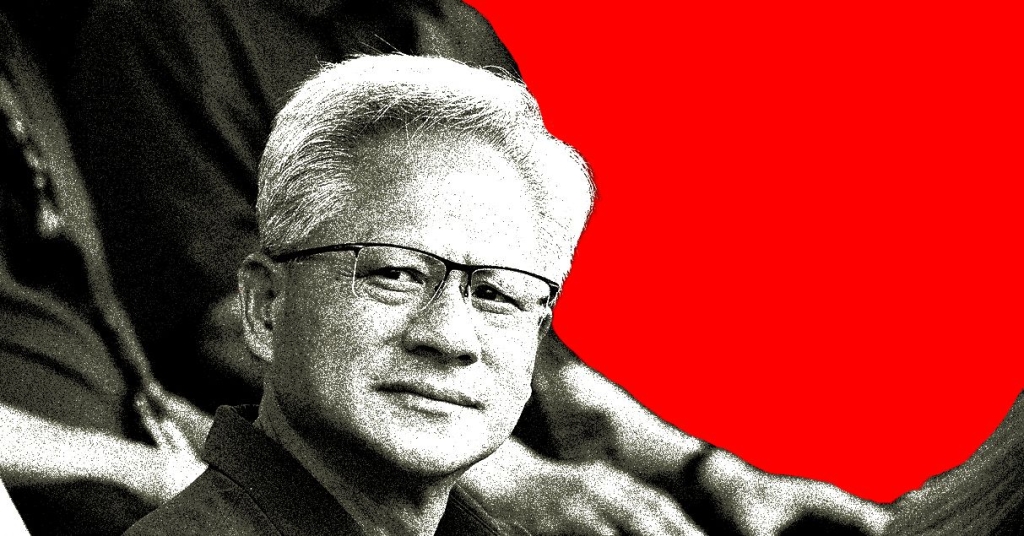
Jensen Huang’s Shanghai Stroll Sparks Tech Diplomacy Breakthrough
Nvidia’s charismatic CEO Jensen Huang has been painting quite the picture during his whirlwind tour of China this week, and it’s not just the vibrant street markets and sizzling hot pots that are turning heads. The tech titan has been spotted leisurely cycling through Shanghai’s bustling streets, browsing fresh fruit stands with the casual air of a local, and indulging in beef hot pot at a humble Shenzhen eatery. But beneath this carefully curated display of cultural immersion lies a seismic shift in the global AI chip landscape that could reshape the technological balance of power.
The timing of Huang’s relaxed demeanor isn’t coincidental—it comes on the heels of what appears to be a stunning diplomatic breakthrough. Multiple reputable news outlets are reporting that Beijing has green-lit the purchase of hundreds of thousands of Nvidia’s powerful H200 AI chips by Chinese tech giants, marking a dramatic reversal of years of stringent export controls.
According to sources speaking to Reuters, the Chinese government has approved conditional licenses allowing ByteDance, Alibaba, and Tencent to collectively acquire over 400,000 of these high-performance chips. The approvals, granted during Huang’s high-profile visit, represent more than just a business win—they signal a fundamental recalibration of the technological chess game between Washington and Beijing.
The Great Chip Control Reversal
This development marks a stunning about-face in American technology policy. Under the Biden administration, the United States had implemented some of the most aggressive export controls in recent history, specifically targeting advanced AI chips like Nvidia’s H200. The restrictions were designed with military precision—literally—aimed at preventing China from developing artificial intelligence systems with potential military applications or other sensitive uses that could threaten U.S. national security interests.
The Biden-era controls were meant to be a technological chokehold, forcing Chinese companies to either develop domestic alternatives or operate with severely limited computing power. The strategy was clear: maintain American technological supremacy by controlling the most advanced AI hardware that powers everything from large language models to autonomous systems.
But the Trump administration has charted a dramatically different course, one championed by Huang himself and White House AI and crypto czar David Sacks. Their argument cuts against traditional hawkish thinking: allowing China limited access to American AI chips is strategically preferable to completely ceding this massive market to Chinese chipmakers.
The logic is multifaceted and surprisingly nuanced. First, there’s the economic argument—the Chinese AI market represents hundreds of billions in potential revenue that American companies cannot afford to abandon entirely. But beyond the balance sheet, there’s a strategic dimension: by keeping Chinese firms dependent on American technology, the U.S. maintains a form of technological leverage and visibility into China’s AI development trajectory.
The Smuggling Argument: A Convenient Justification?
In internal White House discussions, officials have offered another justification for the policy reversal that cuts particularly close to the bone of the original restrictions. They point to the continued smuggling of advanced chips into China as proof that the export controls have been fundamentally ineffective, according to two people familiar with the matter.
This argument suggests a pragmatic, if cynical, approach: if determined Chinese actors will obtain these chips through gray markets regardless of official restrictions, then regulated, limited sales with oversight are preferable to an opaque black market where the U.S. has zero visibility into where the technology ultimately ends up.
“The Trump administration is committed to ensuring the dominance of the American tech stack—without compromising on national security,” stated White House spokesperson Kush Desai, attempting to thread the needle between economic engagement and security concerns.
China’s Calculated Double Play
From Beijing’s perspective, this development represents a masterclass in strategic patience and opportunism. Samuel Bresnick, a research fellow at Georgetown’s Center for Security and Emerging Technology, suggests that China is achieving multiple strategic objectives simultaneously through this arrangement.
Chinese tech champions like ByteDance, Alibaba, and Tencent gain desperately needed access to the computing power required to train AI models that can compete with the latest offerings from OpenAI, Anthropic, and other American labs. This access is crucial for maintaining China’s competitive position in the global AI race, where computational resources often determine who crosses the finish line first.
But Beijing isn’t simply rolling out the red carpet for Nvidia. By maintaining tight control over who receives these conditional licenses, the Chinese government ensures that demand for domestic alternatives—particularly Huawei’s AI chips—remains robust. This approach creates a delicate balance: Chinese companies get the compute they need while still having strong incentives to continue investing in and developing China’s domestic semiconductor ecosystem.
“This is excellent evidence that this David Sacks idea of keeping China hooked on American technology is just not how this is going to go,” Bresnick observes. “I see this as proof that China is totally uncomfortable with the idea of letting its own burgeoning chip industry be swamped by Nvidia.”
The Strategic Ambiguity Problem
Perhaps the most significant casualty of this policy whiplash isn’t technological—it’s strategic credibility. For years, U.S. policymakers have sent increasingly mixed signals about what they actually hope to achieve with chip controls, and China has been watching these oscillations with the keen interest of a competitor studying an opponent’s tells.
“The worst possible thing we can do is just go back and forth,” warns Bresnick. “We have already given China the imperative to get their own chips going while also giving them access at the same time.”
This inconsistency creates a dangerous strategic ambiguity. Chinese companies and policymakers are left to parse whether today’s approvals represent a new normal or merely another pivot point in an unpredictable policy landscape. Meanwhile, American allies watching this seesaw of restrictions and relaxations must question whether the U.S. can maintain a consistent technological containment strategy.
The Broader Implications
The H200 approvals represent more than just a business deal or a diplomatic gesture—they signal a potential new paradigm in technological competition. Rather than pursuing absolute technological dominance through complete isolation, the Trump administration appears to be embracing a model of managed interdependence.
This approach acknowledges several uncomfortable realities: China’s AI ambitions cannot be stopped through export controls alone, the economic costs of complete technological separation are prohibitive, and some level of engagement may actually provide better visibility and leverage than attempted isolation.
For Nvidia, the approvals represent the culmination of intense lobbying efforts and a validation of Huang’s argument that engagement, rather than isolation, serves both American economic and strategic interests. The company can now access one of the world’s largest and fastest-growing AI markets while theoretically maintaining some oversight through the conditional licensing framework.
Looking Forward: A New Technological Order?
As Huang continues his charm offensive through China’s tech hubs, the implications of these approvals will reverberate far beyond the immediate business opportunities. The decision suggests a potential shift from a strategy of technological containment to one of technological competition through engagement—a subtle but significant distinction.
This new approach raises difficult questions about the future of U.S.-China technological relations. Can managed interdependence actually work in practice, or will it simply provide China with the breathing room needed to accelerate its domestic semiconductor development? Will other American allies follow suit, or will they maintain stricter controls, creating a fragmented global technology landscape?
The answers to these questions will shape not just the AI chip market but the broader trajectory of technological competition between the world’s two largest economies. As Huang bikes through Shanghai’s streets and samples local cuisine, he’s not just enjoying a diplomatic victory lap—he’s witnessing the emergence of a new technological order where engagement and competition coexist in uneasy tension.
The coming months will reveal whether this approach represents a clever strategic recalibration or merely another pivot point in the ongoing technological chess match between Washington and Beijing. One thing is certain: the game has changed, and the rules are still being written.
Tags & Viral Phrases:
- Jensen Huang’s China charm offensive
- Nvidia H200 AI chip approvals
- Biden vs Trump tech policy whiplash
- China’s strategic double play
- Technological interdependence vs isolation
- AI chip smuggling revelations
- ByteDance, Alibaba, Tencent chip bonanza
- David Sacks’ tech diplomacy
- Semiconductor ecosystem balancing act
- Managed technological competition
- Export control policy reversal
- U.S.-China tech cold war recalibration
- Huawei vs Nvidia chip rivalry
- Georgetown CSET analysis bombshell
- White House tech policy chaos
- AI compute power race intensifies
- Strategic ambiguity problem
- American tech stack dominance debate
- Huang’s Shanghai bike ride diplomacy
- Conditional licensing framework explained
,

Leave a Reply
Want to join the discussion?Feel free to contribute!