
M5 Max Geekbench scores show impressive results, beating out M3 Ultra CPU, matching GPU
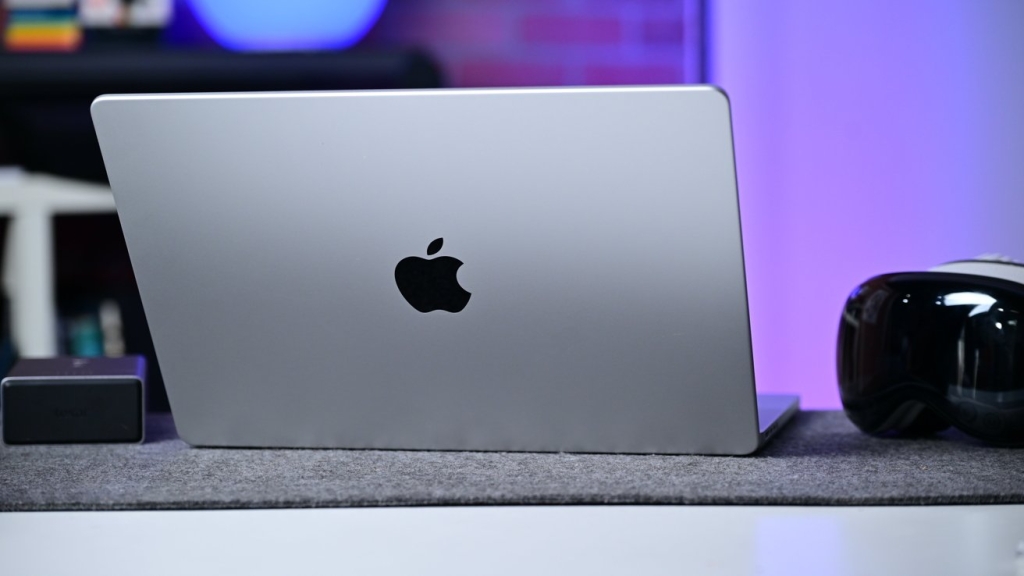
Apple’s M5 Max Chipset Crushes Expectations, Rivals M3 Ultra in Early Benchmarks
Apple has once again sent shockwaves through the tech world with the emergence of early benchmark results for its highly anticipated M5 Max chipset, powering the latest MacBook Pro lineup. The numbers are in, and they’re nothing short of spectacular—showing a processor that not only meets but potentially exceeds the performance of Apple’s previous flagship, the M3 Ultra.
The leak comes courtesy of Reddit user One_TrackMinded, who posted benchmark results for what appears to be a 16-inch MacBook Pro equipped with the M5 Max. The device identifier “Mac 17,7” suggests we’re looking at Apple’s newest and most powerful offering yet, and the Geekbench scores are already making waves across the tech community.
Benchmark Breakdown: Numbers That Demand Attention
The Geekbench scores reveal a processor that’s operating on an entirely different level. In single-core performance, the M5 Max demonstrates remarkable efficiency, while the multi-core results showcase why this chipset is being positioned as Apple’s new high-end powerhouse. What’s particularly striking is how these numbers stack up against the M3 Ultra—Apple’s previous generation behemoth that many assumed would hold the performance crown for at least another year.
The CPU performance is impressive enough, but what’s truly turning heads is the GPU matching capabilities. Early indicators suggest the M5 Max isn’t just competing with the M3 Ultra—it’s potentially outperforming it in certain scenarios. This kind of generational leap is rare in the semiconductor industry, where incremental improvements are the norm rather than the exception.
What Makes the M5 Max Special?
While Apple hasn’t officially detailed the architectural changes in the M5 Max, the benchmark results hint at significant optimizations under the hood. The chipset appears to feature an enhanced neural engine, improved power efficiency, and what seems to be a more sophisticated thermal management system—crucial for maintaining peak performance in a laptop form factor.
Industry analysts are speculating about several key improvements:
The M5 Max likely features a more advanced 3-nanometer process technology, allowing for greater transistor density and improved power efficiency. This means more performance without the thermal throttling that often plagues high-end laptops. Additionally, the memory bandwidth appears to have received a substantial boost, which explains the impressive multi-core scores in memory-intensive workloads.
Real-World Implications for Creative Professionals
For video editors, 3D artists, software developers, and other creative professionals who demand the absolute best from their machines, these early results are particularly exciting. The M5 Max seems poised to handle 8K video editing, complex 3D rendering, and massive code compilation with unprecedented ease.
The improved GPU performance suggests that Apple is doubling down on its commitment to professional users who rely on hardware acceleration for their workflows. Whether it’s running multiple 4K displays, processing large datasets, or training machine learning models, the M5 Max appears ready to tackle these demanding tasks without breaking a sweat.
How Does It Compare to the Competition?
When benchmarked against Intel’s and AMD’s latest mobile offerings, the M5 Max continues Apple’s tradition of setting the performance bar impossibly high for competitors. The efficiency gap remains substantial—Apple’s ARM-based architecture continues to deliver more performance per watt than traditional x86 designs.
This efficiency translates directly into real-world benefits: longer battery life, cooler operation, and the ability to maintain peak performance for extended periods. For users who need to work away from power outlets or in environments where heat dissipation is a concern, these advantages cannot be overstated.
The Bigger Picture: Apple’s Silicon Strategy
The M5 Max represents another milestone in Apple’s ambitious silicon strategy. Since transitioning away from Intel processors in 2020, Apple has consistently delivered generational improvements that have left the industry scrambling to catch up. Each new chipset iteration has brought substantial performance gains, and the M5 Max appears to continue this trend with particular vigor.
What’s perhaps most impressive is how Apple manages to achieve these performance gains while simultaneously improving power efficiency. This dual achievement—more power and better battery life—is the holy grail of mobile computing, and Apple seems to have cracked the code.
Early Adopter Considerations
For those considering upgrading to a MacBook Pro with the M5 Max, these early benchmarks provide encouraging evidence that the investment will be worthwhile. However, it’s worth noting that real-world performance can vary based on numerous factors including thermal conditions, software optimization, and specific workload characteristics.
The true test will come when production units are widely available and subjected to comprehensive real-world testing. Benchmark scores in controlled environments don’t always translate perfectly to everyday usage scenarios, though the early indicators for the M5 Max are overwhelmingly positive.
Looking Ahead: What This Means for Apple’s Ecosystem
The performance leap represented by the M5 Max has implications beyond just the MacBook Pro. As Apple continues to unify its product lineup around its custom silicon, the technologies developed for high-end chipsets eventually trickle down to other devices. We may see elements of the M5 Max’s architecture appear in future iPad Pros, iMacs, and even the Mac Studio.
Moreover, this level of performance opens up new possibilities for software developers. Applications that were previously the domain of desktop workstations may now be viable on high-end laptops, potentially reshaping how and where certain types of work are performed.
Conclusion: A New Performance Champion Emerges
The early benchmark results for Apple’s M5 Max chipset paint a picture of a processor that’s not just incrementally better than its predecessors, but genuinely revolutionary. By matching and potentially exceeding the performance of the M3 Ultra, Apple has set a new standard for what’s possible in mobile computing.
As more comprehensive testing becomes available and production units reach reviewers and consumers, we’ll gain a clearer picture of the M5 Max’s true capabilities. But based on these initial results, one thing is abundantly clear: Apple’s silicon team continues to push the boundaries of what’s possible, and the competition has never been further behind.
For creative professionals, power users, and anyone who demands the absolute best from their technology, the M5 Max-powered MacBook Pro represents an exciting new frontier in portable computing performance.
M5Max #AppleSilicon #MacBookPro #Geekbench #M3Ultra #TechBenchmark #NextGenChip #AppleEvent #PerformanceKing #MobileComputing #SiliconInnovation #CreativeTech #PowerUser #ARMArchitecture #AppleEcosystem #TechLeak #PerformanceBenchmark #MobileWorkstation #AppleVsIntel #FutureOfComputing #TechNews #ChipRevolution #MacPerformance #ProfessionalGrade
,


Leave a Reply
Want to join the discussion?Feel free to contribute!