
Sam Altman Says ‘Government Should Be More Powerful Than Corporations.’ Which Government?
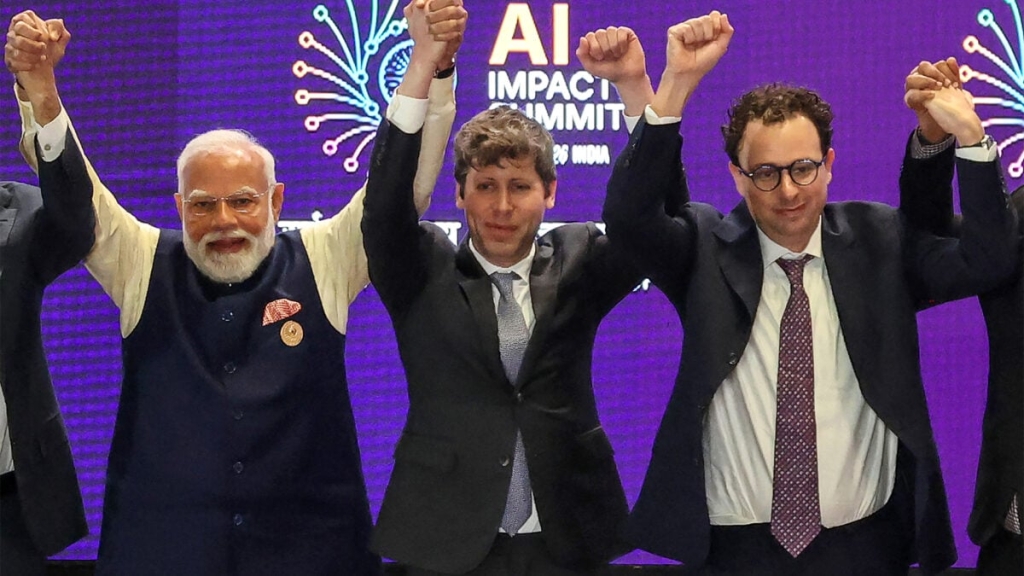
OpenAI CEO Sam Altman Defends Government Ties Amid Escalating AI Wars
San Francisco, CA — In a bold declaration that’s sending shockwaves through Silicon Valley and beyond, OpenAI CEO Sam Altman has thrown his full support behind the Trump administration’s controversial push to weaponize artificial intelligence, even as internal tensions at OpenAI reach a boiling point.
Speaking at the Morgan Stanley Technology, Media & Telecom Conference in San Francisco this week, Altman positioned himself squarely in America’s escalating AI arms race, defending OpenAI’s deepening partnership with the Pentagon while dismissing concerns about the ethical implications of military AI deployment.
“We Have to Trust the Democratic Process” — But Which Democracy?
Altman’s comments come as the tech world watches in stunned silence while the Trump administration squares off against rival AI company Anthropic in what observers are calling an unprecedented corporate-government showdown.
“The government is supposed to be more powerful than private companies,” Altman told the conference audience, according to the Wall Street Journal. “We have to trust in the democratic process.”
The statement rings hollow to many observers, given Altman’s increasingly cozy relationship with an administration that has spent the past two months systematically dismantling democratic norms and institutions.
The Pentagon’s Ultimatum: Drop the Guardrails or Face Consequences
The conflict centers on the Pentagon’s demand that Anthropic remove safety guardrails from its AI model Claude that prohibit use for mass domestic surveillance and fully autonomous weapons. When Anthropic CEO Dario Amodei refused, Defense Secretary Pete Hegseth threatened to blacklist the company as a supply chain risk — a move without precedent for an American company.
While Anthropic has stood firm on its ethical principles, OpenAI has positioned itself as the administration’s willing partner, agreeing to terms that many AI safety advocates warn could have catastrophic consequences for humanity.
Internal Revolt at OpenAI
The decision has created significant internal tension at OpenAI, with employees expressing outrage that Altman rushed to accommodate Pentagon demands without proper consultation or consideration of the long-term implications.
“The speed at which this happened, without any real debate or transparency, has left many of us feeling betrayed,” one OpenAI employee told CNN, speaking on condition of anonymity. “We’re talking about potentially unleashing autonomous weapons systems and mass surveillance capabilities that could fundamentally alter the balance of power in society.”
Global Implications: OpenAI Operates in 190+ Countries
The stakes are even higher when considering OpenAI’s global reach. The company operates in every country except Belarus, China, Cuba, Iran, North Korea, Russia, and Venezuela, according to data published last month.
This global footprint creates unprecedented challenges for governance and oversight. What happens when OpenAI’s protocols for identifying potential threats clash with local laws and customs? How does the company navigate competing demands from different governments with vastly different approaches to civil liberties and human rights?
The Canadian Controversy: When AI Misses Mass Shooting Threats
The complexity of these issues was recently highlighted in Canada, where OpenAI faced criticism after it was revealed that a mass shooter had been flagged in the company’s systems for plotting an attack, but authorities weren’t notified in advance.
Canadian officials met with OpenAI executives to discuss “new protocols” for identifying high-risk cases, though the specifics remain unclear. The incident raises difficult questions about the balance between privacy, security, and corporate responsibility in an increasingly interconnected world.
International Law vs. Silicon Valley: A Collision Course
The challenges facing OpenAI are emblematic of broader tensions between tech companies and international law. In Germany, displaying swastikas is illegal. In Australia, news organizations can be held liable for defamatory comments made by users on their social media pages.
As AI systems become more powerful and pervasive, these jurisdictional conflicts will only intensify. Who gets to decide what’s acceptable speech or behavior when different countries have vastly different standards?
The Oligarch’s Dilemma: Principles or Power?
Perhaps the most revealing aspect of Altman’s stance is what it reveals about the true nature of power in America today. OpenAI executives have donated millions to Trump’s campaigns and causes, creating an obvious conflict of interest when it comes to questions of government oversight and accountability.
This isn’t about abstract principles of democratic governance — it’s about which oligarchs get to sit at the table and call the shots. Altman’s rhetoric about government power rings particularly hollow given that he and his allies have effectively purchased their influence in the current administration.
Trump’s America: A New World Order
The context for Altman’s statements is crucial. The Trump administration has been bombing Iran for nearly a week, with Politico reporting that the conflict could last through September. The president has threatened to invade Canada and Cuba, kidnapped Venezuela’s president, and systematically undermined America’s traditional alliances.
In this environment, Altman’s claims about trusting the democratic process and supporting government oversight seem almost farcical. He’s not defending democracy — he’s defending his access to power and his ability to shape policy to benefit his company and his allies.
The Real Question: What Happens When the Tables Turn?
The fundamental question that Altman’s stance raises is: what happens when the political winds shift? How committed is he to the principle of government oversight when it’s a Democratic administration or a European leader making the demands?
History suggests that tech oligarchs are deeply committed to their own power and influence, regardless of which party or ideology happens to be in charge. When faced with regulations or oversight they don’t like, they’re quick to mobilize their resources and connections to fight back.
The Bottom Line: Power, Not Principles
Sam Altman can talk all he wants about how much he believes that governments should be the ones in charge. But the reality is that he and his fellow tech oligarchs are the ones who are really in charge right now.
They’ve purchased their seats at the table, and they’re jockeying for position in a rapidly changing political landscape. As alliances shift and new threats emerge, we’ll see just how committed they really are to the principles they claim to uphold.
For now, Altman’s stance represents a dangerous escalation in the AI arms race, one that prioritizes corporate profits and political influence over human safety and democratic values. The consequences of this approach could be catastrophic, and the world will be watching closely to see how this high-stakes game of technological chicken plays out.
Tags & Viral Phrases:
- OpenAI CEO Sam Altman defends Pentagon AI partnership
- Anthropic vs OpenAI: The AI Cold War heats up
- Trump administration weaponizes artificial intelligence
- Silicon Valley oligarchs buy influence in Washington
- Mass surveillance AI systems spark ethical firestorm
- Autonomous weapons debate reaches fever pitch
- Tech companies face global governance challenges
- Canada criticizes OpenAI over mass shooting threat
- Democratic process or corporate oligarchy?
- AI arms race threatens global stability
- Sam Altman’s dangerous alliance with Trump regime
- Pentagon demands removal of AI safety guardrails
- Internal revolt at OpenAI over military contracts
- Tech giants navigate conflicting international laws
- The real power behind America’s AI policy
- OpenAI operates in 190+ countries amid controversy
- Ethical AI development takes backseat to profits
- Silicon Valley’s dangerous game of political influence
- The future of AI governance hangs in balance
,


Leave a Reply
Want to join the discussion?Feel free to contribute!