
UK arts must not be sacrificed for speculative AI gains, peers say | AI (artificial intelligence)
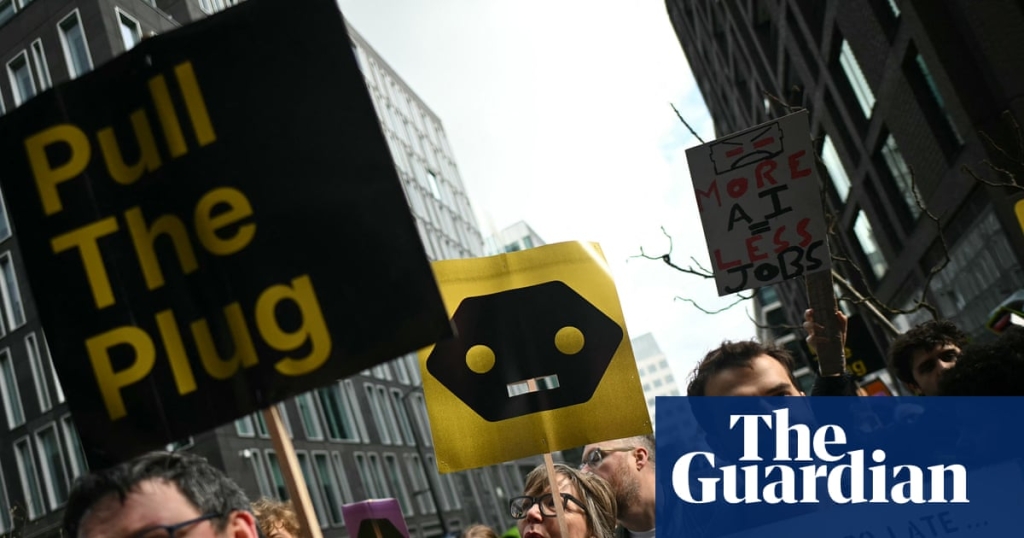
UK Government Urged to Protect Creative Industries from AI Copyright Overhaul
In a dramatic escalation of the battle between Britain’s creative sector and the burgeoning AI industry, a powerful House of Lords committee has issued a stark warning to ministers: do not sacrifice the nation’s £146 billion creative economy for the speculative promise of AI advancement.
The House of Lords Communications and Digital Committee has delivered a comprehensive report titled “AI, Copyright and the Creative Industries,” demanding that the government abandon controversial proposals that would allow technology companies to freely use copyrighted works from artists, writers, musicians, and journalists without explicit permission or compensation.
Barbara Keeley, Labour peer and committee chair, minced no words in her assessment of the threat facing Britain’s creative professionals. “The UK’s creative industries face a clear and present danger from AI firms using their work without credit or payment,” she declared. “AI may contribute to our future economic growth, but the UK creative industries create jobs and economic value now.”
The timing of this intervention is critical. The government is preparing to release an economic impact assessment of proposed changes to copyright law, alongside a progress update on consultations about the legal overhaul, with a deadline of March 18th looming. This assessment will reveal the potential costs and benefits of altering a copyright framework that has underpinned Britain’s creative economy for decades.
At the heart of the controversy lies the government’s main proposal: allowing AI companies to use copyright-protected material unless the creator explicitly opts out. This approach has sparked outrage across the creative community, with legendary musician Elton John leading the charge against what he calls government “absolute losers” for even considering such a relaxation of copyright protections.
The scale of the creative sector’s contribution to the UK economy cannot be overstated. Official figures show the creative industries contribute £146 billion annually – a massive economic engine that employs hundreds of thousands of people across the country. From blockbuster films and chart-topping music to best-selling novels and groundbreaking journalism, this sector represents both cultural heritage and economic powerhouse.
The committee’s report goes beyond simple rejection of the opt-out proposal. It calls for a comprehensive licensing regime that would ensure artists receive payment when their work is used to train AI systems. This would create a market-based solution where tech companies pay for the data they need, rather than simply taking it.
Other recommendations include supporting UK-developed AI models to reduce dependency on American tech giants, requiring AI companies to disclose exactly what data they’ve used to train their systems, and strengthening creators’ rights against the proliferation of deepfakes and unauthorized digital manipulation.
The government’s consultation has presented four options for the future of copyright in the AI age: maintaining the status quo, requiring AI companies to seek licenses, allowing AI firms to use copyrighted work with no opt-out for creators, or the controversial opt-out proposal that has galvanized opposition.
Critics argue that the opt-out model fundamentally misunderstands how the internet works. Content creators would need to somehow monitor the entire web to identify where their work is being used, then navigate complex legal processes to prevent its use in AI training. For many independent artists and writers, this represents an impossible burden.
The committee also expressed concern about a potential “commercial research” exemption that could allow AI firms to claim their use of copyrighted material falls under research purposes, even when the ultimate goal is commercial profit. Ministers have refused to rule out this possibility, stating it would be “pre-emptive” to eliminate any option before the upcoming report.
The international context adds another layer of complexity. The UK finds itself in a race with other nations to attract AI investment and development. Some argue that loosening copyright restrictions could make Britain more attractive to major US tech companies looking to establish AI operations. However, the committee firmly rejects this approach as a “race to the bottom” that ultimately serves neither British interests nor the long-term health of the creative sector.
The report’s timing coincides with growing awareness of how AI systems actually function. These technologies require vast datasets for training – millions of images, articles, books, and music tracks. Much of this material is scraped from the open web without creators’ knowledge or consent. The resulting AI tools can then generate new content that closely mimics the style and substance of the original works.
This raises fundamental questions about the nature of creativity and ownership in the digital age. If an AI system is trained on thousands of novels by a particular author, can it produce work that is essentially derivative without compensating the original creator? If an image generator learns from thousands of paintings by a specific artist, is the resulting output truly original?
The creative industries argue that their work represents years of skill development, unique artistic vision, and significant investment. They contend that allowing AI companies to freely harvest this work for commercial purposes devalues human creativity and threatens livelihoods.
From the tech industry’s perspective, access to diverse training data is essential for developing competitive AI systems. They argue that overly restrictive copyright rules could hamper innovation and cause the UK to fall behind in the global AI race. Some suggest that the benefits of advanced AI – from medical breakthroughs to climate solutions – could ultimately outweigh the costs to individual creators.
The government finds itself caught between these competing interests. A spokesperson stated: “The government wants a copyright regime that values and protects human creativity, can be trusted, and unlocks innovation. We welcome the committee’s contributions, and we will continue to engage closely with parliament going forwards.”
As the March 18th deadline approaches, all eyes will be on the economic impact assessment. This document will likely shape the government’s final decision and could determine whether Britain’s creative industries maintain their current protections or face a fundamental restructuring of their rights in the digital age.
The stakes could not be higher. The outcome will affect not just the £146 billion creative economy, but also the future development of AI technology in the UK, the country’s position in the global tech race, and the very nature of creative work in an AI-dominated future.
Tags & Viral Phrases:
- Creative industries vs AI tech giants
- £146 billion at stake
- Elton John calls government “absolute losers”
- Race to the bottom for AI dominance
- Copyright opt-out controversy explodes
- Deepfakes and digital manipulation rights
- UK creative economy under threat
- Licensing regime for AI training data
- Commercial research exemption loophole
- House of Lords delivers bombshell report
- Tech companies vs artists battle intensifies
- AI jam tomorrow costs creative jobs today
- Government caught between innovation and protection
- March 18th deadline looms large
- US tech giants eye UK copyright changes
- Independent creators face impossible burden
- The future of creativity in the AI age
- Economic impact assessment reveals all
- Protecting £146 billion creative engine
- AI training data transparency demanded
,

Leave a Reply
Want to join the discussion?Feel free to contribute!